Just over four months into the phased implementation of the European Union’s new Entry/Exit System (EES), the reality of transitioning from traditional manual passport stamping to a sophisticated, automated digital infrastructure is becoming clear. As the EU moves to modernize the management of its external borders, the shift represents more than just a technological upgrade; it is a fundamental reimagining of how millions of non-EU nationals interact with the Schengen Area. Writing on the early experiences of this rollout, Krum Garkov, former executive director of eu-LISA—the agency responsible for managing the EU’s large-scale IT systems for border and migration—highlights that while the ultimate goals of the system are sound, the operational transition requires urgent refinement.
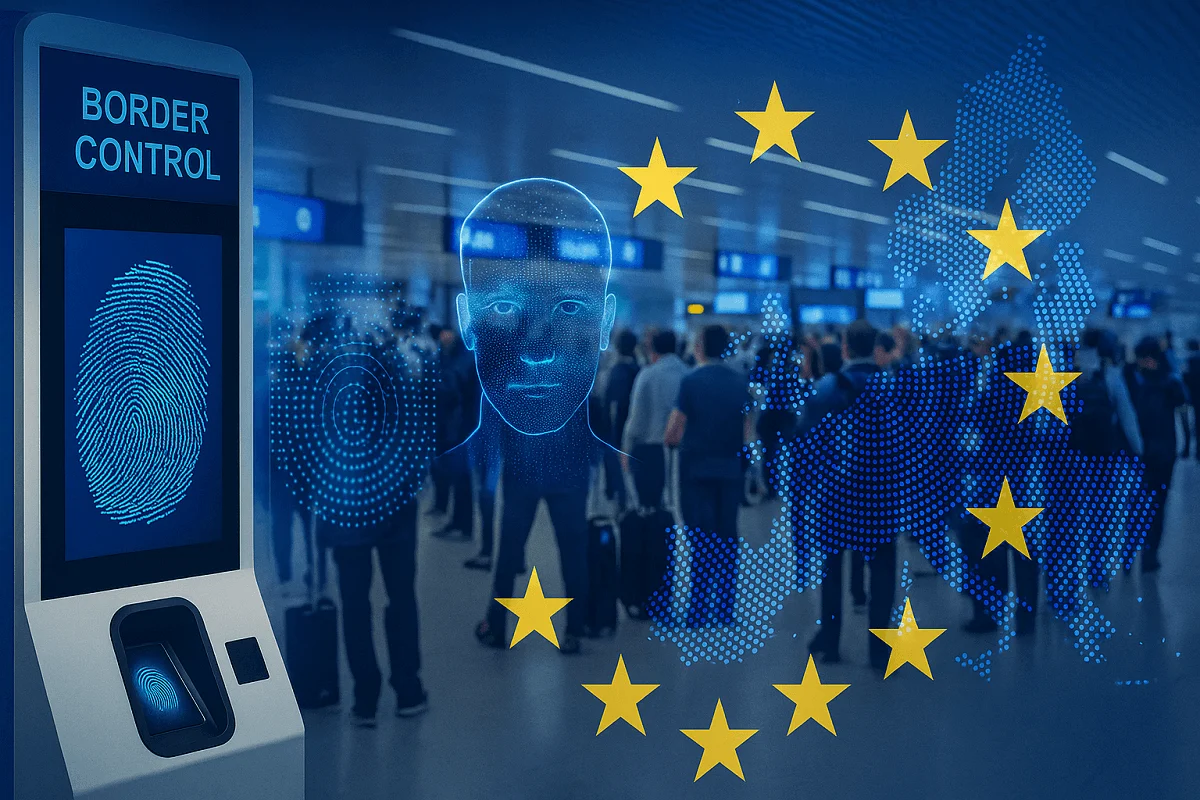
The EES is the cornerstone of an ambitious effort to modernize the Schengen Area’s external frontiers, which encompass most EU member states along with Iceland, Norway, Liechtenstein, and Switzerland. By replacing manual stamping with an automated, biometric-linked digital record, the EU aims to create a more resilient and efficient border regime. Travellers are now required to provide biometric data—specifically fingerprints and facial images—during their initial entry. This digital footprint is then stored and reused for subsequent journeys, creating a streamlined history that should, in theory, accelerate future crossings. The scale of this undertaking is immense: by 2026, it is projected that non-EU nationals will conduct approximately 220 million external border crossings annually, a figure expected to climb to 260 million by 2029. Given these volumes, the necessity for automation is undeniable.
Drawing on his extensive experience at the helm of eu-LISA, Garkov expresses confidence in the system’s long-term potential. Once the EES reaches its full, steady-state operational capacity, it promises to enhance the efficiency of border management, improve the reliability of identity checks, curb identity fraud, and ultimately facilitate faster, more secure passage for legitimate third-country nationals. However, the path to that steady state is a complex operational puzzle. The rollout has been carefully calibrated in phases to allow for adjustments. Starting in October of last year, Member States were mandated to register 10 per cent of third-country nationals crossing external borders, a threshold that was subsequently increased to 35 per cent on January 9. Even at these lower, incremental stages, the system has already encountered significant friction, with reports of widespread disruption emerging at several major transport hubs.
The feedback from the aviation industry has been particularly pointed. Airport Council International (ACI) Europe has documented significant increases in border processing times, with some airports experiencing queues lasting several hours. According to their estimates, overall processing times have surged by as much as 70 per cent. At the heart of this bottleneck is the requirement for travellers to enrol their biometric data via self-service kiosks before presenting themselves to a border officer. When these kiosks are unfamiliar to the traveller, unavailable, or suffer technical downtime, the impact on throughput is immediate and severe. ACI Europe has expressed significant concern that these conditions could deteriorate further as the mandatory registration percentage increases toward full implementation.
Such challenges are not entirely unexpected when deploying a large-scale IT system of this magnitude. Integrating cutting-edge technology into deeply entrenched workflows, retraining staff to handle new digital processes, and ensuring the traveling public is adequately prepared for a departure from long-standing procedures are all significant hurdles. In the short term, these necessary adjustments can temporarily mask the efficiency gains that the system was fundamentally designed to achieve. Industry groups, cognizant of the mounting pressure on border checkpoints, have called for the immediate activation of contingency measures. These include the temporary limitation of biometric checks or even the suspension of the system during peak travel periods. While such interventions might provide temporary relief for beleaguered airports, they are merely stop-gap measures and fail to address the core issue.
The central problem is that the most time-consuming administrative burdens of the border-crossing process—specifically the initial biometric enrolment—are currently concentrated at the border itself. By forcing travellers to perform these complex tasks at the exact moment they arrive at a checkpoint, the EU is inadvertently creating bottlenecks at the point of highest congestion. To move past this, it is essential to shift the administrative load away from the border.
One highly practical and achievable solution is to facilitate pre-enrolment before the traveller even reaches an EU border. Currently, the lack of a widely accessible, robust pre-enrolment option means that all biometric data collection must occur on-site, adding immense pressure to border guards and infrastructure alike. A logical solution already exists in the form of the global network of visa application centres (VACs). These centres, particularly those operated by experienced external service providers such as VFS Global, are already equipped to handle the secure collection of alphanumeric and biometric data at scale. With trained staff, secure and controlled environments, and a proven track record of handling high-volume identity management, these centres are uniquely positioned to act as the primary point of enrolment for third-country nationals.
Leveraging this existing global infrastructure would allow travellers to receive expert, hands-on support, making the biometric collection process significantly faster, more predictable, and less stressful. The benefits of such an approach would be felt immediately at the border. By reducing the time required for registration upon arrival, the risk of massive queues is lowered, and the workload on border guards is eased. This, in turn, allows border officers to pivot their focus back to their primary mission: core security, risk management, and the oversight of critical border operations. Ensuring that border guards can prioritize security over routine data entry is essential, especially during high-traffic periods when the temptation to expedite queues might otherwise compromise safety standards.
The legal framework of the EES provides the necessary flexibility for this transition. The EES regulations do not dictate a rigid, one-size-fits-all approach to how Member States must organize their pre-enrolment processes. Each country retains the sovereignty to determine the channels used, whether through mobile applications or physical facilities located in third countries. Furthermore, collaborating with external service providers is not a novel concept for the EU. As biometric technology became increasingly central to visa issuance in recent years, the resulting strain on consular resources forced governments to seek assistance. Governments turned to external partners to handle the non-judgmental, administrative facets of the process—such as identity data collection, biometric enrolment, and the secure transmission of information to national systems. Today, this collaboration is a well-established, integral component of the EU’s global visa policy, having successfully eased infrastructure and staffing pressures while simultaneously streamlining the overall administrative experience.
As the EU approaches the full deployment of the EES, set for April 10, the focus must shift toward operational resilience. The system represents a monumental step forward in modernizing Schengen border management, enhancing record-keeping, and preparing for an increasingly automated future. However, its success depends entirely on making operational choices that carefully balance the need for security with the necessity of traveller facilitation.
Strategically utilizing the existing infrastructure of visa application centres offers a proven, pragmatic route to preventing bottlenecks and maintaining consistent traveller throughput. By moving the biometric enrolment process into a controlled, off-border environment, the EU can ensure a smoother rollout that respects the sovereignty of individual Member States while providing a more efficient, secure, and predictable experience for those entering the Schengen Area. With the final implementation deadline approaching, the adoption of these strategic, field-tested measures will be the deciding factor in ensuring the EES achieves its ambitious objectives—not just as a technological system, but as a functional, secure, and reliable component of European border policy.