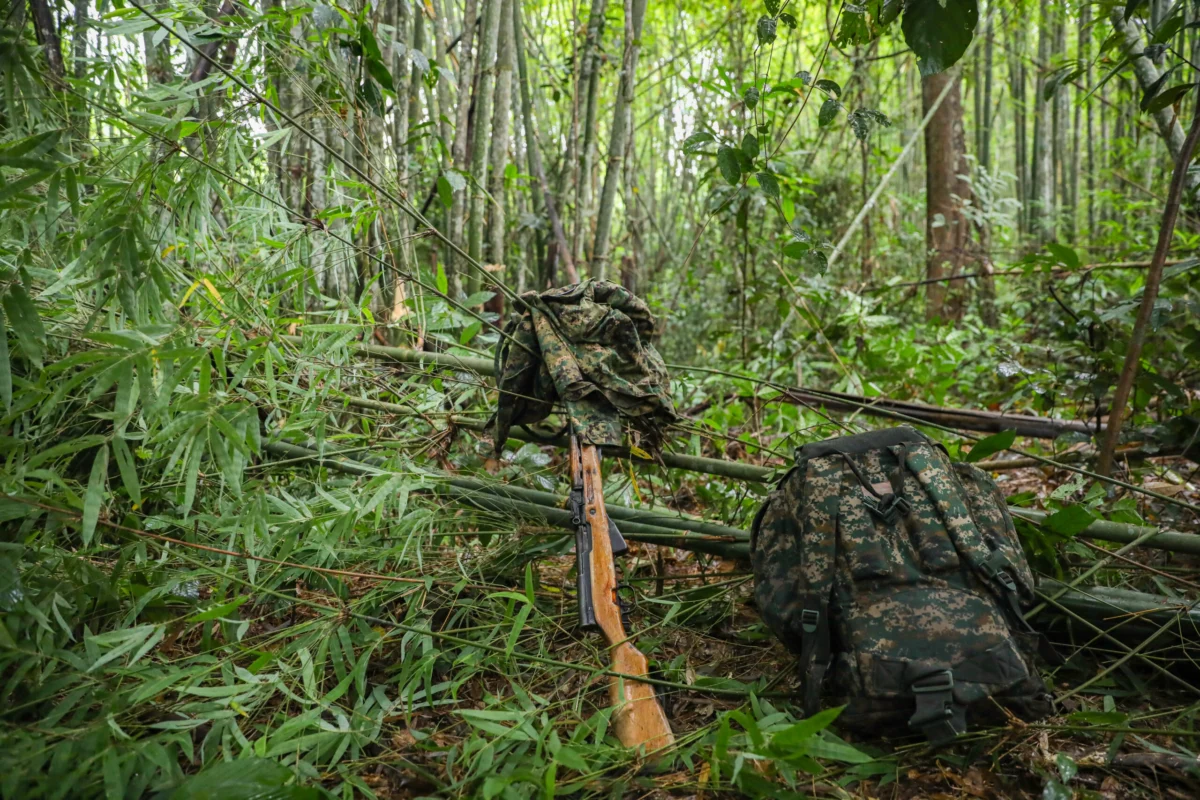
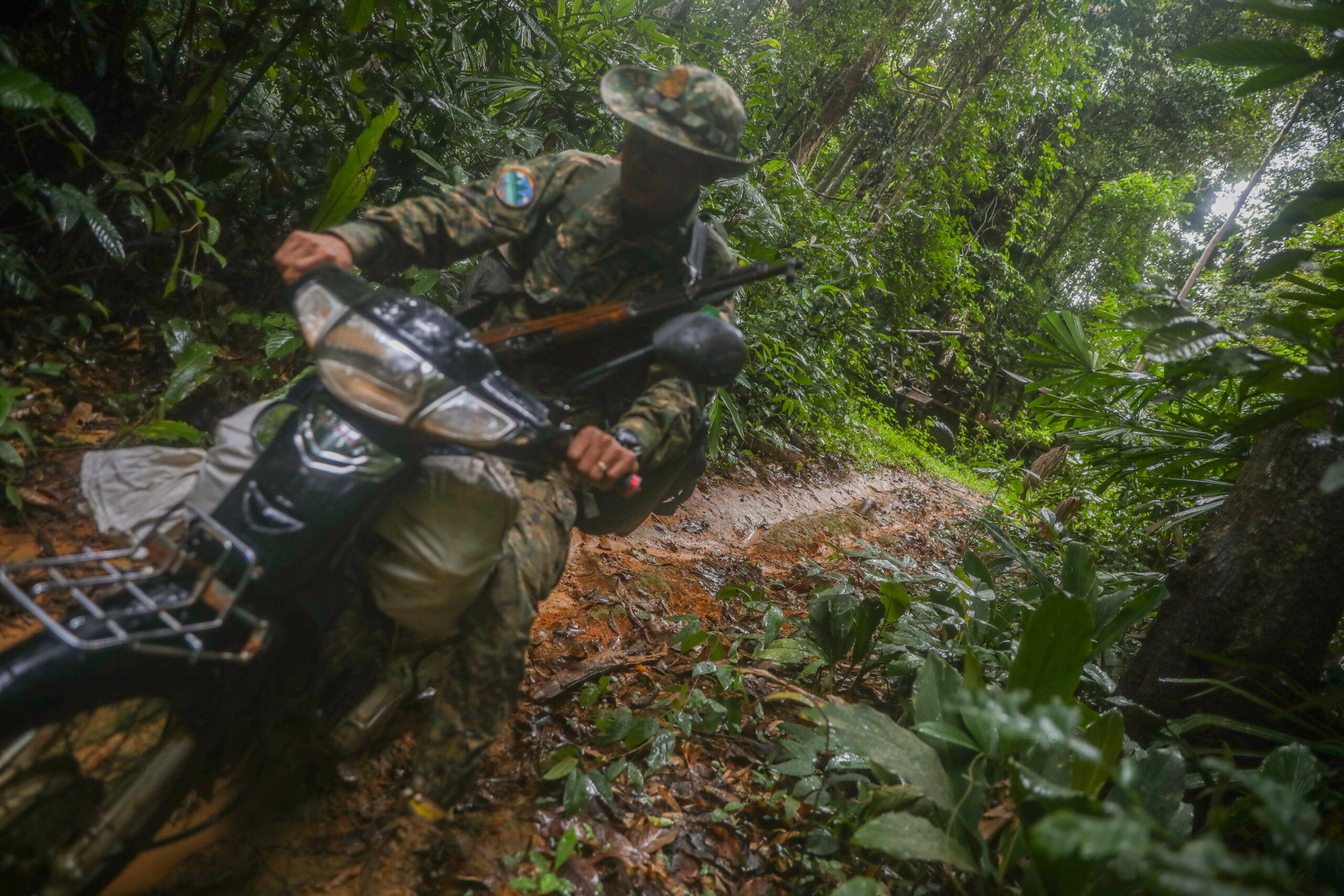
As monsoonal rains slowly rust the charred skeleton of an abandoned logging truck deep within the wilderness, wild vines wrap tightly around the blackened vehicle, appearing to drag it further into the earth. Not far from this grim relic, moving down an old logging trail in Cambodia’s Virachey National Park, a team of rangers conducts a routine biodiversity survey. Much of this vast, protected area remains entirely unexplored, serving as one of the last relatively untouched ecosystems in the rapidly developing Mekong region.
"Logging and poaching is an issue, but the park has a way of protecting itself," said Thon Soukhoun, who has served as a ranger since the forest was officially designated as a national park in 1993. "Nowhere in the country is like Virachey; it is Cambodia’s gem."
Nestled in the Kingdom’s remote northeastern corner along the borders of Laos and Vietnam, Virachey was among the first forests in Cambodia to be granted protected status 30 years ago. Spanning more than 3,300 square kilometers—nearly five times the total land area of the capital city, Phnom Penh—it stood as the largest national park in the country at the time of its establishment.
Yet, as Southeast Asia races to cut its reliance on fossil fuels, driven partly by international climate finance schemes, Cambodia is now risking this critical regional biodiversity hotspot for renewable energy development. Confidential documents and maps leaked to Southeast Asia Globe from meetings held this year between private developers and government officials reveal that at least two hydropower projects inside the park are quietly underway. These files indicate that initial assessment work has already commenced at the proposed dam sites located squarely in the core of Virachey, a landscape that also serves as the ancestral heartland for indigenous communities living along Cambodia’s borders.

Monetizing the Forest to Counter Development
To counter the relentless domestic thirst for infrastructure development, academic researchers are attempting to monetize the national park through an alternative mechanism: assigning a tangible dollar value to Virachey’s immense potential as a carbon credit project. This strategy is an explicit attempt to prove to policymakers that the protected area is worth far more to the national economy remaining standing than it would be if cleared.
The stakes of this high-level trade-off are immense. According to environmentalists and conservation scientists, the construction of hydropower dams will directly threaten endangered species by drastically altering natural river flows and clear-cutting swathes of old-growth trees. The leaked documents further indicate that one of the planned dams will create a sprawling 215-hectare reservoir, permanently flooding that section of the pristine forest ecosystem.
Conservationists also harbor deep fears that hydropower dams in Virachey could jeopardize hundreds of thousands of dollars in vital conservation funding originating from the United Kingdom, all in the name of producing "clean" energy—a designation that these experts strongly challenge.
"To build a dam within this valuable area within the national park, you would have to create access roads, cut down trees, and disturb wildlife," said Pablo Sinovas, country director for the international conservation nonprofit Fauna & Flora. "I would not call any energy coming out of that ‘clean’."

A Final Frontier for Mekong Biodiversity
In the three decades since Virachey was awarded national park status, Cambodia has suffered the loss of more than 30% of its total forest cover. Protected areas across the country, which are frequently safeguarded only on paper, have been severely impacted by this widespread, large-scale logging.
While Virachey has not entirely escaped the pressures of deforestation, the park’s famously rugged terrain has protected it from the worst of the destruction. The dense jungle is now recognized by wildlife experts and conservationists like Sinovas as a "final frontier" for biodiversity in the Mekong region, a status owed largely to its functioning transboundary habitat that supports animals migrating freely across the triple border.
As behind-the-scenes development discussions persist, Chou Phanith, an associate professor at the Royal University of Phnom Penh specializing in environmental economics, is currently calculating the exact tonnage of carbon dioxide Virachey can absorb and potentially market as carbon credits. In Phanith’s blunt assessment, "money talks."
If the forest is successfully monetized before dam construction officially breaks ground, it could trigger a national debate over whether Virachey holds greater economic value standing intact or toppled for hydropower, Phanith noted. He emphasized that the proposed dams are targeted directly at one of the park’s sectors with the highest potential for carbon storage.
"If forest ecosystems do not have any economic value, policymakers and the private sector will always regard forest ecosystems as less important than development," Phanith said. "We calculate the economic value of a functioning forest ecosystem as part of a win-win strategy, where we don’t always block development but force sustainable and responsible development."
Historical Plans and Growing Ecological Toll
The hydropower proposals inside Virachey are not entirely unprecedented. The earliest published documentation regarding energy production within the park dates back to a 2009 master plan for hydropower development in Cambodia, which was backed by the state-run Japan International Cooperation Agency (JICA).
Miyoshi Asagi, counsellor for the Japanese Embassy in Cambodia, stated that JICA’s involvement with those specific dam developments concluded when the master plan was published. In August, JICA announced it was developing a new roadmap to clean energy for Cambodia. Asagi noted that she is "aware hydropower plants have lots of debate" and that "there are no projects in the pipeline for hydropower."
Meanwhile, an October report published by WWF ahead of the World Hydropower Congress concluded that the ecological toll of dams in the Lower Mekong Basin far outweighed the rewards of renewable energy. The report warned that "as hydropower development grows, the cascading nature of its impacts could be wider and more significant than understood today."
The potential dams in Virachey are slated for the Prek Liang River, a waterway that acts as a tributary to the Sesan River. The Sesan is part of Cambodia’s vital "3S River Basin," which itself feeds into the broader Mekong River system. The Mekong is already reeling from compounding hydropower pressures, with additional dam developments threatening to further choke off the once-mighty river and its critical fisheries.
Transparency Challenges and Official Stance
In Cambodia, the government typically maintains low transparency regarding major infrastructure projects, with foundational documents such as environmental and social impact assessments rarely made available to the public. Officials from both the Ministry of Environment and the Ministry of Mines and Energy did not respond to multiple requests for comment. However, Minister of Environment Eang Sophalleth addressed the issue during a question-and-answer session at the Cambodia Climate Change Summit in November.
Responding to an inquiry regarding energy plans within national parks like Virachey, Sophalleth spoke broadly about the need for balance and addressing developments in a "scientific matter," asserting that national security through energy security remains a top priority. He insisted that the ministry "does not do things because we feel like doing it" and that environmental studies and impact assessments are conducted "properly before we decide to do all of this."
When asked if these documentation files would eventually be made accessible, Sophalleth replied, "When the public is receptive enough to accept it, to read, to think, and to see what we are trying to achieve, yes."

The leaked files reviewed by reporters indicate an opaque network of four different corporate entities that have been involved in the Virachey hydropower plans over the years. Three of these are developers based in South Korea—KTC Company, Kyung An Cable, and Korean South-East Power—while the fourth is Phnom Penh-based electrical equipment supplier Rich-Grid Technologies. None of the four companies responded to requests for comment, leaving it unclear which entities currently maintain an active role in the project.
"These are very sensitive documents," said Bunleap Leang, director of the local environmental organization 3S Rivers Protection Network (3SPN). He noted that the involved parties prefer to keep potentially controversial plans under wraps. "If the dam is good from the perspective of the government and the developer then, to them, no one else needs to know."
Bunleap added that his network confirmed hiring processes have already begun in Tabok village, which sits near one of the proposed dam sites.
A Crucial Habitat for Endangered Species
Virachey spans a dramatic elevation gradient, tumbling from Cambodia’s lowlands up into the rich biodiversity hotspot of the Annamite Mountains, creating what Sinovas describes as "two worlds converging in the park."
When the initial sites were surveyed for hydropower potential decades ago, very little was known about the developments’ potential impacts on biodiversity and forest health. That scientific understanding has shifted dramatically over the past 15 years.
"As we started to understand more and more about what was in the park, we are realizing its conservation is critical for Cambodian and regional biodiversity," Sinovas said.
Fauna & Flora has deployed roughly 140 camera traps across Virachey, successfully documenting the critically endangered Sunda pangolin, the northern yellow-cheeked gibbon, and half a dozen other threatened species. The national park is also the first location where large-antlered muntjacs were recorded in Cambodia, and it is regarded as the last possible refuge for the kouprey, the country’s national mammal, which has not been sighted in the wild for decades.
"Virachey is one of those areas where deforestation levels have been much lower. That is partly why we have all of this wildlife," Sinovas said. "Doing anything to damage that would not be in the national interest of Cambodia."
Compounding the immediate construction impacts are long-term secondary threats, including poaching, illegal logging, and other forest crimes that routinely plague Cambodia’s more accessible protected areas.
Earlier this year, the U.K. Embassy in Phnom Penh confirmed that approximately $730,000 has been earmarked for Virachey as part of Britain’s global Biodiversity Landscapes Fund. Marc Thayre, deputy head of mission at the embassy, stated that the vast majority of the regional funding is directed toward Virachey to increase its intrinsic value as a protected sanctuary.
"This is designed to increase the value of the park as a park itself," Thayre said, expressing hope that the funds would "realign the idea of what an asset is" by proving the forest is more valuable left standing than exploited.
Asked directly about the proposed dams, Thayre acknowledged the inherent tensions. "If you want to tackle issues like climate change and biodiversity, then you have to work in all places in the world with all governments," he said. "We have to be honest with ourselves about the challenge and tradeoff between environment and development. There will always be some tension there."

The Expanding Carbon Credit Market
Cambodia’s development ambitions have increasingly dovetailed with a growing national interest in carbon credits. These financial mechanisms are designed to limit global emissions by preventing deforestation in vulnerable areas like Virachey, allowing major corporate polluters to offset their fossil fuel emissions by sponsoring forest protection.
In recent months, however, Cambodia’s carbon credit sector has faced intense scrutiny regarding its overall effectiveness. Following allegations of human rights abuses brought by Human Rights Watch against the country’s largest registered carbon credit zone, the leading registry service Verra suspended issuing new credits to the Southern Cardamoms REDD+ project.
Despite these setbacks, Cambodia’s drive to market carbon credits remains strong. Research conducted by Phanith with the ASEAN Centre for Biodiversity found that roughly 40% of the nation’s total landmass—about 79,200 square kilometers—could theoretically be considered for carbon credits. Virachey emerges as one of the premier prizes in this portfolio.
In research reviewed by reporters, Phanith identified three core sectors within Virachey possessing an estimated total carbon storage capacity of 28 million tonnes. He calculated that credits for the park could exceed $200 million in total value depending on prevailing market rates, a figure that does not yet account for hydrological benefits, biodiversity preservation, and other ecosystem services.

The proposed hydropower dams, notably, are situated directly within one of these three core carbon-dense areas.
"If you want to develop Virachey into hydropower dams, or whatever, make sure the economic value is more than [the cost of carbon]. If it is, go ahead," Phanith said. "But be willing to pay [that] anyways to offset."
An Indigenous Connection to the Land
Financial calculations and carbon metrics, however, cannot account for everything. A total of 47 rangers are assigned to Virachey, many of whom belong to indigenous groups native to the park. Several hail from the approximately 60,000-strong Brau ethnic minority population residing across Cambodia, Laos, and Vietnam. For these rangers, Virachey is far more than a carbon sink or a prospective energy source.
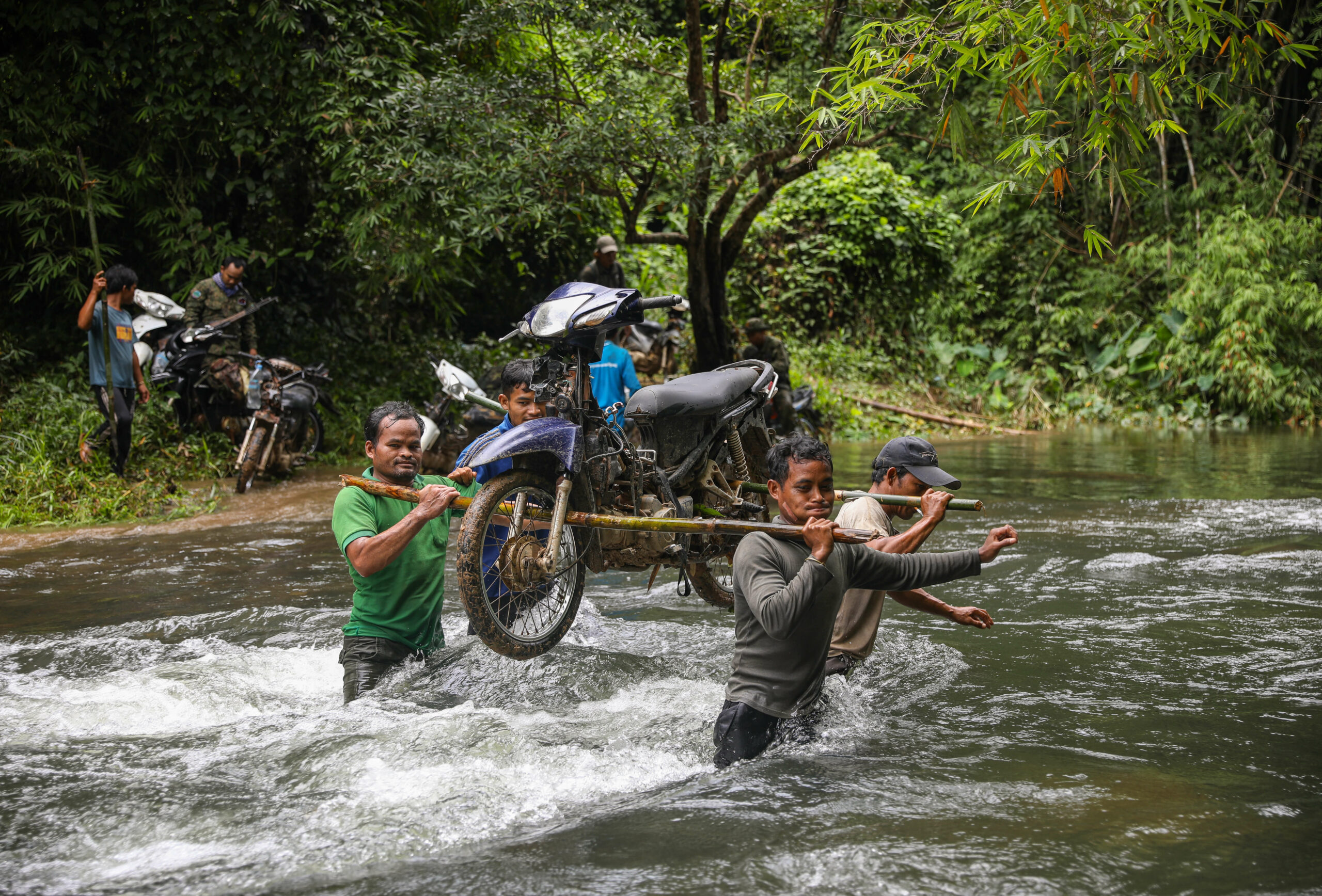
While on patrol, indigenous rangers often laugh off the physical toll of the jungle, encouraging visitors to leave leeches undisturbed as they latch onto arms, legs, and necks. They refer to the blood-suckers as a "forest tax" owed directly to Virachey, choosing to ward them off with tobacco-leaf cigarettes rather than killing them.
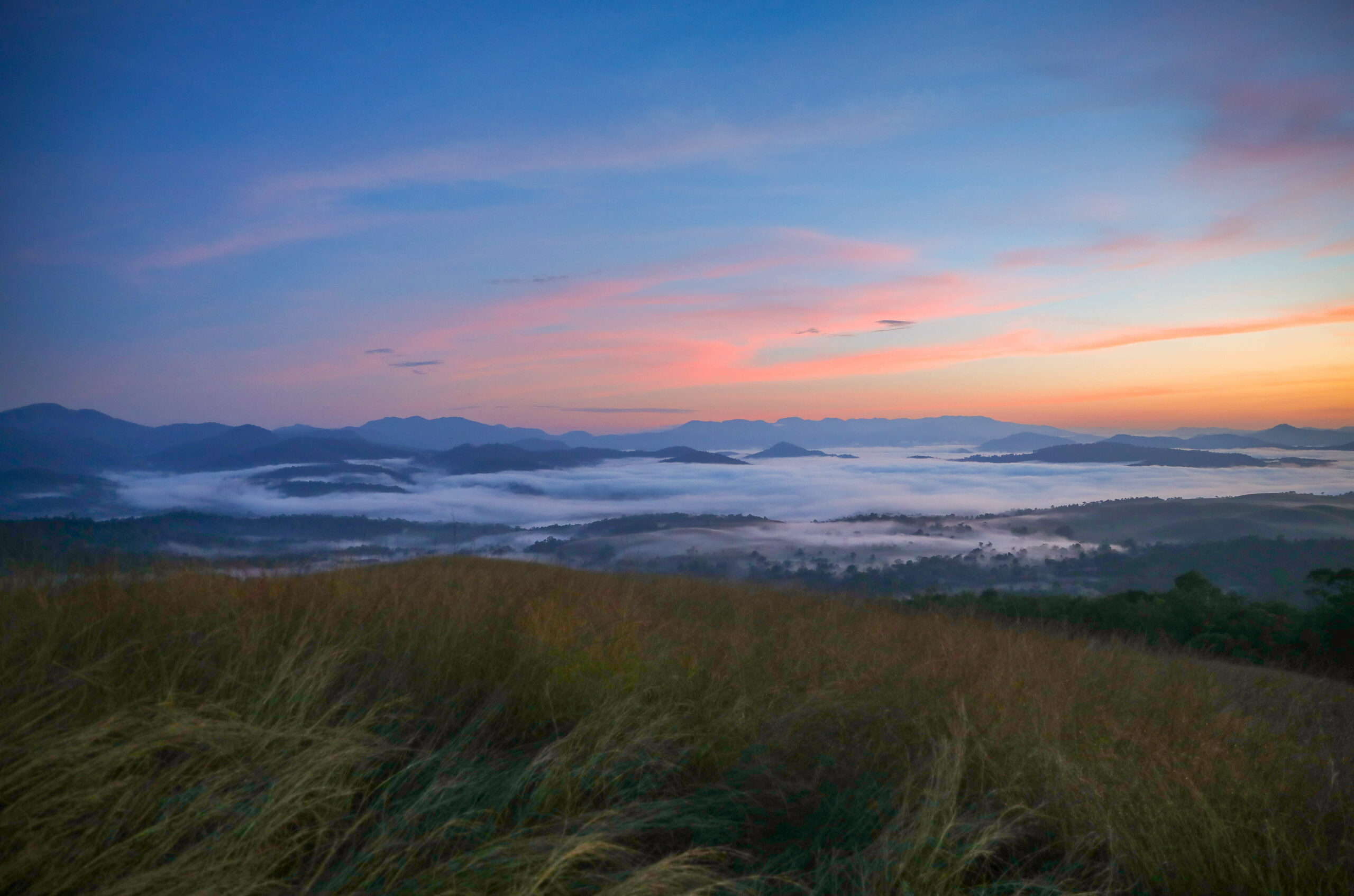
As patrols conclude for the day, a chilling breeze typically sweeps across the landscape just as the sunset paints the Veal Thom grasslands in deep gold. Sra Er, a Brau community member who heads the Taveng Ranger Station, often reflects on his deep personal connection to Virachey—a bond that ultimately drove him to become a ranger.
When questioned directly about the potential construction of hydropower dams inside the park, Er grows silent and slowly shakes his head.
"We care about Virachey and we protect the park from what we can," he said.