As governments, financial institutions, and corporate leaders grapple with the enormous economic and logistical challenges of shifting away from fossil fuels, a critical human rights crisis is unfolding in the shadows of Southeast Asia’s green transition. In Vietnam, advocates for environmental, climate, community, and workers’ rights find themselves entirely locked out of the national conversation. Instead of being welcomed as essential partners in shaping a sustainable future, civil society members face an escalating campaign of threats, intimidation, and arbitrary arrest.
Discussions surrounding Vietnam’s ambitious $15.5 billion Just Energy Transition Partnership (JETP) are currently unfolding entirely behind closed doors. These high-stakes negotiations are restricted to closed circles comprising international banks, government officials, and corporate entities. Concerned members of civil society, whose livelihoods and communities stand to be most affected by these sweeping energy policies, are afforded no opportunity to provide meaningful feedback, offer constructive input, or engage freely with international colleagues in other nations where similar decarbonization plans are actively moving forward.
This exclusion is not merely bureaucratic; it is punitive. Six prominent advocates for climate and energy justice have been arrested and detained in Vietnam for their tireless efforts to help wean the country off its heavy reliance on coal. Among those targeted is environmental justice lawyer Dang Dinh Bach, who is currently serving a harsh five-year prison sentence. Bach was the founder and director of the Law and Policy of Sustainable Development Research Centre, an organization where he dedicated his professional life to safeguarding the public health of marginalized communities impacted by industrial pollution.
The international community has taken note of these authoritarian measures. Earlier this year, the United Nations Human Rights Council Working Group on Arbitrary Detention released a formal opinion regarding Bach’s imprisonment. The working group concluded that his detention constituted a clear violation of international law, while also expressing deep concerns regarding what it identified as a systemic problem with the arbitrary detention of environmental defenders in Vietnam.
Bach is far from alone in his ordeal. Another leading defender of climate justice in the country, Hoang Thi Minh Hong—founder of the prominent environmental group CHANGE VN—was recently sentenced to three years in prison under questionable legal pretexts. Her conviction has triggered a wave of condemnation from the global diplomatic community. To date, the United Nations, the United States government, the United Kingdom, and the European Union have all released official statements sharply criticizing her conviction and sentencing, viewing it as a chilling indicator of the shrinking space for civil dissent in Vietnam.
It is directly against this alarming backdrop that civil society advocates are urging multilateral development banks, such as the Asian Development Bank (ADB) and the World Bank, alongside key donor governments, to halt their aggressive push to implement the Vietnam JETP and its associated energy projects. Moving forward under current conditions means these international financial institutions risk acting as complicit bystanders to the ongoing silencing, intimidation, and severe reprisals directed at community rights advocates, labor leaders, and environmental defenders.
The concerns raised by civil society extend well beyond Vietnam’s borders. Elsewhere in the region, including the Philippines and Indonesia, plans by the ADB and the World Bank Group to dole out hundreds of millions of dollars in public funds to enable coal companies to refurbish or retire their facilities early have met with heavy criticism from environmental, climate, and social-justice organizations. Although these financial schemes are marketed as vital contributions to a "Just Transition"—and are explicitly being factored into ongoing JETP arrangements in Indonesia—critics argue that the reality on the ground tells a very different story.
Under these proposed frameworks, project operators are routinely shielded from legal and financial culpability for the historical harm and environmental damage wrought by their coal-fired power plants. For years, these facilities have degraded community livelihoods, compromised workers’ health, and severely polluted local ecosystems. Yet, as international financing flows in to restructure these assets, clear and enforceable promises to retain workers, provide dignified retirement packages, or offer comprehensive redress for occupational and community health impacts remain entirely nonexistent.
Furthermore, proposals for the creation of "green jobs" frequently lack binding commitments that would guarantee core labor rights in alignment with international conventions. Rather than offering a genuine pivot toward sustainable, equitable employment, the plans being put into place prioritize the "repurposing" of coal plants rather than their outright decommissioning. This approach allows facilities that once burned coal to be retrofitted to rely upon alternative resource-intensive, high greenhouse gas-emitting fuels, such as woody biomass or municipal waste. Consequently, workers and residents in surrounding communities are left facing the grim prospect of continuing to live and work in areas where the air, land, and water remain heavily contaminated.
Alarmingly, indications suggest that this exact model of "repurposing" aging coal facilities will soon be proposed for financing under the framework of the Vietnam JETP. These sweeping plans are being advanced and backed by a powerful coalition of corporate and financial actors who appear largely insulated from the social fallout of their investments. In direct response, civil society networks, community grassroots groups, and labor alliances across the region have consistently called upon international banks and donor governments to establish rigorous, non-negotiable commitments. These must include creating safe, open spaces where affected populations can voice their concerns, review project drafts, and provide vital feedback well before any plans transition from the drawing board to the implementation phase.
This democratic deficit stands in stark contrast to official diplomatic declarations. The high-level political declaration that formally announced the JETP in Vietnam explicitly affirmed the critical importance of engaging in genuine consultations with diverse stakeholders, including non-governmental organizations and civil society networks, to achieve a broad social consensus regarding the nation’s energy-transition pathway. However, the hostile and disabling environment enforced against civil society and community-based groups in Vietnam renders any meaningful participation virtually impossible. Citizens and advocates understand that speaking out or challenging official narratives carries the immediate, terrifying risk of arbitrary detention, fabricated criminal charges, and prolonged imprisonment.
Furthermore, both the ADB and the World Bank Group possess robust, formalized institutional policies that explicitly guarantee public access to information, systemic transparency, and broad public participation in project design and execution. None of these foundational standards can possibly be met under the current political and legal context in Vietnam, raising serious questions about the institutional integrity of financing projects in an environment where fundamental freedoms are systematically suppressed.
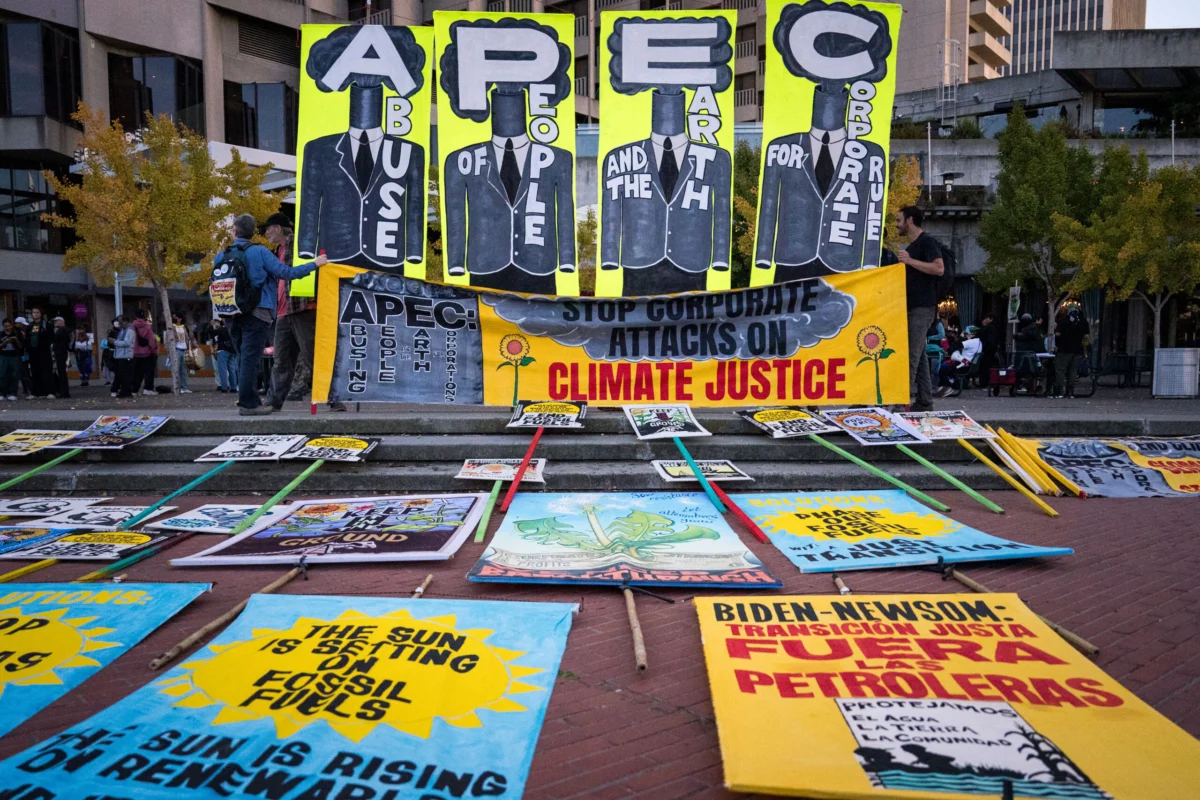
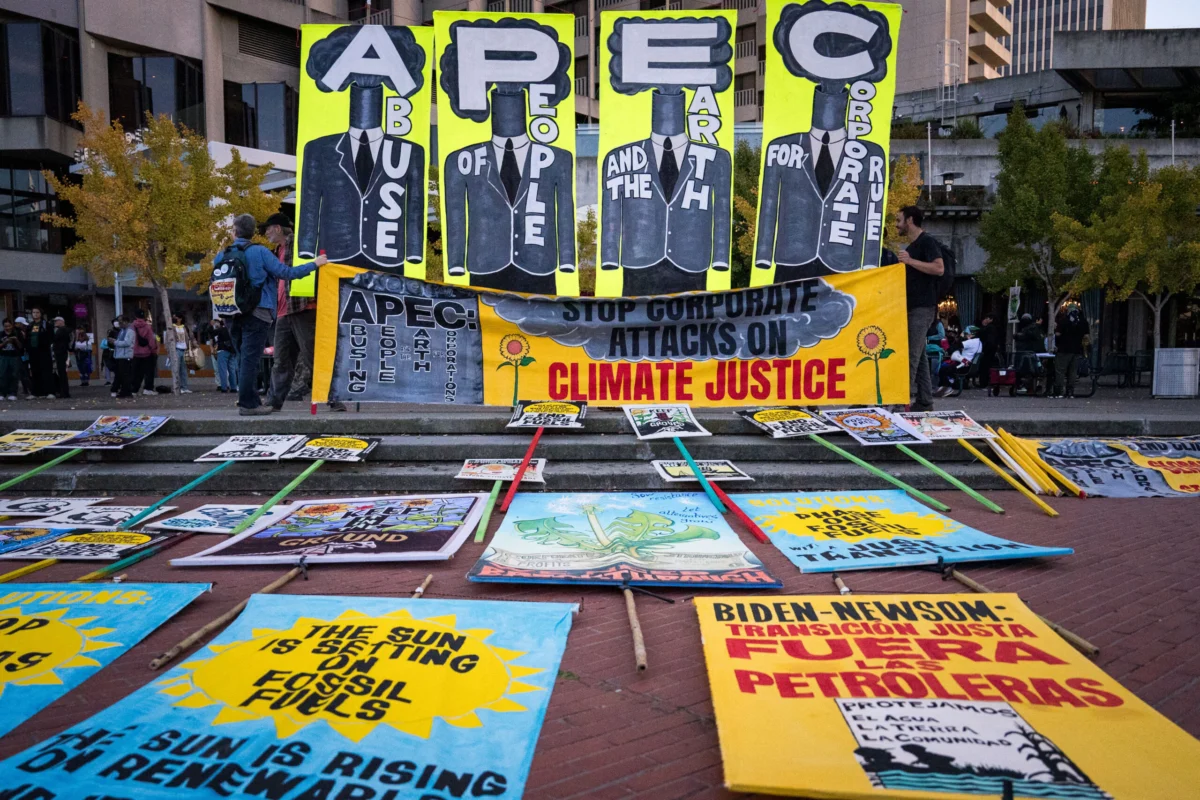
Activists argue that major regional gatherings, such as the Asia Pacific Climate Week and forums associated with the Asia Pacific Economic Cooperation (APEC), should serve as a definitive moment for both the ADB and the World Bank Group to "walk the talk." Rather than engaging in business-as-usual diplomacy, these powerful financial institutions must issue clear, public statements offering explicit support for the immediate and unconditional release of imprisoned environmental and human rights defenders. More broadly, they must commit to suspending all Just Transition-related planning processes and financial disbursements until safe, meaningful, and unhindered spaces are established for community members, workers, and civil society groups to raise questions, express concerns, and voice grievances without fear of state reprisal.
In the interim, mobilization efforts by civil society groups working outside of Vietnam to secure the freedom of Dang Dinh Bach, Hoang Thi Minh Hong, and other incarcerated defenders will continue unabated. Alongside these advocacy campaigns, collective efforts persist across the region and beyond to forge and defend processes, principles, and practices that genuinely embody an equitable, rights-based Just Transition.
Tanya Lee Roberts Davis is the Just Transitions Advocacy Coordinator at NGO Forum on ADB.