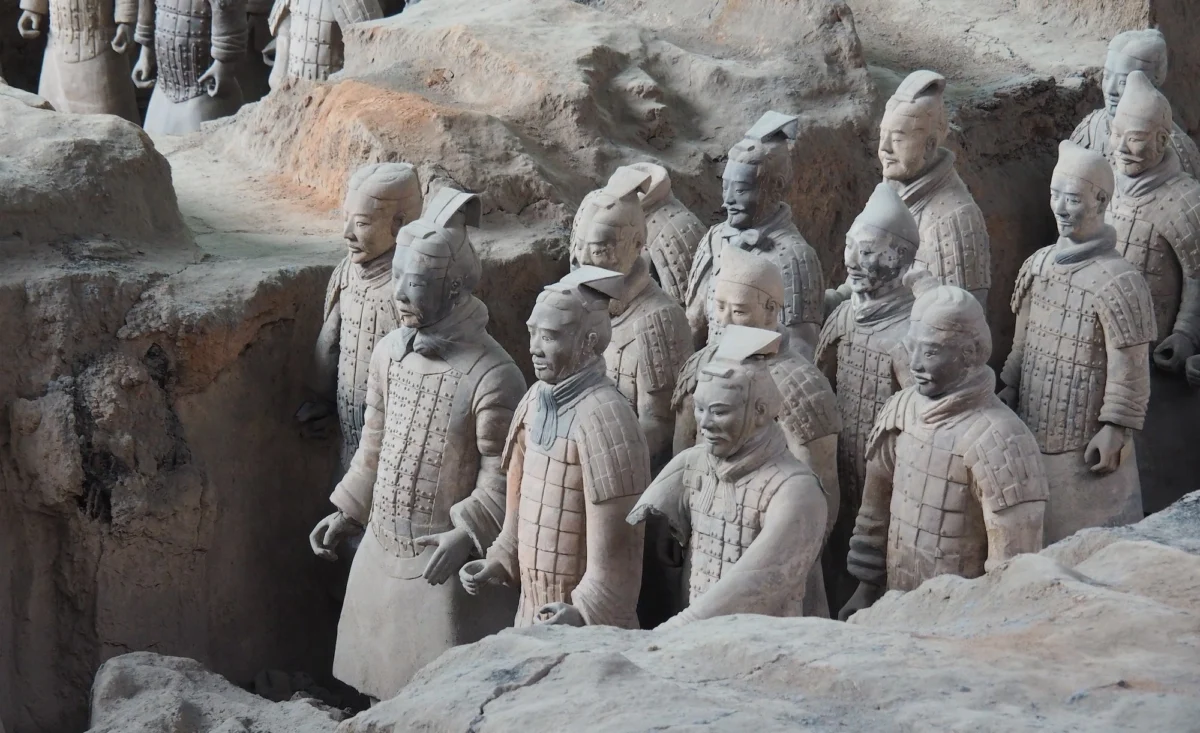
XI’AN, CHINA — For nearly half a century, the monumental Terracotta Army guarding the tomb of China’s first emperor has stood as a silent testament to imperial might, standardized production, and a society seemingly driven by the ironclad command of an absolute ruler. Discovered in 1974 by local farmers digging a well roughly a mile from the 2,200-year-old tomb of Emperor Qin Shihuangdi, the vast subterranean necropolis has long been visualized as the product of an exclusively male workforce—a massive army of adult artisans laboring under strict state supervision to construct roughly 8,000 unique soldier statues. Each figure, complete with distinct facial features, intricate hairstyles, and detailed armor, has fascinated archaeologists and historians worldwide. However, a recent analysis of microscopic physical evidence left behind in the clay suggests that the creation of this ancient wonder was far more diverse and collaborative than previously understood.
According to findings highlighted by Science Alert, a detailed forensic survey of fingerprints preserved in the clay of a sample of these famous statues reveals that men, women, and children all contributed to the meticulous labor of assembling the sculptures. Rather than relying solely on a specialized corps of adult male craftsmen, the production of the Terracotta Army involved various segments of the ancient population, painting a richer and more complex picture of imperial labor organization during the Qin Dynasty.
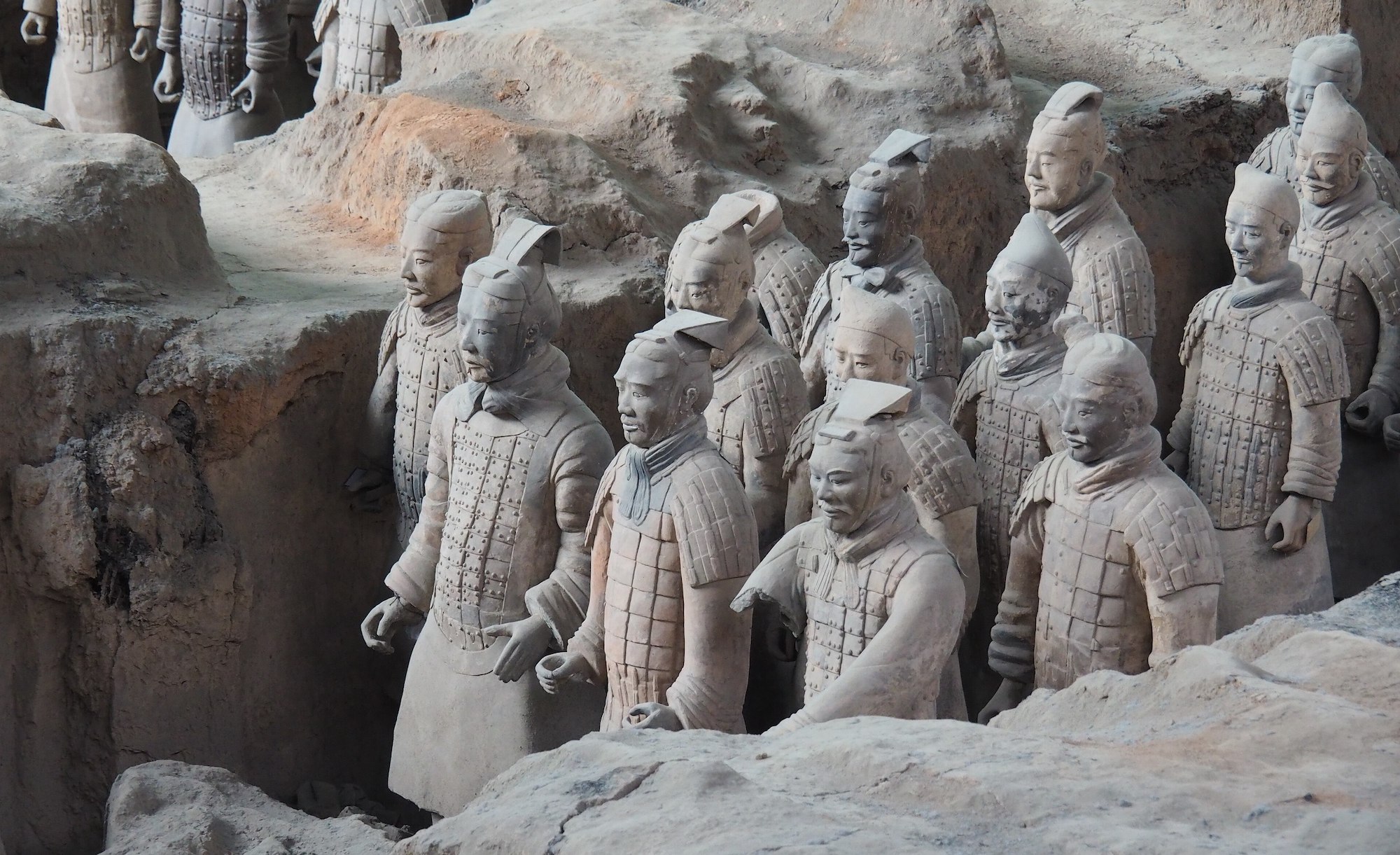
The new insights emerged from a targeted survey of 36 warrior statues recovered from a single excavation pit within the vast mausoleum complex. Researchers meticulously scanned the surfaces of these statues to locate and document any preserved tactile impressions left by the ancient creators while the clay was still malleable. Through this careful examination, a total of 91 distinct fingerprints were identified across the 36 statues.
To ensure accuracy, the research team filtered out multiple prints left by the same individuals, excluding 12 fingerprints that appeared to belong to repeat contributors. Of the 79 remaining fingerprints available for detailed analysis, the vast majority—73 in total—were left behind during the foundational stages of manufacturing, specifically during the processes of molding, shaping, and assembling the massive clay bodies of the statues. A spatial analysis of these particular impressions revealed that most were concentrated on the upper portions of the warriors, notably around their heads and arms, where the structural components were joined and refined.

The remaining six fingerprints recovered during the survey offered a glimpse into a different phase of production. These impressions were left behind during the intricate decorating process and were discovered on delicate details such as the fingernails and the waistbands of the soldiers’ elaborate armor. Every touch, preserved in the terracotta for more than two millennia, provided a direct, physical link between the modern researchers and the ancient hands that shaped the imperial guard.
Extracting demographic data from ancient fingerprints is a specialized discipline that relies on dermatoglyphics—the study of skin ridge patterns. The spatial distances between the ridges of fingerprints can serve as reliable clues to the age and sex of the person who left them, as biological patterns correlate with anatomical development. To decipher who might have worked on these 36 statues, researchers applied a sophisticated mathematical model to the measurements obtained from the 79 usable fingerprints.
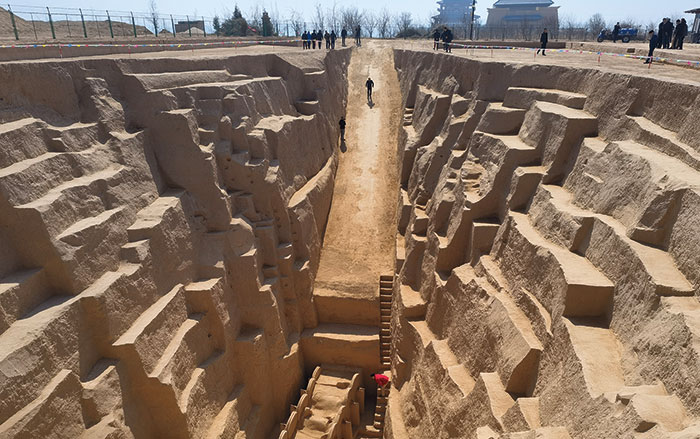
The results of this mathematical modeling challenged long-standing historical assumptions about the workforce behind Emperor Qin Shihuangdi’s underground army. The analysis indicated that about 45 percent of the analyzed prints likely belonged to adult men, aligning with traditional expectations of ancient construction labor. However, a significant portion of the impressions told a different story: approximately 32 percent of the prints pointed to women, while about 22 percent appeared to belong to children under the age of 15.
The presence of children among the artisans working on the imperial mausoleum aligns with known administrative practices of the era. According to historical records from the Qin Dynasty, youths and teenagers frequently worked in workshops as apprentices, learning specialized trades under master craftsmen. These young workers would have performed vital support tasks, helping to knead clay, transport materials, and assist in the multi-step assembly process required to construct life-sized ceramic warriors on an unprecedented industrial scale.
These findings carry significant weight for historians studying the social and economic structures of early imperial China. Xiaoxi Li of the Emperor Qin Shihuang Mausoleum Site Museum noted that the new evidence fundamentally shifts our understanding of how the massive imperial project was staffed. According to Li, these discoveries challenge the long-held assumption that Terracotta Army production relied exclusively on adult male labor, demonstrating instead that the monumental undertaking mobilized a broad cross-section of the population.
The ongoing research into the Terracotta Army continues to yield surprises, shedding light not only on the art and military strategy of ancient China but also on the everyday lives of the people who served the empire. As archaeologists apply advanced scientific techniques to artifacts recovered from the site, the individual stories of the men, women, and children who built the emperor’s afterlife guard are slowly coming to light, transforming an anonymous mass of clay figures into a testament to collective human endeavor.