ANTALYA, TURKEY — Marine archaeologists and researchers operating off the stunning and rugged coastline of southwestern Turkey have made a remarkable maritime discovery. According to recent reports from BBC News, a Bronze Age shipwreck resting quietly on the seafloor near Kekova Island has been scientifically dated to between 4,400 and 4,700 years ago, placing its final voyage deep within the early Bronze Age and making it one of the most ancient maritime relics ever identified in the region.
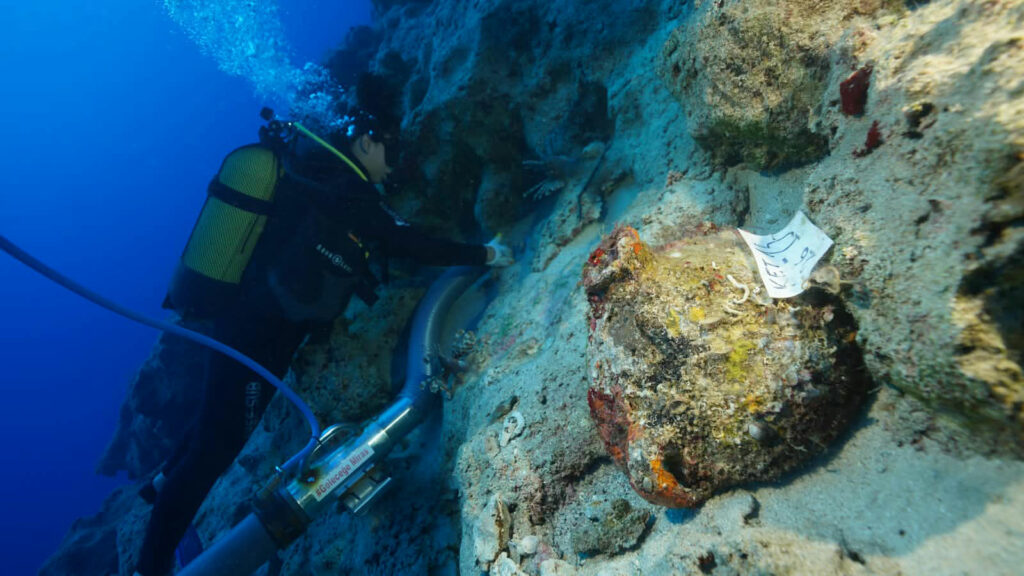
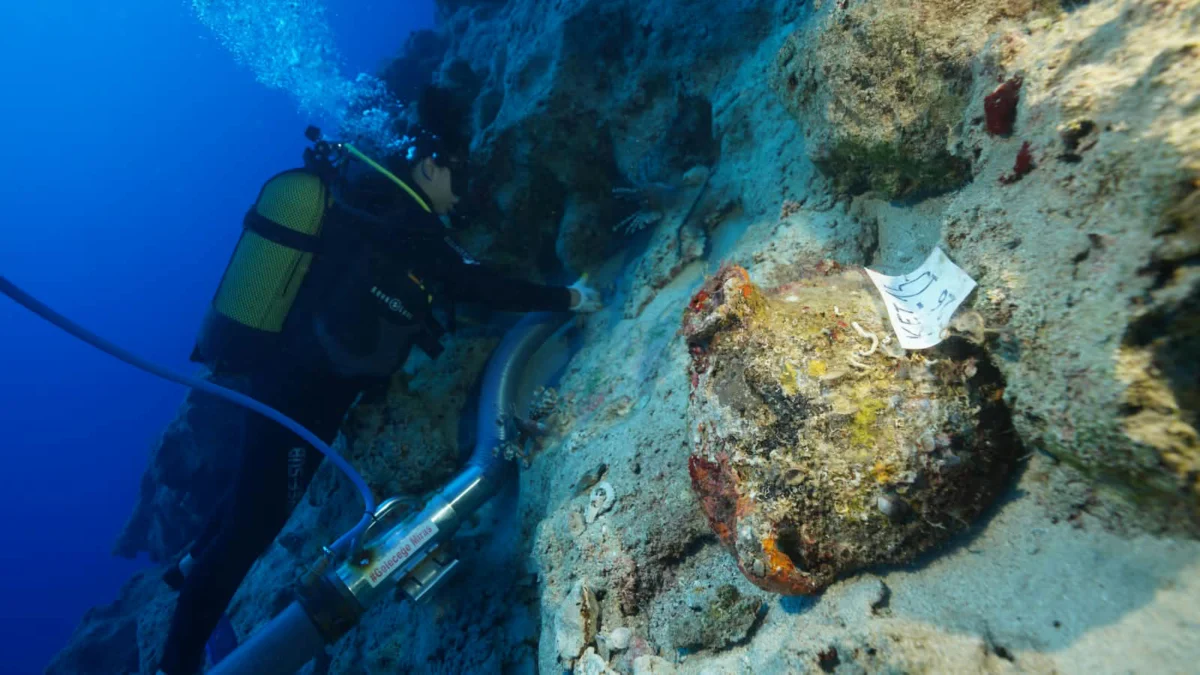
While the wooden hull of the vessel has completely disintegrated over the millennia—a common fate for organic materials submerged in warm Mediterranean waters for nearly five millennia—its enduring cargo remains remarkably intact. More than 30 ceramic amphoras, the classic two-handled storage jars of the ancient world, rest undisturbed on the dark seafloor at a depth of approximately 100 feet. Alongside these silent witnesses to ancient commerce, researchers also recovered three large stone anchors, providing vital clues about the ship’s size, engineering, and navigation methods during a formative period of human civilization and Mediterranean trade.
Hakan Öniz of Akdeniz University, a leading expert involved in the investigation, explained that the chronological dating of the wreckage was primarily achieved through a detailed analysis of the amphoras. The distinctive style, shape, and manufacturing technique of the ceramic vessels match those unearthed at contemporaneous archaeological sites in Egypt and the wider Middle East. This stylistic alignment offers a concrete chronological anchor, helping researchers confirm that the vessel sank during a time when maritime networks were rapidly expanding across the ancient Near East, connecting disparate cultures through the medium of sea trade.
Based on the cumulative volume and weight of the scattered cargo, marine archaeologists estimate that the merchant vessel was originally around 30 feet in length. While modest by modern standards, a 30-foot wooden ship would have been a standard and seaworthy coastal trader for its era, capable of carrying a significant payload of valuable commodities across open water, provided the weather and sea conditions remained favorable.
However, the waters surrounding Kekova Island have long held a reputation among mariners for being treacherous, characterized by sudden wind shifts, rocky shoals, and unpredictable currents. Researchers analyzing the ship’s likely trajectory suggest that the ill-fated trade ship had originally departed from a port located in the eastern Mediterranean. At the time of its sinking, the vessel was likely navigating northward, traveling along established maritime routes toward its intended destination in northwestern Turkey or the island of Crete. Instead of reaching its port of call, the ship encountered disaster in the perilous waters near Kekova, plunging its valuable cargo onto the seabed where it would remain hidden for nearly five millennia.
The discovery offers more than just geographic and structural insights into early seafaring; it also presents a rare scientific opportunity to reconstruct the actual commodities traded by early Bronze Age merchants. Karin Sowada of Macquarie University, whose research team is collaborating on the project, revealed that specialists are currently conducting sophisticated residue analyses on samples extracted from some of the intact, sealed amphoras recovered from the site.
"It could be olive oil, it could be wine, it could be tree resins," Sowada said, highlighting the range of high-value organic goods that drove early Mediterranean commerce. Organic residue analysis—a technique that examines absorbed lipids and chemical signatures left inside porous ancient ceramics—frequently upends assumptions about ancient diets, agricultural production, and trade economies by identifying substances that would otherwise leave no physical trace in the archaeological record.
The waters off the coast of Turkey have long been recognized by maritime historians as an underwater museum of global significance, preserving some of the world’s most famous and historically pivotal Bronze Age shipwrecks. Sites such as Cape Gelidonya and Uluburun have previously yielded breathtaking insights into the late Bronze Age "international age" of diplomacy and commerce, shedding light on the sophisticated networks of exchange that tied together the Aegean, the Levant, Egypt, and Mesopotamia.
The newly dated wreck near Kekova Island pushes the timeline of documented maritime activity in these waters even further back into antiquity, bridging the gap between local coastal seafaring and the broader, more integrated trade networks that would define the later stages of the Bronze Age. As ongoing laboratory analyses of the amphora residues progress and further archaeological surveys of the Kekova site are conducted, researchers hope to paint a clearer, more vivid picture of the brave mariners who sailed the Mediterranean at the dawn of urban civilization.