Few culinary traditions hold as firm a grasp on a nation’s cultural identity as Nasi Lemak does in Malaysia. Widely celebrated as the nation’s definitive comfort food, this seemingly simple dish of fragrant rice cooked in coconut milk anchors the daily routines of tens of millions of people stretching from the south of Thailand, down through the Malay Peninsula, and across to Singapore. Despite its widespread availability across the region, finding an exemplary version remains a pursuit for food enthusiasts and everyday diners alike. Among the capital’s countless purveyors, Nasi Lemak Tanglin in Kuala Lumpur stands out as a historic institution, having served its beloved rendition of the national dish since 1948.
Located within a bustling complex of food stalls dedicated to classic Malaysian breakfast and midday fare, Nasi Lemak Tanglin draws a dedicated crowd daily, rain or shine. A visit on a recent Friday afternoon underscored the restaurant’s enduring popularity, as the surrounding parking lot was filled to capacity, requiring motorists to circle multiple times before securing a space. While neighboring stalls offer an array of appealing regional specialties, local wisdom consistently points newcomers and returning patrons alike directly to Tanglin as the premier destination for the dish.
Rain or Shine, Nasi Lemak Tanglin Sells Out Daily
As the morning approached 10:00 AM, hundreds of patrons converged on the open-air seating area, prompting staff to quickly extend protective awnings against potential rain showers. The vibrant atmosphere is further energized by live musical performances featuring the distinctive local Malay style of "Pop Yeh Yeh"—a genre of pop and psychedelic rock popular across Malaysia and Singapore during the 1960s. This musical backdrop helps ease the brief wait times that are standard during peak hours.
Regular patrons and local guides offer a reliable guarantee regarding the stall’s daily operations: Tanglin consistently sells out of its rice and accompanying ingredients every single day. Consequently, diners are strongly advised to arrive well before the traditional lunch hour rush, as the counters are often completely empty by 11:30 AM.
The Anatomy of ‘Fat Rice’
Literally translating to "fat rice" in Malay, Nasi Lemak belies its simple name with layers of meticulous preparation and regional variation. The foundation of the dish begins with rice infused with rich coconut milk to soften the grains during cooking, accompanied by knotted pandan leaves that impart a gentle, recognizable fragrance.
Traditional accompaniments are carefully balanced to provide contrasting textures and flavors, typically featuring salted fish, crisp fried peanuts, and fresh slices of cucumber. Central to the experience is the sambal—a chili paste that appears deceptively simple but requires considerable time and technique to produce. Balancing spicy, tangy, and occasionally sweet notes if fruit ingredients are incorporated, the sambal acts as the unifying element that ties the disparate components of the dish together when mixed into the rice.

Beyond its cultural significance, Nasi Lemak serves as an accessible, budget-friendly option for travelers navigating Malaysia’s diverse culinary landscape, offering a window into everyday local dining habits.
A Traditional Counter Service Experience
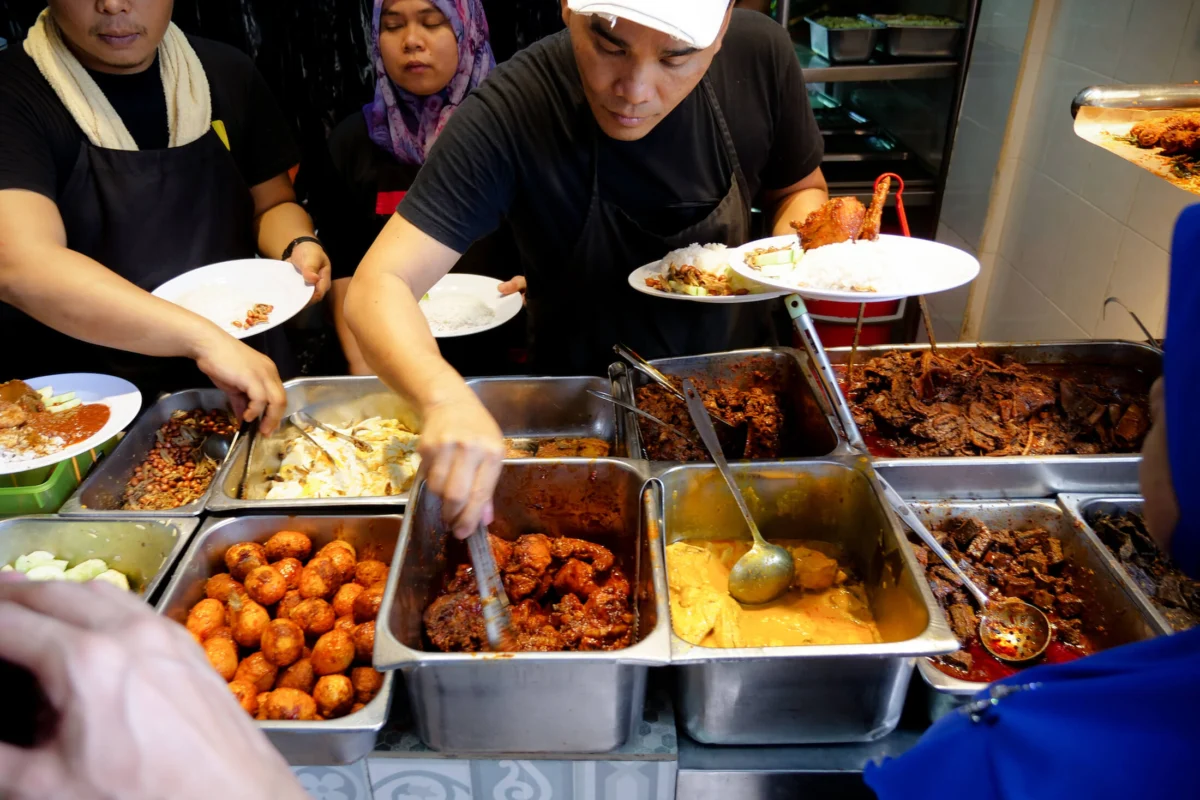
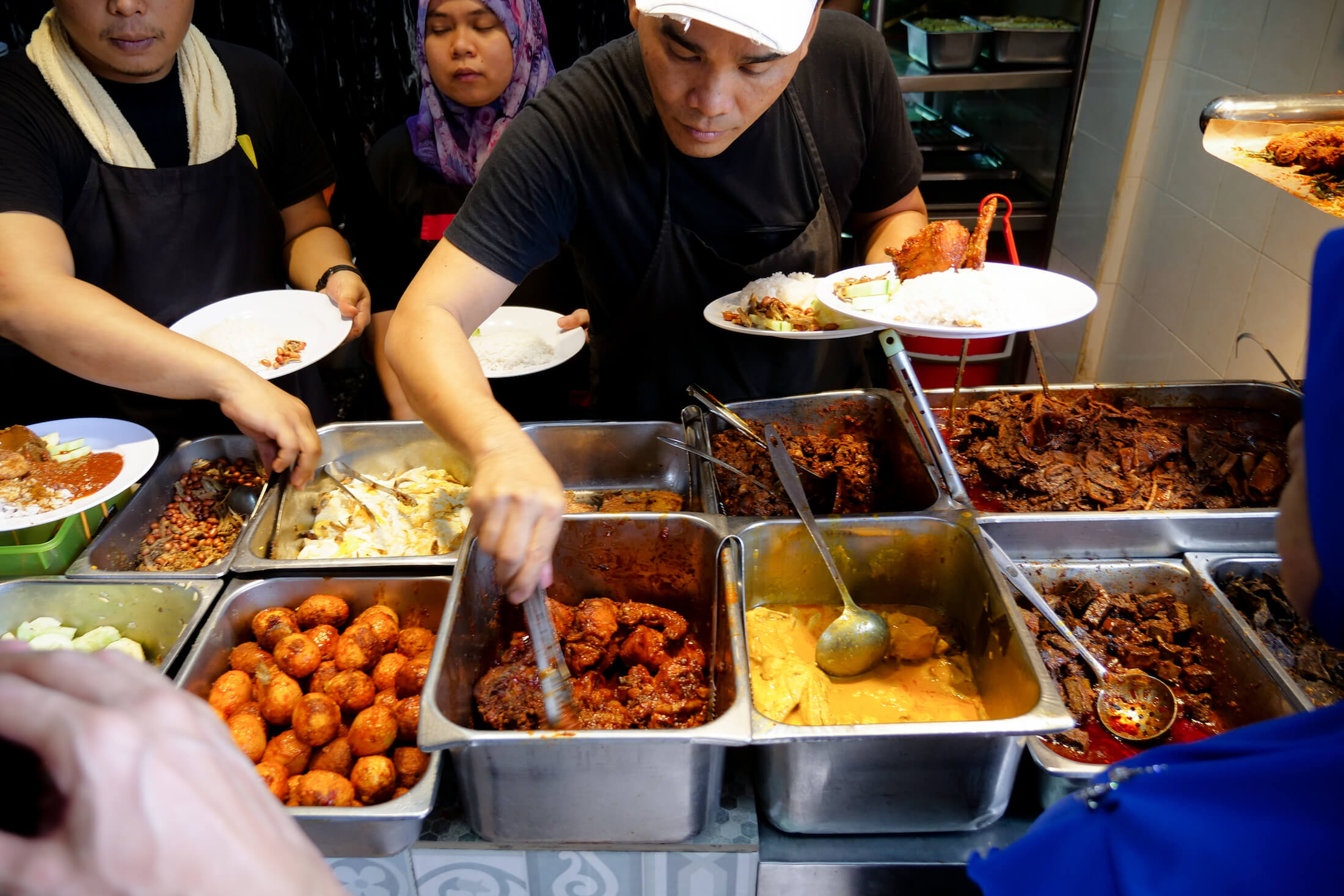
The ordering process at Nasi Lemak Tanglin is rooted in efficiency and personal customization. Diners join the queue at the main counter to receive a base portion of coconut rice before navigating an extensive selection of curries, meats, and side dishes. Staff members skillfully ladle chosen curries and proteins directly onto the plate, allowing customers to pay conveniently while holding their meals.
In recent years, the establishment has shifted away from the traditional banana leaf serving style in favor of reusable plates. This operational change not only accelerates service and reduces waste, aligning with broader national initiatives to curb single-use plastics, but also supports environmental efforts to protect delicate jungle ecosystems from the over-harvesting of banana trees.

Customizing the Plate with Curries and Traditional Delicacies
Part of the appeal of Nasi Lemak Tanglin lies in the sheer variety of toppings available to layer over the rice. While dining companions might gravitate toward cockles or traditional rendang made with beef, local recommendations frequently highlight less common proteins, such as beef spleen and intestines, locally known as kolong.
Prepared under a generous blanket of thick, dark brown curry sauce, the beef spleen offers an exceptionally rich, creamy texture that contrasts sharply with the crunchy peanuts and cucumbers. Diners often request a complementary ladle of leftover curry broth—frequently sourced from the beef rendang—poured directly over any visible patches of white rice, ensuring that every grain absorbs the complex spices. A fried egg is routinely added to complete the plate, a universal enhancement that elevates the dish further.
When consuming the meal, diners often follow local custom by mixing the components thoroughly with their fingers, allowing the warm curry broth to coat each individual grain in a manner that utensils cannot replicate.

A Lasting Culinary Landmark in Kuala Lumpur
The experience of dining at Nasi Lemak Tanglin extends beyond the food itself, offering an authentic glimpse into Kuala Lumpur’s lively midday culture. Set against a backdrop of open-air tents and lush surroundings, the combination of traditional cuisine, brisk service, and live musical entertainment creates a welcoming environment for both locals and visitors.
For travelers exploring the diverse food scene of Malaysia’s capital, a visit to Nasi Lemak Tanglin offers a direct connection to a post-independence culinary tradition that continues to thrive.
Name: Nasi Lemak Tanglin
Location: Kompleks Makan Tanglin
Hours: Open daily from 7:00 AM to 1:00 PM
Prices: A single base plate of Nasi Lemak is priced at 2 Malaysian Ringgit, with additional eggs and meat items ranging from 1 to 5 Ringgit more per plate. A complete meal for four people typically totals approximately 35 Ringgit, or roughly $8.50 USD.