Hainanese Chicken Rice stands as one of the most recognizable and universally beloved street foods across the bustling urban centers of Southeast Asia. Yet, within Malaysia, certain culinary pockets offer experiences that transcend the ordinary. Among these is the historical coastal city of Melaka, home to a food culture shaped by centuries of trade, migration, and multicultural exchange. Situated high on local and international dining recommendations alike is a modest yet legendary establishment: Kedai Kopi Chung Wah.
Renowned for pioneering and perfecting the art of the Hainanese chicken rice ball, this family-run institution offers a culinary experience so distinct that it routinely draws travelers from afar. Pairing freshly chopped, aromatic chicken with meticulously handcrafted rice spheres, Kedai Kopi Chung Wah represents a living testament to culinary heritage that is well worth the journey.
Melaka, Malaysia
It would be a considerable understatement to describe Melaka as merely popular among modern tourists. The city’s strategic geography along the Strait of Malacca has made it a magnet for global travelers since the middle of the 15th century, drawing merchants and voyagers from across Asia and as far away as Europe.
Long before modern tourism arrived, ocean-faring ships from China docked along these shores, carrying immigrants who would leave an indelible mark on the region’s culinary identity. While Hainanese chicken rice is distinctly a Chinese contribution to Southeast Asia rather than a Peranakan creation, it exists alongside a rich tapestry of local food traditions. Melaka and Malaysia as a whole offer diverse gastronomic landscapes, encompassing the unique heritage of Peranakan and Nyonya cultures, where history and cuisine are deeply intertwined.
Hainanese Rice Balls
At first glance, the presentation at Kedai Kopi Chung Wah defies expectations. Rather than the loose, fluffy grains typically associated with steamed rice dishes, the staple here is served in tightly packed, hand-formed spheres. Exploring unfamiliar culinary traditions remains one of life’s great pleasures, and discovering how different cultures adapt staple ingredients offers a fascinating look into human connection through food.
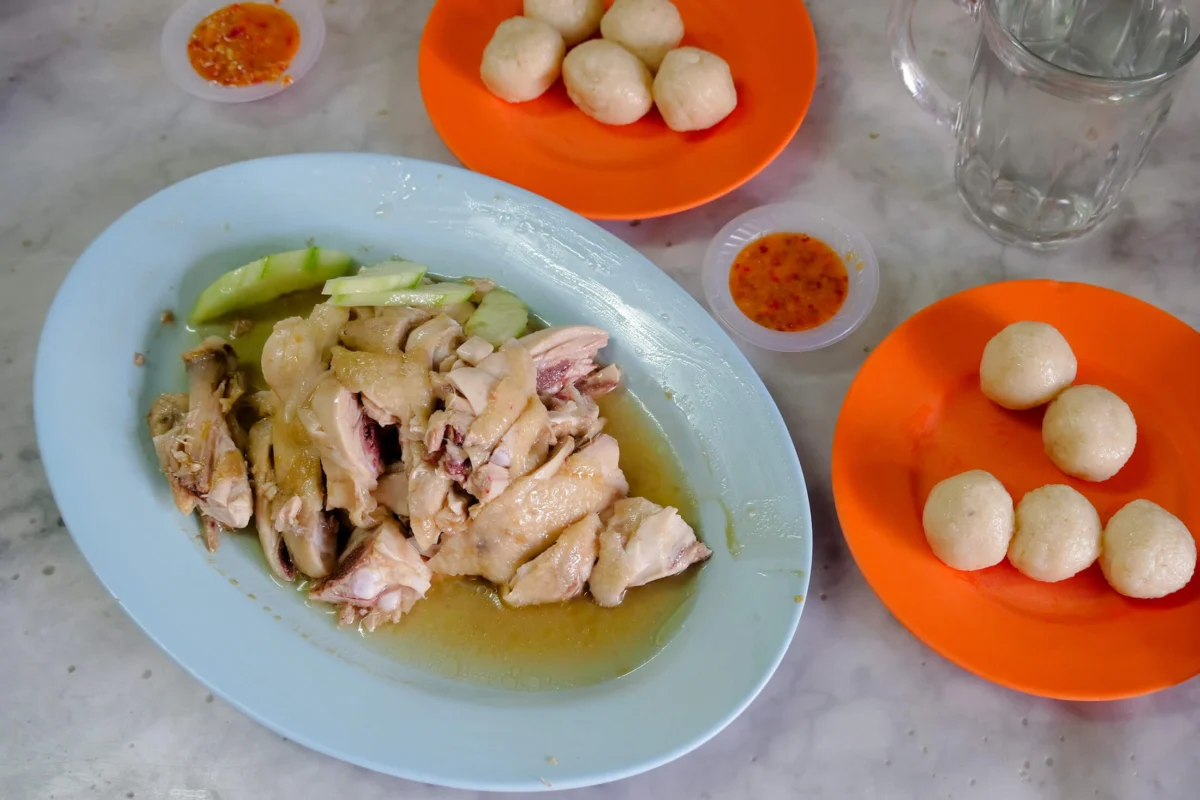
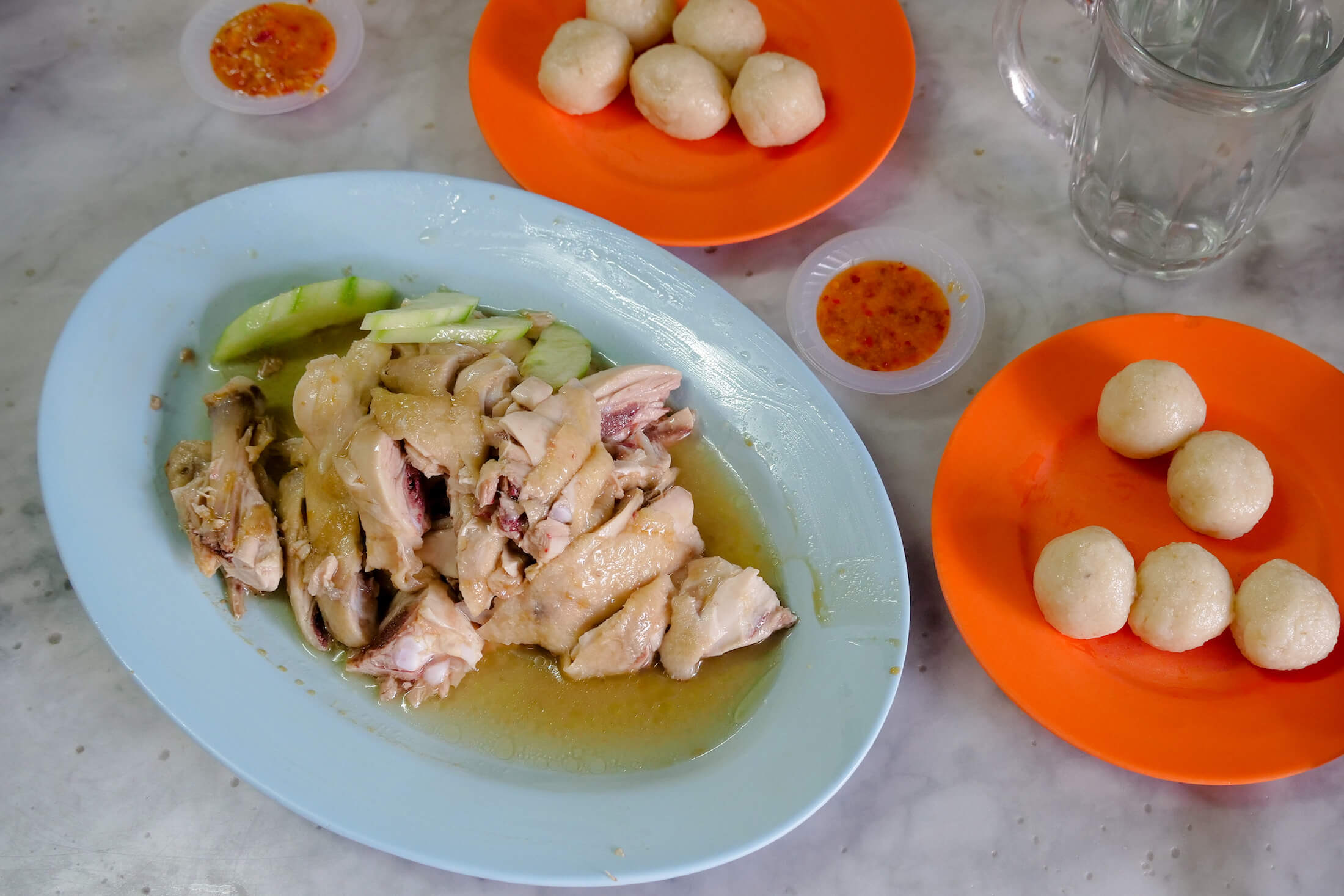
Unlike standard steamed rice, these spheres possess a surprising structural integrity. Servers can roll them effortlessly across a plate, their firm texture defying the initial visual impression. Although white in color, the hue differs noticeably from standard varieties, and the individual grains merge together so seamlessly that an uninitiated diner might easily mistake them for glutinous or sticky rice.

How to Order
Navigating the bustling dining room at Kedai Kopi Chung Wah is a remarkably streamlined process born of decades of high-volume service. Upon entering, the ordering system requires guests to simply count the number of people in their party, which dictates the corresponding number of plates of rice balls. Diners then specify their chicken preference, choosing strictly between a half-portion or a whole bird.
Service moves at a blistering pace, often resulting in guests securing a table simultaneously with the server delivering the food. The steady line spilling out onto the pavement is a testament to the restaurant’s enduring popularity. While the atmosphere is vibrant and efficient, it is not designed for lingering, as patrons quickly make way for the next wave of hungry visitors.
Behind the Scenes
Although Hainanese chicken rice can appear deceptively simple, creating this iconic Southeast Asian staple requires rigorous preparation and meticulous attention to detail. Practitioners of the craft understand that skipping steps is not an option, and the multi-generational family running Kedai Kopi Chung Wah works tirelessly to uphold their ancestral standards.

The chefs chop the poultry at a rapid pace to keep up with the relentless lunchtime rush. Visitors often adopt a divide-and-conquer strategy, with one person scouting for a scarce table while another stands in line to place the order. Once seated, diners are encouraged to sample the chicken while it remains steaming hot. The skin of each piece is exceptionally tender, carrying deep aromatic notes infused during the preparation process.
While the chicken itself serves as a reliable foundation, the accompanying chili and vinegar-based dipping sauce elevates the meal to extraordinary heights. Heavy on garlic and delivering a sharp, tangy, and subtly spicy punch, the sauce represents a brilliant fusion of Chinese culinary roots with distinctly local Malay flavor profiles. The harmonious balance bridges distant culinary traditions, leaving many diners wishing they could capture the recipe to replicate at home.
The centerpiece of the meal—and the primary draw for the daily queues—remains the famous chicken rice balls. Distinct in both appearance and aroma, the rice carries a subtle, smoky fragrance reminiscent of the prized, slightly caramelized crust found at the bottom of a traditional rice cooker. Historical accounts indicate that these compressed spheres were originally invented by Hainanese families seeking a portable, convenient meal for picnics and journeys into the hills. By bringing this tradition abroad to Malaysia, the Hainanese community created a uniquely practical and travel-friendly dish that continues to delight generations of diners.

The Restaurant
True to its name, which incorporates the Malay word "kopi" for coffee, the establishment closely resembles a traditional kopitiam. Patrons frequently pair their meal with iced coffee or traditional Chinese tea. Located right across a flower-adorned bridge on a prominent corner facing Jonker Street—Melaka’s most famous pedestrian thoroughfare—the restaurant commands a prime location despite the inevitable wait times.
Operations typically begin promptly at 9:00 AM, and arriving early is the best strategy to secure a table before the morning rush peaks. Visitors arriving by vehicle should exercise caution with nearby parking, as local street markings can occasionally prove ambiguous. For those continuing their culinary journey through Malaysia, exploring the coastal regions of Kelantan and Terangganu in the northeast offers further rewards, including distinctive regional specialties like tempoyak, a prized local preparation of fermented durian.
Name: Kedai Kopi Chung Wah
Location: Jonker Street, Melaka, Malaysia
Hours: 9:00 AM to 3:00 PM on weekdays, 9:00 AM to 4:00 PM on weekends
Prices: Standard meals average around 28 Malaysian Ringgit (approximately US$6.77)