"The sixth level is the most spectacular… and most scary."
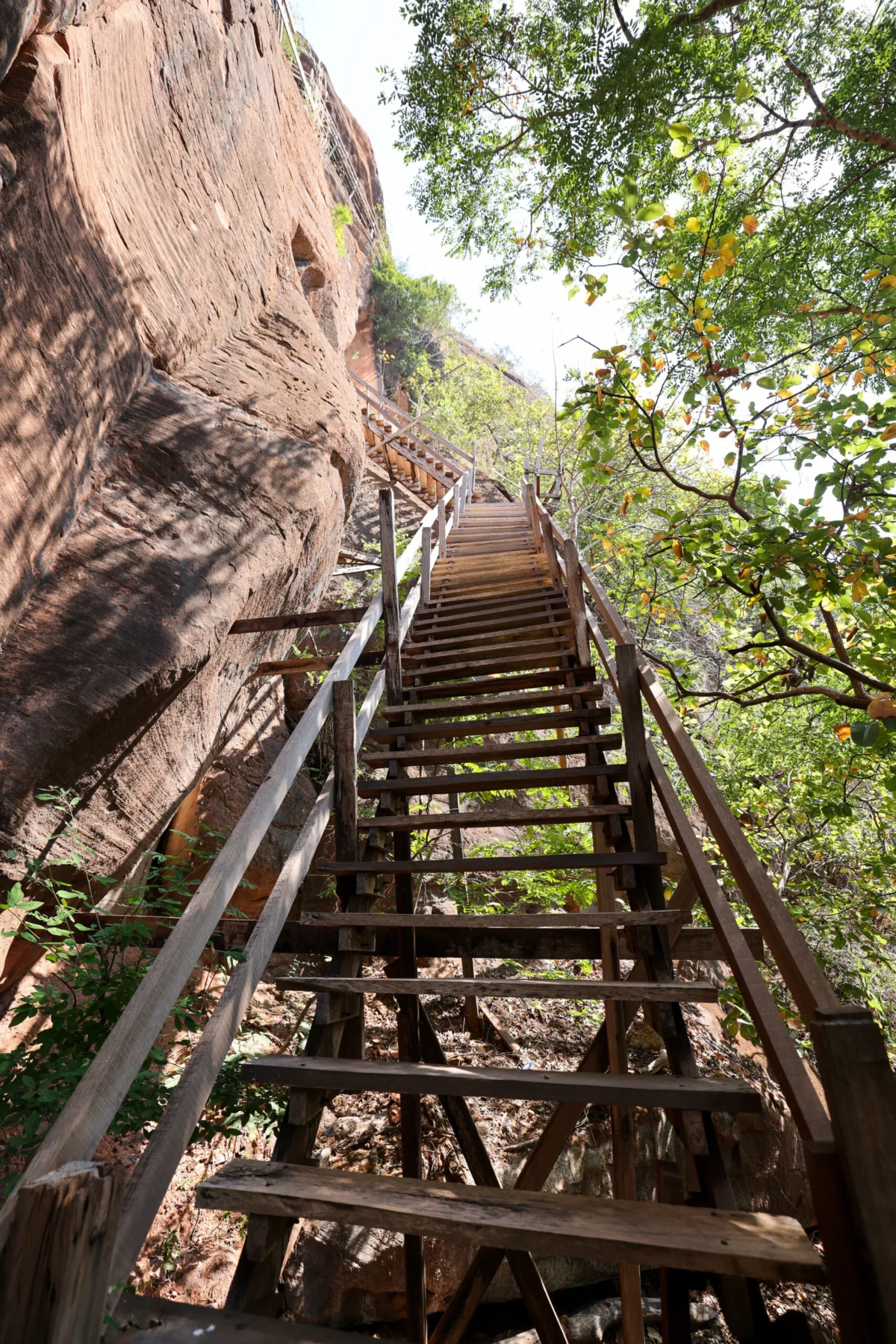
That was the recurring warning passed between travelers as they navigated the labyrinth of rickety wooden stairs and suspended ladders climbing the sheer red rock of Phu Tok in Thailand’s remote Bueng Kan province. Rising steeply from the flat landscape of the far northeastern Isan region, Wat Phu Tok stands as one of the most unique, visually arresting, and heart-pounding architectural marvels in Southeast Asia.
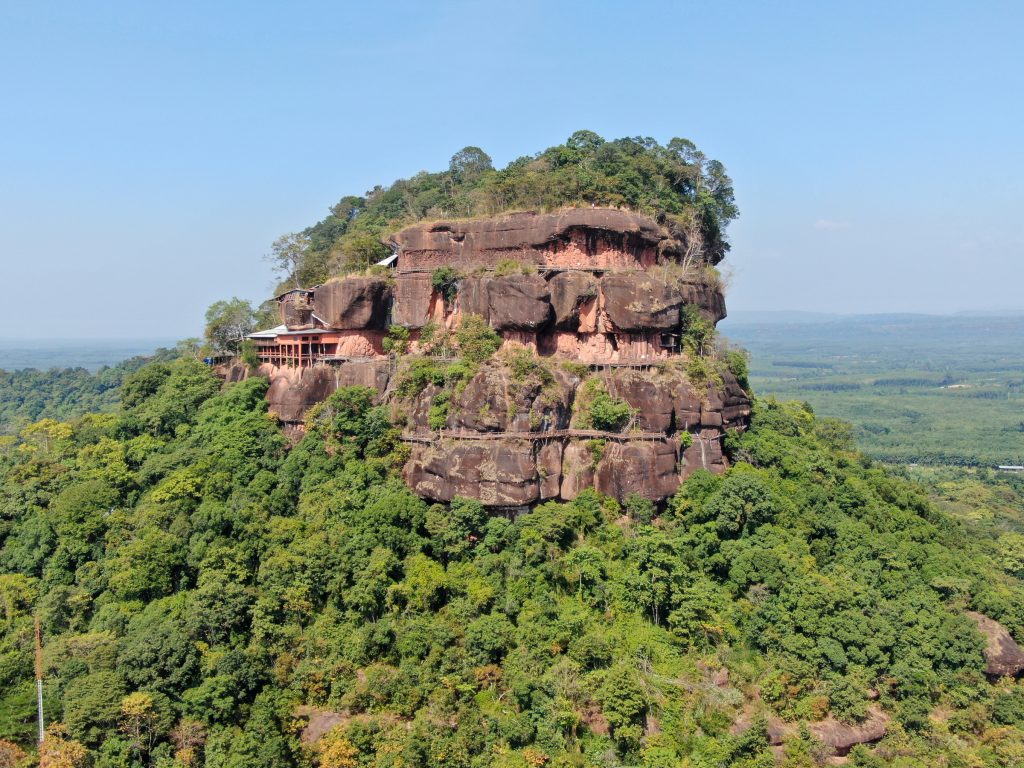
Located far off the conventional tourist trail, the temple challenges visitors with a combination of isolated natural beauty and an intricate system of wooden walkways clinging directly to the face of a vertical cliff. For travelers willing to venture into Thailand’s less-visited provinces, Wat Phu Tok offers an unforgettable journey into peace, endless open spaces, and raw adventure.
Officially named Wat Jetiyakhiri, the site is universally known by locals as Wat Phu Tok. In the regional Isan dialect, "Phu Tok" translates directly to "lonely mountain"—a fitting description for the isolated 359-meter-high sandstone formation that rises abruptly out of the surrounding countryside, bearing a striking resemblance to a smaller version of Sigiriya in Sri Lanka.

The mountain’s rugged terrain and remote geographic setting have historically made it a natural sanctuary for wildlife, particularly venomous snakes. Over generations, this same isolation, combined with a striking natural landscape and an inherent element of physical danger, transformed the location into an ideal retreat for Buddhist monks seeking solitude, meditation, and spiritual testing.
The complex was originally founded by the revered monk Luang Pu Juan, who envisioned and directed the construction of the intricate network of wooden staircases, ladders, and horizontal pathways that weave around the mountain. These man-made structures were deliberately designed to connect a series of scattered shrines, caves, and meditation niches. Architecturally and spiritually, the mountain was divided into seven distinct levels, intentionally corresponding to the seven stages of Buddhist enlightenment and meditation. Although Luang Pu Juan tragically passed away in an aircraft accident years ago, the temple grounds continue to be meticulously maintained, preserving a majestic and deeply spiritual atmosphere.

Reaching the site requires a brief thirty-minute drive from Bueng Kan city. Visitors arrive at a spacious complex featuring a large temple at the base, bordered by a scenic lake and expansive parklands with ample parking. From the base, the trail toward the mountain is immediately apparent. After passing through the main entrance gate, the path transitions almost immediately from a dirt trail into wooden plank staircases.
Initially, the ascent is gentle and unassuming. However, as the trail progresses higher up the mountain face, the staircases grow increasingly steep, eventually transforming into vertical ladder-like structures. Despite the steep angles and the slight bounce of the wooden planks underfoot, the construction feels remarkably secure and stable, offering reassurance to those tackling the climb. The lower tiers feature occasional shrines, but the true journey begins further up the vertical ascent.

Arriving at the fifth level, visitors encounter a dramatic shift in the landscape. This tier serves as the primary hub for the temple complex, housing numerous shrines, prayer halls, and the mountain’s largest ordination hall. Unlike the narrow cliffside paths found elsewhere, much of the trail on the fifth level sits securely on solid ground, allowing for easier navigation among the various religious structures.
Just off the main trail, a rewarding detour leads visitors along an elevated rock walkway connected to a small wooden bridge. This pathway leads to an isolated rock temple tucked away against the side of the main mountain. Though slightly off the main circumference trail, this secluded sanctuary provides one of the most picturesque and serene encounters on the mountain, rivaling the famous upper tiers in visual impact.

Ascending another steep flight of wooden stairs brings travelers to the widely anticipated sixth level. Comprising a circuit where roughly half the path is anchored directly into the side of the vertical rock cliff and the other half rests on natural ground, this tier is the undeniable highlight of the temple complex. The suspended wooden plank walkways offer an experience that is equal parts exhilarating and terrifying.
While the cantilevered walkways are stable and well-maintained—providing a manageable trek even for those with a fear of heights—navigating them requires constant attention and caution, as a single misstep along the cliff edge could prove fatal. From this vantage point, unobstructed panoramic views stretch across the lush green canopies of Bueng Kan and the distant Mekong River basin. The fresh mountain breeze and sweeping vistas in every direction reward those who make the complete circuit around the cliff face.

Beyond the sixth tier lies the seventh and final level. Known locally for its dense population of venomous snakes, access to the topmost tier is undertaken strictly at one’s own risk. The summit features no shrines, elevated walkways, or elaborate structures; it is simply the natural crown of the mountain. While a careful ascent to the correct vantage point reveals additional sweeping views, most visitors agree that the architectural marvels and unique atmosphere of the sixth level capture the true essence of Wat Phu Tok.
Through its combination of spiritual dedication and daring engineering, Wat Phu Tok remains an extraordinary testament to human endeavor set against the untamed backdrop of Thailand’s northeastern frontier.