For many UAE residents, the planning of a European vacation has become an increasingly stressful endeavor, often dictated by the daunting prospect of securing a Schengen visa. In an attempt to navigate long wait times and limited appointment availability, a pervasive belief has taken root: the so-called "small country trick." This strategy involves applying for a visa through less popular or smaller Schengen member states—such as Luxembourg or Malta—in the hope that their consulates process applications more quickly than the high-demand hubs of France, Italy, or Germany.
However, according to Monaz Billimoria, the UAE Regional Director of VFS Global, this common strategy is not only a myth but a dangerous miscalculation that can lead to immediate visa refusal and long-term consequences for an applicant’s travel history. Far from providing a shortcut, attempting to manipulate the system by choosing an incorrect country of application is a violation of the EU Visa Code, and officials are increasingly adept at identifying such patterns.
The Legal Framework of Visa Competence
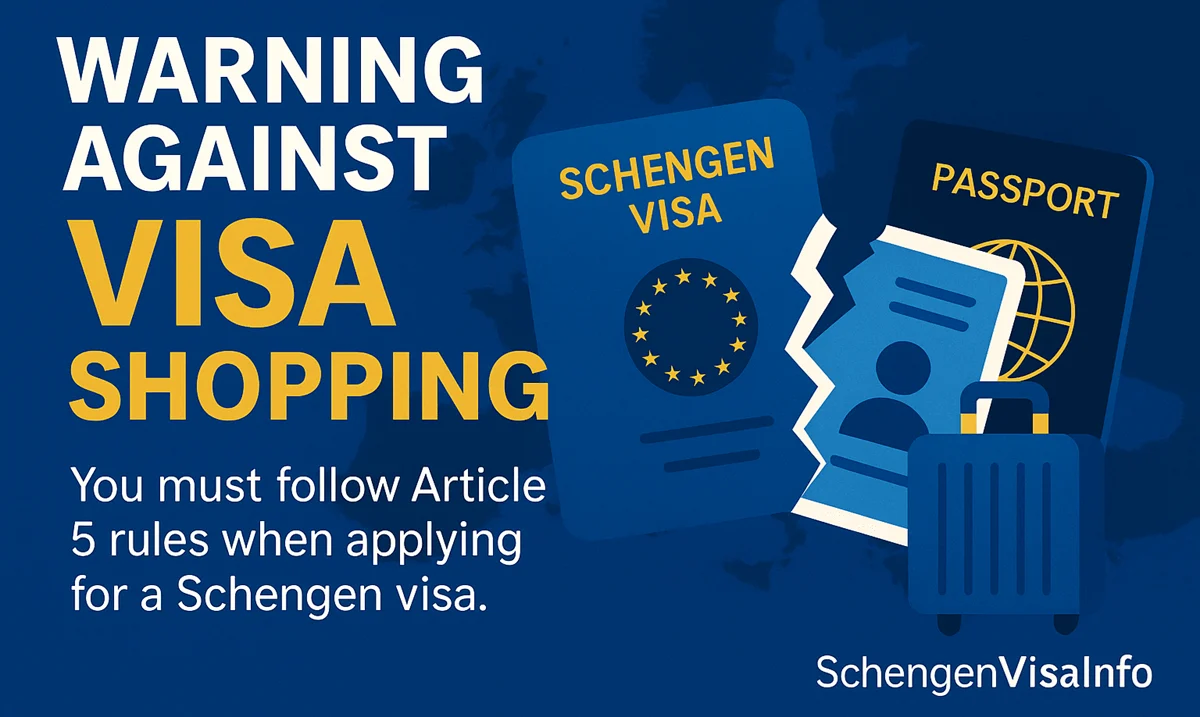
The regulations governing Schengen visa applications are not arbitrary; they are strictly defined under the EU Visa Code (Regulation 810/2009). Article 5 of this code establishes a clear, non-negotiable hierarchy for determining which member state is responsible for processing a visa application. The law dictates that applicants must apply to the country that serves as their primary destination. If the traveler intends to visit multiple countries, the competent member state is the one where they will be staying for the maximum number of days. If the stay is equal across several countries, the applicant must apply to the member state of first entry.
"The Schengen law says you need to apply to the country that you’re traveling to or the country where you’re going to be staying the maximum amount of days," Billimoria explained. "They enforce this rule very strictly. If you don’t, then there is a possibility that they will refuse you."
This enforcement is not merely a formality; it is a security measure. When a visa is refused, that decision is logged into the Visa Information System (VIS), a centralized database used by all Schengen member states. A refusal on one’s record is permanent and highly visible to every consulate in the Schengen area, which can trigger additional scrutiny or outright rejection for any future applications, regardless of which country the applicant later chooses to approach.
The Fast-Track Fallacy
The "small country trick" is often fueled by the false belief that some consulates offer expedited services or that "anything will do" when it comes to selecting a destination. Billimoria was categorical in debunking these notions. Within the Schengen system, there are no official provisions for fast-tracking or paying extra fees to jump the queue, regardless of how urgent a traveler’s personal circumstances may be.
This creates a stark contrast to the experiences of UAE residents applying for visas to other regions, such as the United Kingdom. The UK’s visa system, for instance, provides a degree of predictability, often guaranteeing appointment availability within a five-working-day window. This reliability has led many UAE-based travelers to favor the UK, but applying this expectation to the Schengen system is a recipe for frustration.
"Please first decide where you’re going and please apply to the Schengen country you’re supposed to be traveling to," Billimoria advised. "Please do not come to us and say anything will do. There is no such thing as anything."
Besart Bajrami, founder of the information portal SchengenVisaInfo, notes that many of the refusals he observes stem from a fundamental misunderstanding of the application process. Consular officers are trained to cross-reference every element of an application, including flight itineraries, hotel bookings, and travel plans. When a discrepancy appears—for instance, an applicant claiming they are traveling to Malta, while their itinerary clearly shows eight days in Germany and only two in Malta—the application is flagged for violation of Article 5.
"The issue here isn’t how to ‘play’ the game; this is about following EU laws," Bajrami observed. "Using the appropriate member state may be less convenient, however it demonstrates your understanding and compliance with the laws and regulations and builds stronger cases."
Shifting Trends in Travel Patterns
While appointment scarcity remains a significant pain point for travelers, there are emerging behavioral shifts that may help alleviate some of the pressure. UAE residents are increasingly moving away from the "summer-only" travel mindset, opting to explore Europe during the shoulder seasons of autumn and winter.
This shift is driven by a combination of factors, including lower costs, better logistics, and the desire to avoid the intense crowding of the peak summer months. There has been a notable surge in demand for Nordic countries during December, as travelers seek out seasonal experiences like the Northern Lights. By diversifying their travel calendars, residents are not only finding more affordable and enjoyable travel conditions but are also helping to spread demand more evenly throughout the year, potentially easing the bottlenecks that typically define the summer peak.
The Peril of Fraudulent Agents
The high level of anxiety surrounding visa availability has created a breeding ground for exploitation. Unscrupulous agents often prey on desperate travelers, promising "guaranteed" appointments or "expedited" processing in exchange for high fees. Billimoria issued a stern warning against these entities, emphasizing that they operate entirely outside of the authorized channels.
"These types of agents operate outside of the valid processes and channels of embassies and authorized visa centers like VFS Global and therefore should be avoided," Billimoria stated. "If you are looking for a visa, do not fall victim to these types of scams."
Official applications should only be processed through authorized centers or directly through embassy portals. Any third-party service claiming to provide "inside access" or special, secret processing routes should be treated with extreme skepticism. The reality is that no private agency can override the official protocols established by the Schengen member states.
Border Control: The Final Hurdle
Even if a traveler manages to secure a visa through an improper application, their challenges are far from over. Securing a visa is not a guarantee of entry; border control agents are empowered to inspect the validity of a traveler’s intent at the point of entry.
Border guards frequently question travelers about their itineraries, the duration of their stay, and the purpose of their trip. If a traveler presents a visa issued by Luxembourg but cannot provide a coherent explanation for why they are spending the entirety of their trip in France, they risk being denied entry at the border. The consequences of such a denial are significant and can result in the immediate revocation of the visa and a mark on the traveler’s record.
The danger often intensifies during the exit phase. When a traveler leaves the Schengen area, immigration officials have the opportunity to review the entirety of their stay. If a traveler exits with a Maltese visa but their travel records show they spent the entire duration of their trip in Spain, the discrepancy is noted. This information is entered into the Schengen Information System (SIS).
"Visa shopping does not always go undetected," Bajrami noted. "Although travelers may be able to enter a country without any problems, there will usually be discrepancies noted by immigration officials between the countries on the traveler’s itinerary and the country that has issued them a visa. The SIS records these discrepancies; they become available for use by all consular offices when an applicant applies for a visa for another time; and as such may cause increased scrutiny or may even result in refusal for many years into the future."
Ultimately, the best approach for UAE residents remains the most transparent one: identify the primary destination based on the intended stay, ensure all documentation is accurate, and adhere strictly to the rules of the EU Visa Code. Taking shortcuts may feel like a solution in the short term, but the potential for long-term damage to one’s ability to travel to Europe is a risk that few should be willing to take.