Watching recent world events and conflicts unfold across global headlines brings a recurring, sobering realization to the forefront: the immense challenge of humanizing far-away tragedies. In an era saturated with round-the-clock news feeds, casualty statistics, and distant geopolitical turmoil, it is easy for human suffering to become reduced to mere data points. Yet, throughout history, artists have possessed a unique and vital ability to pierce through this emotional numbness, translating abstract geopolitical violence into visceral, shared human experiences.
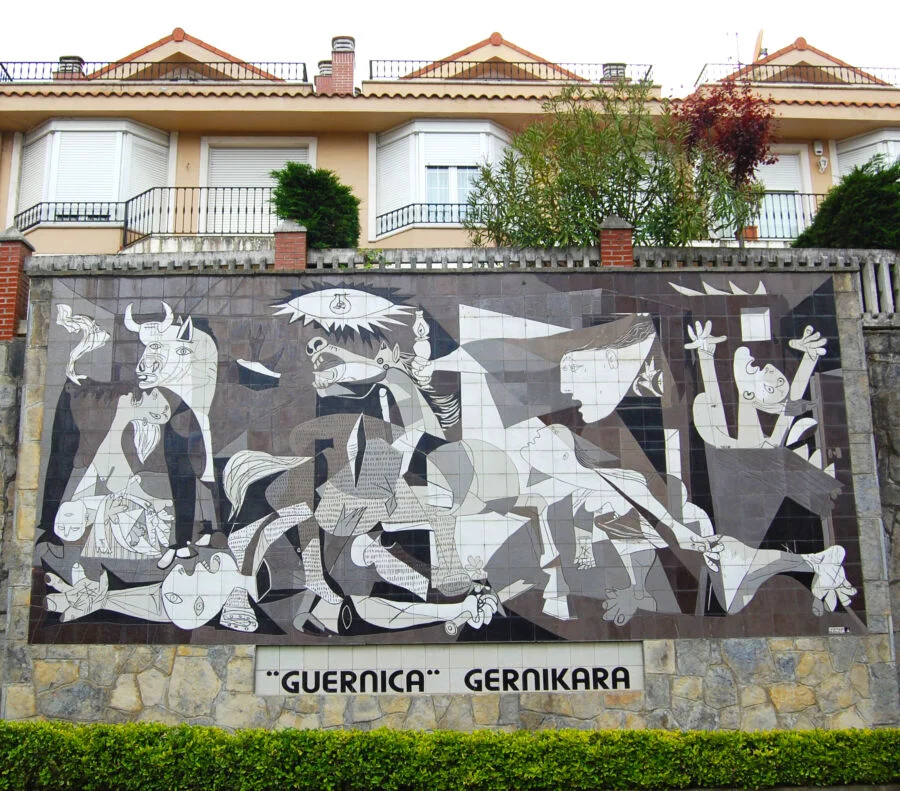
Among the most powerful examples of this artistic intervention is Pablo Picasso’s monumental painting, "Guernica." Stretching more than 25 feet wide, the masterpiece is not merely a towering achievement in modern art history; it is a historical document that captures the mechanized horror of modern warfare with terrifying clarity. Today, a full-scale ceramic mural reproduction of the painting stands permanently on a wall in the Basque market town of Guernica itself, serving as a solemn reminder of the day the community was erased from the physical landscape and etched forever into the global consciousness.
The historical genesis of the painting is rooted in a specific, dark chapter of the Spanish Civil War, a bitter conflict that tore the nation apart between 1936 and 1939. The war pitted Spain’s democratically elected government against nationalist forces led by the fascist General Francisco Franco. Desperate to crush the fierce and persistent resistance of the Basque people in northern Spain, Franco turned to his ideological and military allies for assistance. He gave permission to Adolf Hitler’s newly formed air force, the Condor Legion, to use the defenseless Basque town of Guernica as a testing ground to evaluate Germany’s emerging aerial combat capabilities.
On April 26, 1937, Guernica became the target of the world’s first saturation aerial-bombing raid deliberately aimed at civilians. Wave after wave of warplanes dropped high-explosive and incendiary bombs on the unsuspecting market town, completely leveling the municipality and causing a scale of devastation that was entirely unprecedented at the time. While the catastrophic loss of life and total destruction of civilian infrastructure would tragically become commonplace just a few years later during World War II, the raid on Guernica stunned the international community and signaled a terrifying new threshold in the evolution of military violence.
At the time, Pablo Picasso, one of Spain’s most celebrated native sons, was living in voluntary exile in Paris. When news of the annihilation of Guernica reached the French capital, the artist was consumed by horror and indignation at the brutality unfolding in his homeland. Abandoning other projects, Picasso immediately set to work, filling sketchbooks with frantic, impassioned drawings of the destruction as he imagined it occurring in the burning streets. These preliminary studies quickly evolved into the sprawling, chaotic composition of the final canvas.
In the mural, the viewer is plunged directly into the middle of the onslaught. Bombs are depicted falling from the heavens, shattering the quiet routine of the Basque village. A terrified woman howls upward at the sky in unfathomable grief, horses scream in agony as they are torn apart by shrapnel, and a man collapses to the ground, struck down in the prime of his life. Amid the chaos, a towering bull—a deeply resonant traditional symbol of Spain—stands as a silent, melancholy observer, watching over a weeping mother cradling her lifeless baby in a modern, secular depiction of a traditional "pietà."
Picasso’s choice of an abstract, Cubist style profoundly reinforces the harrowing message of the painting. Rather than presenting a straightforward, photographic reproduction of the event, the fractured shapes and distorted perspectives make it appear as though the artist had gathered the bomb-shattered shards of the village and pasted them directly onto the canvas. The stark, somber palette of black, white, and gray mirrors the gritty aesthetic of the newspaper photographs that brought the news of the bombing to the world, creating a depressing, sickening mood that drains the color and life from the scene.
Furthermore, Picasso deliberately utilized universal symbols to elevate the work from a regional historical record into a timeless commentary on the inherent brutality of all wars. The central horse, pierced by a jagged spear, symbolizes humanity succumbing helplessly to overwhelming brute force. The fallen soldier lying beneath the horse’s hooves features a severed arm and a broken sword, serving as stark, unmistakable emblems of defeat and powerlessness. The bull, typically viewed as a proud emblem of national strength and vitality, is rendered impotent, bewildered, and profoundly frightened. Nearby, a terrified dove of peace can do nothing but cry out in distress against the backdrop of industrial carnage.
Illuminating this nightmarish tableau from above is the harsh, blinding glare of a bare electric lightbulb, shaped chillingly like an evil eye. Through this stark illumination, Picasso threw a glaring spotlight onto the emerging brutality of Hitler and Franco’s fascist regimes, thrusting a localized atrocity onto the global stage and ensuring the world could no longer look away.
The painting made its dramatic public debut at the Spanish Republic pavilion during the 1937 Paris International Exposition, provoking an immediate and profound sensation among international visitors and critics. For the first time, ordinary citizens outside of war zones could clearly see the destructive, unchecked force of the rising fascist movement across Europe—serving as a terrifying prelude to the global conflagration that would erupt just two years later.
As the Spanish Civil War ground to its tragic conclusion, Franco emerged victorious, establishing a repressive dictatorship that would rule the country with an iron fist for the next 36 years. True to his vehement opposition to the regime, Picasso vowed that his masterwork would never set foot in Spain while Franco remained in power. Consequently, "Guernica" embarked on a decades-long international exile, finding a secure home at the Museum of Modern Art in New York City, where it traveled globally to raise awareness and funds for refugees and political causes.
It was not until Franco’s death in 1975 that the conditions for the painting’s return were finally met. Following Spain’s successful transition to a constitutional monarchy and democracy, "Guernica" was finally repatriated to its homeland. After brief displays in other Madrid locations, the monumental canvas ultimately found its permanent home at the Museo Reina Sofía in Madrid, where it stands today as Spain’s undisputed national masterpiece.
With each passing decade, Picasso’s canvas appears increasingly prophetic. The painting honors not only the hundreds of innocent civilians who perished in the ruins of Guernica on that spring afternoon in 1937, but also echoes the suffering of the estimated 500,000 victims of Spain’s bitter civil war, the 55 million lives lost during World War II, and the countless casualties of subsequent conflicts down to the present day. By capturing the agony of the innocent, Picasso succeeded in putting an enduring human face on what modern military terminology sterilely defines as "collateral damage."