The quiet transfer of a major multi-billion-dollar casino resort in Vietnam from the former corporate vehicle of an imprisoned gambling tour kingpin to a billionaire Hong Kong family suggests that China’s massive gaming industry still sees immense potential for expansion and capital investment across Southeast Asia. Driven by sweeping Chinese government crackdowns targeting the high-stakes gambling enclave of Macau, some prominent organizers of VIP gambling tours—historically known as junkets—appear to be enduring the regulatory storm by quietly transferring business operations and networking models elsewhere in their regional networks. Meanwhile, across Vietnam, locally owned and operated gambling enterprises are actively restyling themselves to capture Chinese high rollers of their own, potentially cutting deeper into the market share of the besieged and fragmented junket industry.
The intense legal pressure emanating from Beijing and Macau sought to systematically dismantle long-standing networks associated with massive money laundering and illegal capital flight, both of which have long been suspected of shadowing jet-setting Chinese gamblers. Junket operators in the special administrative district had developed a formidable reputation for helping affluent individuals ferry their wealth across tightly controlled borders to gamble freely in opulent casinos. Once inside the enclave, these high rollers could collect their winnings in U.S. dollars or other stable foreign currencies, which could then be funneled smoothly into lucrative real estate investments or hidden away in offshore tax havens.
However, with the lingering economic effects of the pandemic still reverberating across the region’s casino floors, alongside unfavorable foreign currency exchange fees and resilient Macau junkets refusing to completely die out, the prospect of Vietnam or other emerging regional destinations becoming primary hubs for such exiled gamers remains uncertain. Gambling operators both in Macau and across Southeast Asia are thus left scrambling to adapt their business models to secure their respective pieces of a shifting market.
"I think that there’s going to be new intermediaries which won’t call themselves junkets, but in effect, are going to be providing the sorts of services that junket operators used in the past," said John Langdale, a researcher and expert on money laundering at Australia’s Macquarie University.
Vietnam has already established itself as a vital node in the bustling Chinese gambling tour business that rapidly re-emerged in the wake of pandemic-era restrictions. As traditional junkets in Macau are pushed further underground by aggressive law enforcement, preexisting Vietnamese gaming firms—frequently referred to as international tour operators—appear increasingly eager to step into the vacuum.
For now, however, these Southeast Asian organizations maintain a significantly more limited reach compared to the towering Macau giants that preceded them. In general, regional junkets "tend to be what we call ad-hoc casual junkets," noted gaming industry consultant Ben Lee.
That decentralized reality stands in sharp contrast to the operational framework once utilized by former junket operators in Macau, who leveraged an almost vertical integration model. In that previous era, gambling tour operators controlled dedicated junket rooms embedded within various major casinos. Within these private domains, they could staff their own dedicated cashiers, manage extensive food and beverage services, and even provide personal drivers, all sustained by their enormous market share of affluent Chinese gamblers, Lee explained.
Southeast Asian junket operators, by contrast, simply lack the structural ability to target mainland Chinese clients with the same scale because they do not possess deeply entrenched networks within the country. Their primary markets remain restricted to various Southeast Asian nations that generate nowhere near the sheer size or volume of Chinese players, Lee added.
Only a select few regional facilities possess the necessary clout to successfully break through this competitive barrier.
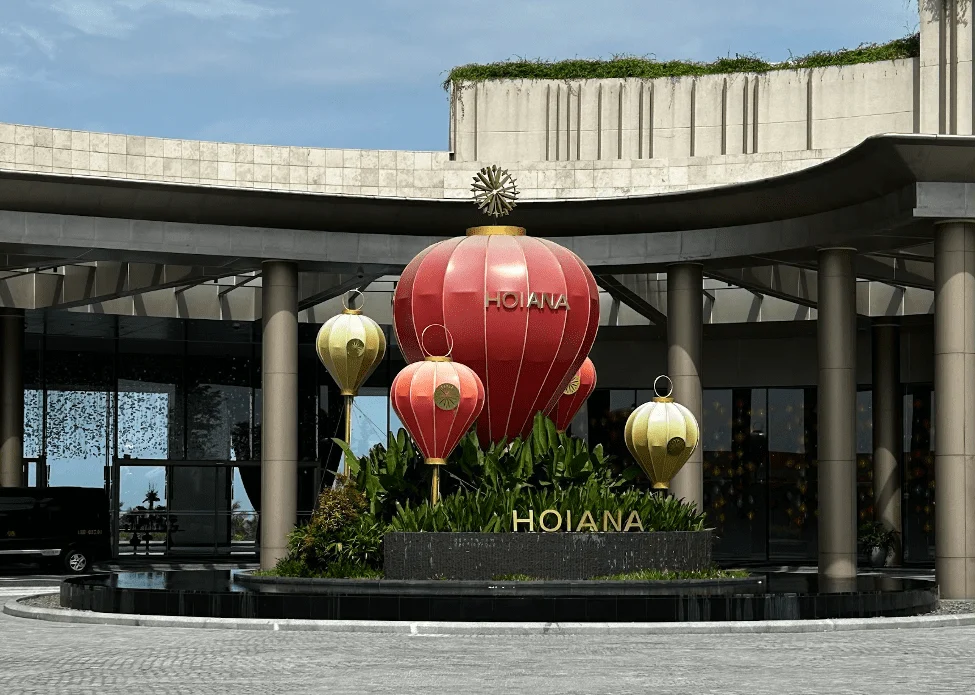
The Hoiana, a sprawling multi-billion-dollar integrated resort and casino, stands out as one of the few properties equipped to make that leap. Stretching across 1,000 hectares of prime coastal land within the Chu Lai Open Economic Zone, situated just south of Da Nang, Vietnam, the mega-resort is uniquely positioned.
"The Hoiana is probably one of the first proper five-star resorts that has a chance to target the Chinese market," Lee said. "But, by the end of the day, the volume of mainland patronage in Vietnam is small compared with China."
While representatives for the casino-resort did not respond to requests for comment regarding these shifts, Hoiana President and CEO Steve Wolstenholme noted in an interview earlier this year that following the easing of pandemic restrictions and the gradual return of Chinese tourists, the property was intensely focused on diversifying its products and services, with a particular emphasis on luxury offerings tailored for high-class guests.
In recent months, operational and ownership control of the Hoiana has transitioned from LET Group Holdings—formerly known as Suncity Group, which was one of Macau’s largest and most dominant junket organizers prior to the government crackdown—to the billionaire Cheng family of Hong Kong, acting through its flagship investment enterprise, Chow Tai Fook Enterprises.
The Cheng family and Suncity were already deeply interconnected long before the embattled tour operator was systematically dismantled by law enforcement agencies in Macau. As a prominent gambling investor in casino-dense Macau, the now-deceased family patriarch Cheng Yu Tung allegedly partnered with notorious triad organizations such as the 14K and Sun Yee On as early as the 1980s. Macau prosecutors would later allege that he maintained business ties with the infamous 14K leader Wan Kuok Koi—widely known as "Broken Tooth" Koi—prior to the gang leader’s dramatic arrest in 1998.
The Cheng family subsequently forged partnerships with a figure widely reported to be Koi’s protégé: Alvin Chau, the founder and CEO of the once-mighty Suncity tour company. After launching his enterprise in 2007, Chau rapidly built a vast fortune catering to Chinese VIP gamblers and branching into real-estate development. However, his soaring success ultimately placed him directly in the crosshairs of Beijing’s sweeping junket crackdown, culminating in his high-profile arrest in 2021, which effectively cratered the traditional junket industry.
Following these events, Suncity officially rebranded itself as the LET Group while Chau awaited trial in Macau on an astounding 286 criminal charges, encompassing allegations of fraud and large-scale money laundering. By January, Chau was formally convicted of heading a criminal organization and sentenced to a staggering 18 years in prison.
Suncity had previously led the public development of the Hoiana project and retained a major ownership stake in the enterprise, which reports indicate has struggled financially in recent years. The publicized change in management directly coincides with the abrupt shutdown of Suncity’s VIP gaming rooms across Macau in the wake of Chau’s imprisonment. It also closely follows regulatory tightening measures aimed at Macau junket operators documented by authorities as having historical associations with organized crime and money laundering, or those simply suspected of facilitating illicit financial flows.
Jeremy Douglas, the regional representative of the U.N. Office on Drugs and Crime (UNODC) for Southeast Asia and the Pacific, has expressed deep concern that in the months and years ahead, properties like the Hoiana could potentially serve as a blueprint for still-ambitious junket bosses and Chinese gamblers eager to launder illicit capital.
Presently, Vietnam maintains no specific licensing regimes explicitly tailored for operators of gambling-related tours. Nevertheless, the Hoiana has managed to maintain significantly cleaner operations than many of the more notorious casinos scattered across the region’s volatile special economic zones.
Regional casinos situated within these remote special economic zones are frequently known to deploy business models where gaming floors operate primarily as money-laundering fronts for displaced Chinese syndicates and regional criminal networks. Furthermore, these areas can harbor a wide array of illicit activities, including cyber scam operations, human trafficking, drug smuggling, and the illegal wildlife trade.
Certain zones, such as the infamous "Golden Triangle" Special Economic Zone in Laos, have evolved into effectively self-policed safe havens for syndicate bosses migrating outward from mainland China. The Golden Triangle SEZ is organized largely under the Kings Romans Group, which is owned and operated by Zhao Wei, a syndicate chief who remains subject to United States sanctions.
Other similar economic zones are clustered densely along Mekong region borders, overlapping extensively with localized casino developments. Data and maps provided by the UNODC indicate that more than 100 casinos operate within Myanmar, nestled among 13 distinct economic zones, while Vietnam hosts an estimated 41 casinos located inside or immediately adjacent to 44 special economic zones.
The persistent threat of lawlessness within these zones has drawn intense scrutiny from regional authorities, contributing directly to China’s tightened control over outbound travel visas. Consequently, Macau has managed to retain its status as an ideal gambling destination due to its geographic proximity and unique autonomous administrative framework.
The former Portuguese colony—despite the purported eradication of formal junket operations within the territory—has successfully cultivated an underground operational model that provides just enough maneuvering room for high-rolling Chinese gamblers actively hunting for capital flight channels and elaborate gambling tours.
"What most people don’t know is that the junket agents are still operating in Macau, but they’re no longer being identified as junkets because that’s no longer politically correct," Lee observed. "They are now being recognized by the casinos as players."
Operating under the designation of "programme players," these former junket operators are able to secure private VIP rooms within a casino by meeting substantial capital buy-in thresholds. The junket agents then organize private gaming environments for their trusted clients, acting as the sole intermediaries dealing directly with the casino management. The agent subsequently redistributes the purchased chips to their associates, who constitute their actual clientele, Lee explained.
"They don’t make any money, but they’re doing that to keep the relationship with their players warm, waiting for the day when they and their players can start going to the casinos around the region," he added.
In the interim, operators within Vietnam appear eager to forge strategic partnerships with Macau’s veteran casino concessionaires. The tour operator Let’s Win Group, which held its soft opening at the Hoiana in February 2022, celebrated a grand opening ceremony and gala dinner for its dedicated VIP club in March of this year, pointedly extending invitations to six of Macau’s premier casino concessionaires.
Even as Vietnam demonstrates a welcoming posture toward foreign investment originating from titans of the gambling-tour industry, the country maintains heavy legal restrictions regarding the lending of money to foreign nationals. This creates a distinct bureaucratic hurdle for the diaspora of former junket operators attempting to establish permanent roots in the country.
According to Langdale, the architectural and operational design of the Hoiana closely mirrors the trendy "integrated resort" model—similar to Singapore’s Sentosa Island—that has successfully taken root across the international gaming industry as a sophisticated facade to overhaul the outdated Macau junket model. In Singapore, where traditional junkets are strictly illegal, this approach effectively disguises the reality that substantial revenues continue to be driven by high-rolling gamblers.
"Instead of smoky casinos with Chinese gamblers gambling 24 hours a day, they’ll present a nice, healthy family-oriented resort," Langdale said.
This integrated resort model purposefully projects the serene atmosphere of an upscale holiday destination centered around family entertainment, leisure amenities, and the lucrative hosting of corporate conventions. While the Hoiana actively promotes itself strictly as a premier resort and golf destination, "you’re still getting VIP gamblers," Langdale noted.
"The diversification into entertainment and conventions and all the rest of it, they provide the cover and the legitimacy for the casinos," he added. "By going down as the integrated resort, the casino operator can say we’re no longer relying on hardcore gamblers."
As Thailand moves to relax visa entry requirements for Chinese tourists, Langdale suspects that Vietnam will inevitably implement similar policy shifts to remain competitive. Such a move could successfully attract affluent Chinese tourists and investors seeking a stable landing zone for capital flight.
"And the Hoiana is one mechanism for doing that," he concluded.