For freelance writers navigating the fast-paced world of digital publishing, the traditional hurdles of reporting remain a constant operational challenge. Conducting interviews with subject matter experts, commonly known as SMEs, often generates thousands of words of raw audio that must be carefully reviewed and verified before a single word of an article can be drafted. Without modern transcription tools, writers frequently find themselves listening to a twenty-minute conversation five or six times, spending upwards of an hour simply trying to capture accurate quotes and contextual nuances.
Freelance writer Liz Froment, who has spent years contributing to prominent fintech publications such as The Financial Brand, has shared her extensive operational experience regarding the integration of automated transcription software into daily journalistic workflows. In a detailed assessment published by Location Rebel, Froment evaluated whether spending approximately one hundred dollars annually on AI transcription software—specifically Otter.ai, a platform she has utilized since 2020—genuinely benefits writers who conduct regular interviews.
The core dilemma of expert interviews lies in the inherent tension between active listening and manual note-taking. When a writer attempts to split their focus between engaging dynamically with an industry expert and frantically typing quotes into a document, both the quality of the conversation and the resulting content suffer. Developing a compelling story angle often requires reviewing the complete dialogue on paper, yet manual transcription consumes valuable hours that could otherwise be dedicated to research, outlining, and drafting.
By adopting real-time voice transcription technology, writers can fundamentally alter how they approach interviews. Recording every conversation with explicit permission allows the interviewer to direct one hundred percent of their attention toward the subject. Rather than tethering themselves to a rigid list of prepared inquiries, journalists can pursue organic follow-up questions and allow complex discussions to flow naturally, secure in the knowledge that the dialogue is being accurately captured in the background.

Evaluating the financial and time-related return on investment reveals significant operational efficiencies. A typical freelance assignment might involve a detailed interview with a subject matter expert, requiring roughly one hour of preliminary research, three hours of structural outlining and writing, and an additional hour dedicated to transcript creation. For an article paying twelve hundred dollars, spending five hours total yields an effective hourly rate of two40 dollars. Removing the manual transcription hour reduces total labor time to four hours, elevating the effective hourly rate to three hundred dollars.
For professionals managing multiple interview-based assignments each month, the time savings accumulate rapidly. Saving between three and five hours monthly allows writers to increase their output, meet tight editorial deadlines with less stress, and offset the subscription cost within the first few weeks of implementation.
Beyond basic transcription, modern AI tools incorporate features designed to streamline the editing and writing process. Advanced search functionalities allow users to query transcripts for specific keywords or conceptual themes. If a subject matter expert discusses complex topics such as credit card fraud or artificial intelligence personalization, a built-in chatbot can immediately locate the relevant sections of the dialogue and provide concise summaries. This capability proves particularly useful when speakers wander off on tangents or connect related ideas across different segments of a lengthy conversation.
Furthermore, audio playback integration links the text transcript directly to the underlying recording. By clicking on any portion of the written text, the user can instantly play the corresponding audio to verify unclear phrasing, resolve garbled passages, or confirm specific quotations before publication.
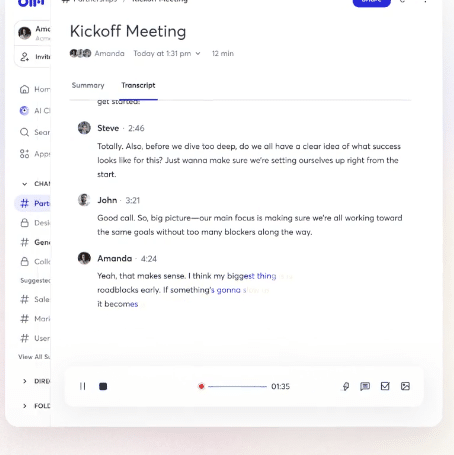
Despite these advantages, practical limitations remain apparent in real-world journalistic environments. Automated transcription platforms are not entirely infallible. Under standard interview conditions, accuracy typically ranges between eighty and eighty-five percent rather than the higher percentages frequently advertised. Industry-specific terminology, unfamiliar proper nouns, and overlapping dialogue can occasionally lead to misinterpretations. Consequently, responsible journalists must review the generated text against the original audio to ensure absolute accuracy.
Additionally, technical constraints such as speaker mode requirements can impact workflow flexibility. When using headphones during a recorded call, transcription software may capture only the user’s voice rather than both sides of the conversation, relying instead on computer speakers to pick up the audio. This setup functions smoothly in private home offices or quiet coworking spaces, but presents challenges in environments requiring strict privacy. Speaker identification features can also falter when participants have similar vocal tones or during multi-speaker panel recordings, requiring manual verification of attribution.
When weighed against traditional alternatives, such as outsourcing transcription to human typists, automated software offers a distinct speed advantage. While human transcription services generally yield higher accuracy, they often require a turnaround time of three to five days, or costly rush fees for expedited delivery. For freelance writers operating under compressed weekly deadlines—where an expert must be sourced, interviewed, and written about within days—waiting several days for a transcript is rarely feasible. Automated tools provide immediate access to the text the moment a call concludes, enabling writers to transition instantly into the drafting phase.
Different pricing tiers cater to varying professional needs. Basic free plans typically offer hundreds of monthly transcription minutes with strict per-recording limits, allowing writers to thoroughly test the software within their existing workflows before committing funds. Paid professional tiers, priced around one hundred dollars annually, expand minute allowances and duration limits, serving as an optimal middle ground for regular freelance contributors. Business tiers cater to organizations requiring deeper collaboration and administrative controls.
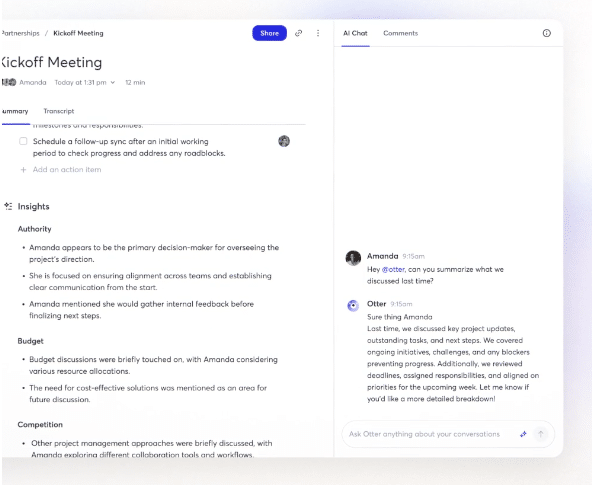
Ultimately, while automated transcription platforms require users to verify accuracy and manage technical quirks, their ability to drastically reduce production time makes them a valuable asset for journalists and content creators who rely heavily on recorded interviews. By streamlining the path from raw audio to published text, these tools continue to influence modern freelance writing operations.