For many residents in the United Arab Emirates, the pursuit of a Schengen visa has become a complex logistical challenge, often characterized by long waiting times and high demand. In an attempt to navigate this hurdle, a persistent myth has taken root: the so-called “small country trick.” This belief suggests that applying for a visa through less popular or smaller Schengen member states, such as Luxembourg or Malta, can bypass the congestion and lead to a faster, more successful application process. However, according to experts and officials, this strategy is not only ineffective but potentially damaging to a traveler’s long-term mobility.
Monaz Billimoria, the UAE Regional Director for VFS Global, the world’s largest visa outsourcing and technology services specialist, has issued a firm warning against this practice. Far from being a shortcut, attempting to manipulate the application process by choosing a country with lower demand—where the applicant has no legitimate travel intent—can lead to immediate visa refusals. These refusals are not merely a temporary setback; they are recorded permanently in the Visa Information System (VIS), creating a digital trail that can complicate or jeopardize all future applications to any Schengen member state.
The Legal Framework of Visa Competency
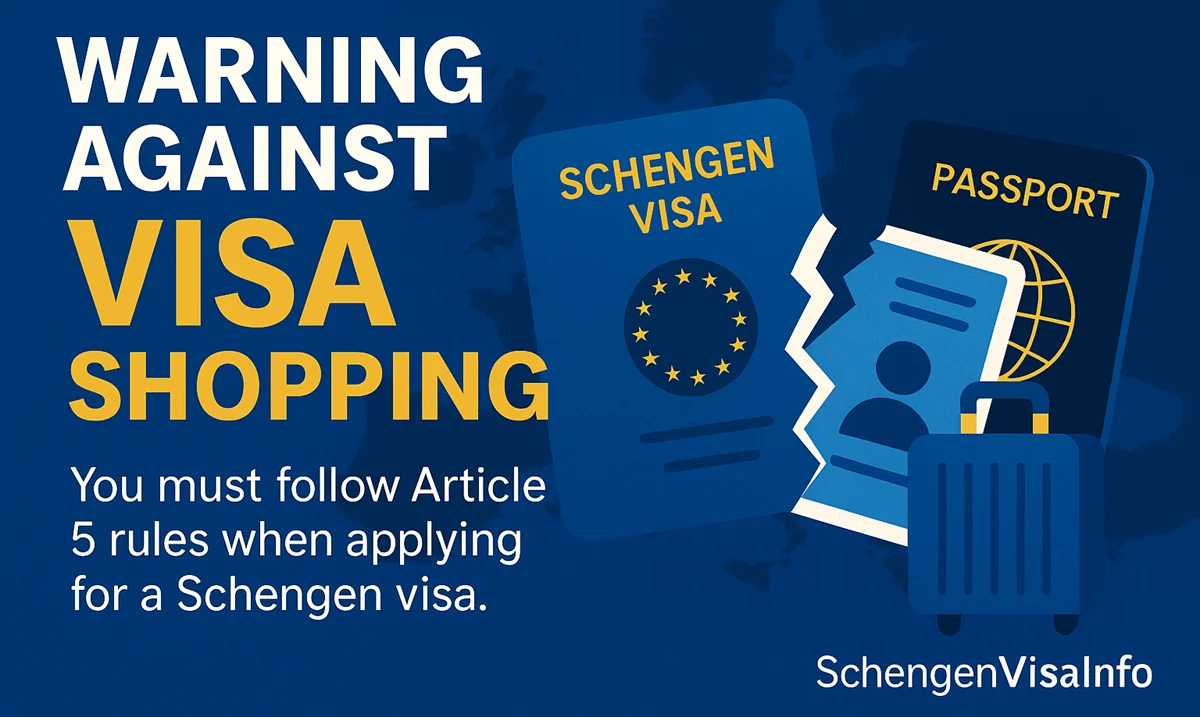
The rules governing where an applicant must submit their visa request are not arbitrary; they are strictly codified under the EU Visa Code, specifically Regulation 810/2009. Article 5 of this regulation establishes a clear hierarchy for determining the “competent member state.” This legal framework is designed to ensure that the country issuing the visa is the one with the most relevance to the traveler’s actual itinerary.
Billimoria stresses that the law is enforced with unwavering rigor. The requirement is straightforward: travelers must apply to the country that serves as their primary destination or, if they are visiting multiple nations, the country where they intend to stay for the longest duration. “The Schengen law says you need to apply to the country that you’re traveling to or the country where you’re going to be staying the maximum amount of days,” Billimoria explained. “They enforce this rule very strictly. If you don’t, there is a strong possibility that they will refuse you.”
The consequences of ignoring this hierarchy are significant. When a consular officer reviews an application, they evaluate the full scope of the traveler’s documentation, including flight bookings, hotel reservations, and the overall itinerary. Besart Bajrami, founder of the information platform SchengenVisaInfo, notes that the discrepancy is often glaringly obvious. If an applicant submits a request through the Maltese consulate but their travel documents indicate they intend to spend eight days in Germany and only two in Malta, the application will almost certainly be rejected for failing to meet the requirements of Article 5. According to Bajrami, the issue is not about “playing the game” to secure an earlier appointment, but rather about adhering to the fundamental principles of EU law. Using the appropriate member state, even if it feels less convenient due to appointment availability, is the only way to build a credible and compliant case.
The Myth of the Fast-Track
Beyond the risks of “visa shopping,” there is a pervasive misunderstanding regarding the speed of processing. Billimoria explicitly stated that there are no provisions within the Schengen system for fast-tracking or expediting applications based on urgency, nor is there a mechanism to pay extra fees to jump the queue. This is a critical distinction between the Schengen process and the systems employed by other nations. For instance, the UK visa system provides UAE residents with guaranteed appointment availability within five working days—a structure that has led to a natural surge in UK-bound applications from the region.
Because the Schengen system does not operate on such guarantees, travelers often feel a sense of desperation. This environment has unfortunately created a fertile ground for fraudulent agents who prey on travelers by promising “guaranteed” appointments or expedited service for a fee. Billimoria urged the public to exercise extreme caution, noting that these agents operate entirely outside the authorized channels of embassies and VFS Global. “These types of agents operate outside of the valid processes and channels of embassies and authorized visa centers and should be avoided by UAE residents,” she warned. “If you are looking for a visa, do not fall victim to these types of scams.”
Evolving Travel Patterns and Seasonal Demand
While the pressure on the visa system remains high, there has been a notable shift in the behavior of UAE travelers that may offer some relief. Many residents are moving away from the traditional model of traveling only during the summer months. By opting to visit Europe in the autumn and winter, travelers are not only finding more favorable weather and lower costs, but they are also discovering more manageable travel logistics.
This shift in travel patterns has created new demand surges, particularly for Nordic countries during the winter, driven by the desire to witness the Northern Lights. By diversifying the times of year they choose to travel, residents are effectively helping to redistribute the strain on the visa appointment system, which typically peaks during the summer months.
The Reality of Border Control
The potential for trouble does not end once a visa is stamped into a passport. The “visa shopping” strategy often falls apart at the border, where entry is never guaranteed, regardless of whether a traveler holds a valid visa. Immigration officers at Schengen entry points are trained to look for inconsistencies in a traveler’s story. They frequently question arrivals about the nature of their trip, their total duration of stay, and their specific travel plans.
If a traveler enters the Schengen area with a visa issued by Luxembourg, but intends to spend the vast majority of their time in France, they risk being denied entry on the spot. Border officials possess the authority to turn away any traveler if they have reasonable grounds to believe that the visa was obtained through fraudulent means or by misrepresenting the intended travel destination.
The risks are even more pronounced during the exit phase of a journey. As travelers depart, border authorities have access to a wealth of data, including accommodation records and transportation history. If an applicant’s records show they spent their entire holiday in Spain despite having obtained their visa through a different member state, the discrepancy is documented. This data is fed into the Schengen Information System (SIS), creating a permanent record of the violation.
“Visa shopping does not always go undetected,” Bajrami warns. “Although travelers may be able to enter a country without any problems, there will usually be discrepancies noted by immigration officials between the countries on the traveler’s itinerary and the country that has issued them a visa. These records become available for use by all consular offices when an applicant applies for a visa another time; and as such, it may cause increased scrutiny or may even result in a refusal for many years into the future.”
For UAE residents looking to travel to the Schengen Area, the advice from authorities remains consistent and clear: identify the correct member state based on the duration or primary purpose of the visit, submit an honest and fully documented application through official channels, and avoid any service provider that claims to offer shortcuts. In the eyes of the law, there is no such thing as an “anything” visa; there is only the correct visa, obtained through the proper process.