By Lauren Liebhaber
Published October 25, 2026
National parks have long served as fertile ground for storytelling. These vast expanses hold deep geological, cultural, and sacred histories stretching back thousands of years, and such landscapes possess a unique capacity to inspire and accumulate narratives. Over time, these tales are passed around and retold, with old details dropped and new ones added until the story itself evolves into a sort of cultural folklore. Fact and folklore blend together seamlessly, eventually making it difficult to determine where documented history ends and where legend begins.
Furthermore, America’s national parks feature no shortage of atmospheric settings for the unexplained. They are filled with dark caves, historic buildings, abandoned settlements, battlefields, and vast stretches of untouched wilderness. Spending a night at the bottom of a deep canyon or inside a century-old backcountry hotel tends to alter perception, making every unexplained footstep, flicker of light, or movement in the periphery feel distinctly otherworldly.
It comes as little surprise, therefore, that many of the stories attached to these protected lands involve ghosts. What remains genuinely surprising, however, is the actual origin of some of those haunting tales.
Yellowstone: The Headless Bride of Old Faithful Inn
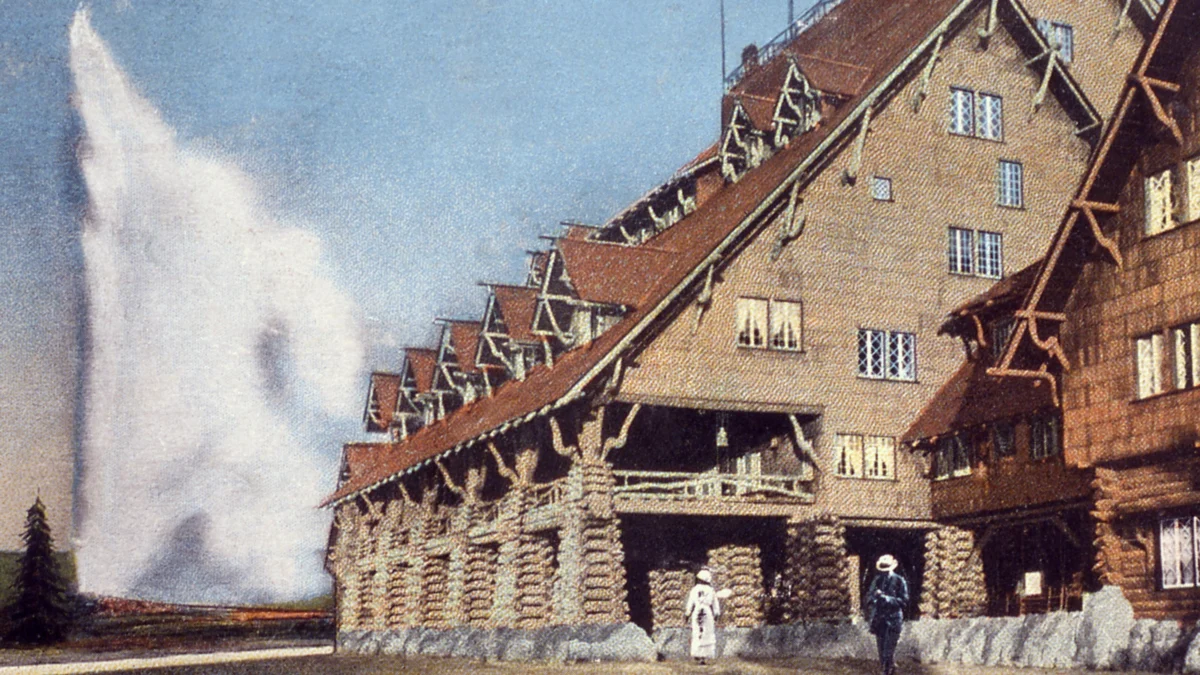
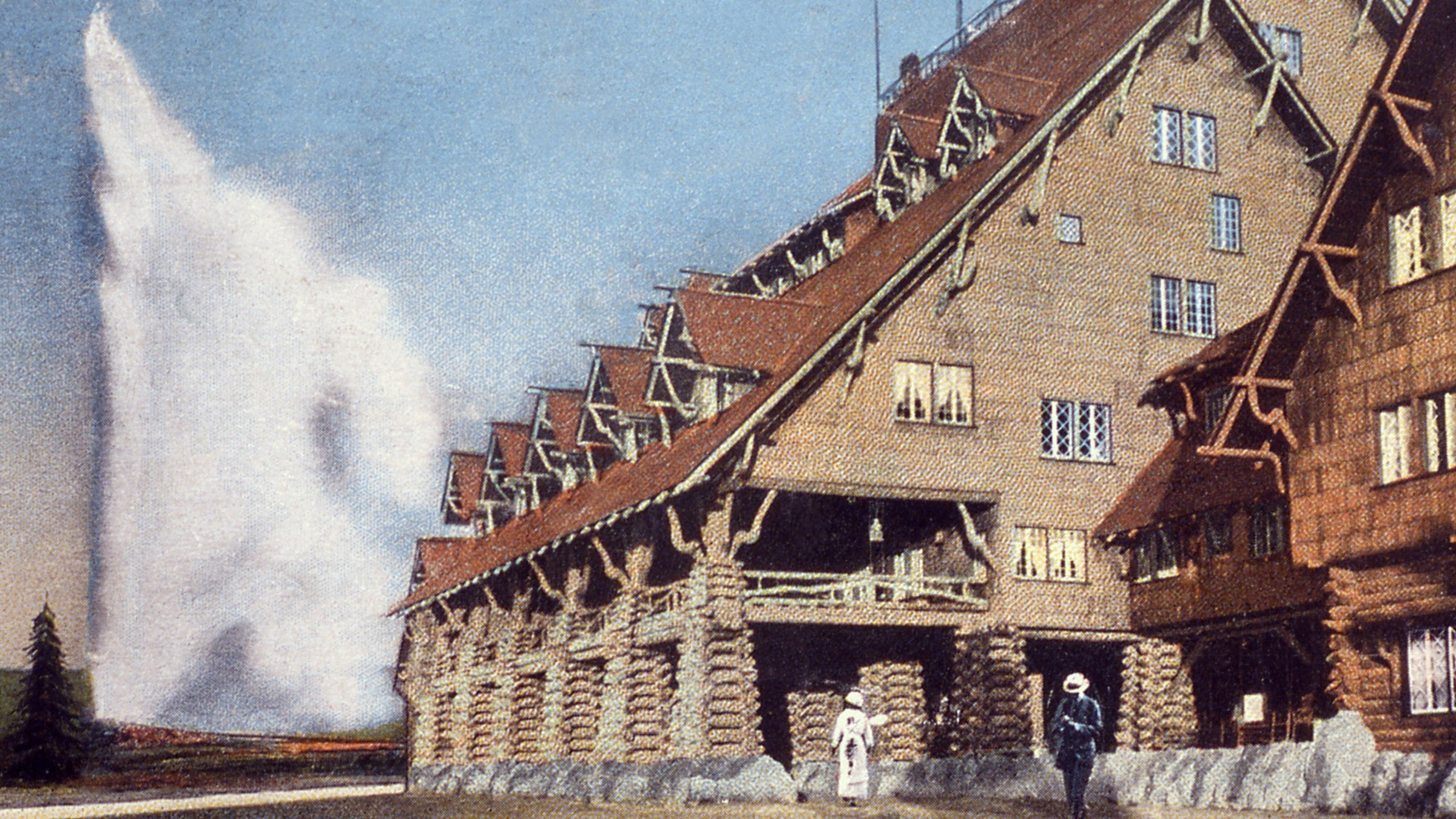
The Old Faithful Inn stands as a gabled architectural monument crafted from sturdy lodgepole pine. Opened in 1904, it was originally built for travelers who wanted to watch the iconic Old Faithful geyser erupt by day and then retire to accommodations that offered rustic comfort. The historic lodge is packed with distinctive character, and according to local lore, it once served as the setting for Yellowstone’s most famous and gruesome murder.
According to one popular version of the legend, the year is 1915, and the rebellious teenage daughter of a wealthy New York shipping magnate has stubbornly refused an arranged marriage. Having fallen in love with an older man who works as a domestic servant in her family’s household, she faces her father’s intense disapproval. Convinced the young man is merely pursuing the family fortune, the father attempts to call their bluff by offering a generous financial dowry on the condition that the couple leaves New York permanently and never returns.
The newlyweds accept the money, head west, and eventually arrive at the Old Faithful Inn to celebrate their honeymoon, reportedly staying in Room 127. Initially, everything appears peaceful. Soon, however, the husband begins drinking heavily and gambling, rapidly burning through the dowry until the couple is entirely broke within a month. When the bride reaches out to her father for financial assistance, he refuses.
One evening, hotel staff members overhear the couple engaged in a violent argument. The husband storms out of the room and is never seen again. After giving the couple some space for a couple of days, a deeply worried maid finally enters the room to check on them, discovering the bride inside the bathroom, covered entirely in blood. Her head is entirely gone.
According to the legend, staff members search the expansive inn for days before someone finally looks up. There, positioned high above the lobby in the Crow’s Nest—the historic perch where musicians once played for evening dances—rests the bride’s missing head.
That specific location is where witnesses claim she still appears today. Over the decades, guests and employees have described encountering a spectral woman in white drifting down from the Crow’s Nest, occasionally carrying her own severed head. In alternative versions of the tale, she paces the wooden halls at midnight, tracing her steps all the way back to the honeymoon suite where she was supposedly murdered.
It is undeniably a gruesome story. It is also entirely fictional.
Park staff have successfully traced one version of the narrative to former Old Faithful Inn bell captain George Bornemann. When a persistent reporter repeatedly badgered Bornemann for local ghost stories, the bell captain insisted there were none. When the reporter refused to relent, Bornemann simply made one up on the spot. When asked what year the fictitious murder occurred, Bornemann reportedly told the reporter to choose whatever year he preferred.
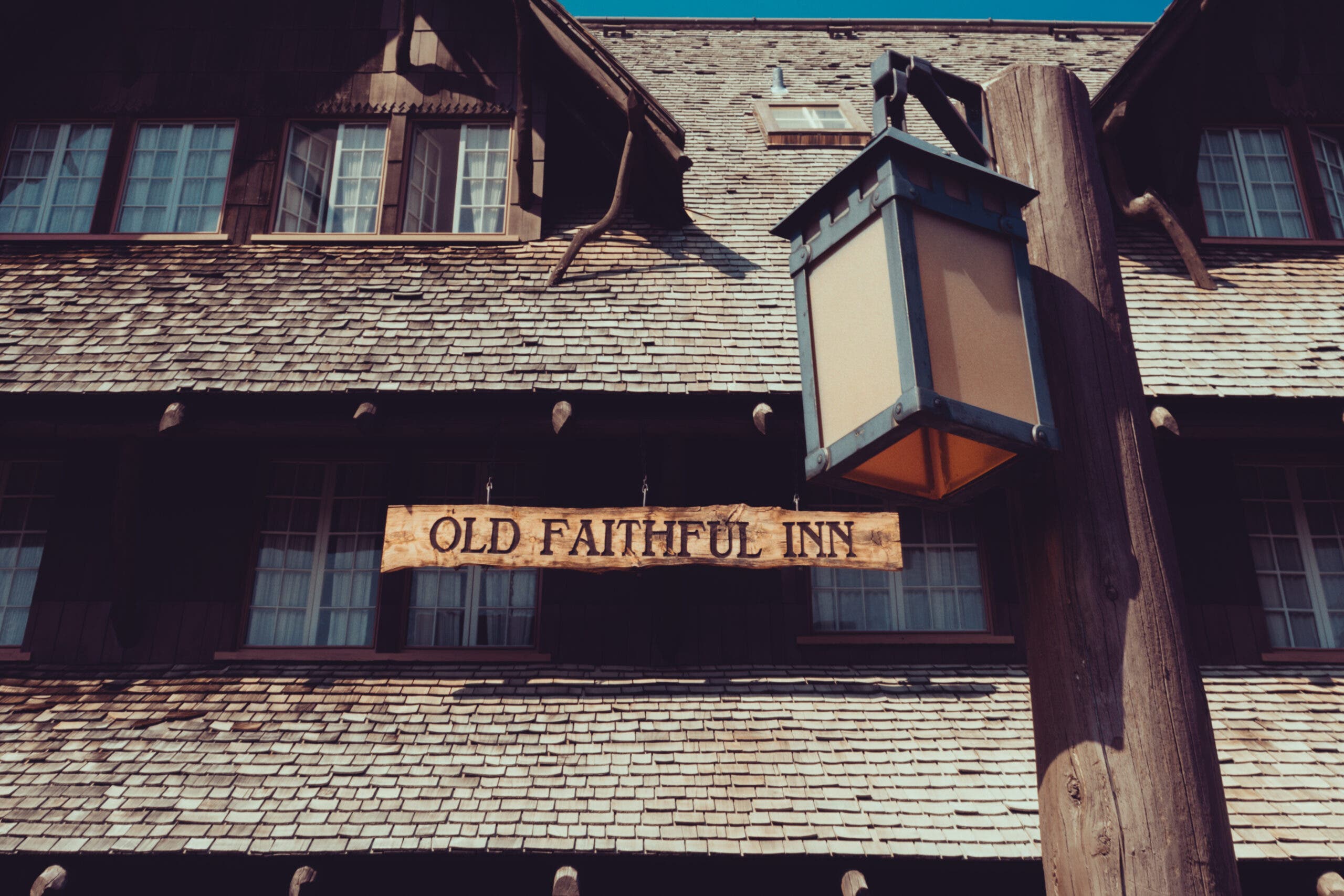
A secondary version of the confession points to an assistant manager from the 1980s who told a local newspaper in 1991 that he invented the tale because visitors naturally expected a historic hotel to feature a resident ghost. Whether two employees independently devised the same story, or the storyteller’s identity shifted over years of retelling, remains unclear. Regardless, the fact that modern guests continue to report sightings of a beheaded fictitious bride highlights the remarkable power of the human imagination.
Mammoth Cave: Tuberculosis and Melissa in the Darkness
Mammoth Cave hardly requires fictional ghosts, as its well-documented history is unsettling enough on its own. In the fall of 1842, a Kentucky physician named John Croghan, who had acquired Mammoth Cave a few years prior, began wondering if the subterranean environment might possess healing properties capable of curing tuberculosis.
The cave remained naturally cool, the air felt pristine, and the local miners who spent extended periods working underground appeared to be in good health. During an era when tuberculosis was decimating populations and conventional medicine offered few viable treatments, Croghan hypothesized that living deep inside Mammoth Cave might allow damaged lung tissue an opportunity to heal. To test this bold theory, he moved 16 tuberculosis patients directly underground.
Roughly a mile and a half inside the cave, Croghan constructed a subterranean settlement complete with wooden cottages and stone buildings. Patients spent their days entirely underground, existing exclusively by the dim illumination of lamps and candles. One resident noted that he rarely heard daylight mentioned or even thought of it.
They had been promised that the cave might save them, but tragically, it did not. Fires utilized for warmth and cooking filled the enclosed, still cave air with thick smoke, causing the patients’ conditions to rapidly deteriorate. Alfred, an enslaved man who worked as a prominent cave guide, later recalled that the residents eventually resembled a company of skeletons, their pupils so dilated by the perpetual darkness that their eyes appeared entirely black. Several patients died underground, and within months, Croghan abandoned the failed medical experiment.
The original stone structures remain standing today, and according to generations of subsequent visitors, the persistent sound of coughing lingers as well. People have repeatedly reported hearing muffled coughs near the historic tuberculosis settlement when the area is completely empty. It is an easily understandable legend, given that real people suffered, coughed, and died in that exact portion of the cave.

However, another of Mammoth Cave’s most famous phantom figures originates from a much stranger source. Her name is Melissa.
According to the traditional tale, Melissa fell hopelessly in love with her tutor, who unfortunately reciprocated affections for someone else entirely. Seeking vengeance, Melissa devised a calculated plan. She invited him on an excursion to explore Mammoth Cave, leading him deep underground while carrying their only light source. Moving deeper through winding passages, they traveled farther from the entrance until she was certain he could never find his way back out alone, at which point she abandoned him in the dark. He never surfaced.
Some versions of the narrative suggest that overwhelming guilt eventually drove Melissa back into the cave to search for him, where she ultimately perished as well. Her ghost is said to wander near the subterranean Echo River, wailing continuously as she searches for the man she left behind to die.
Despite its authentic gothic romance appeal, Melissa was never a real murderer. She was simply a fictional character. In February 1858, The Knickerbocker magazine published a short story titled "A Tragedy of the Mammoth Cave," later attributed to writer Lillie Devereux Blake, who had toured the cave alongside her husband. Within the story, a character named Melissa confesses that she abandoned her beloved deep underground fifteen years prior and announces her intention to return to the cave to await her own death.
Subsequent retellings transformed a fictional confession into an enduring local legend about a wandering spirit. Later readers and storytellers even embellished her biography—claiming, for instance, that she died of tuberculosis—thereby blending historical context with pure fiction.
American Samoa: The Dance at To’aga
Unlike campfire tales rooted in Western folklore, the supernatural traditions of American Samoa carry profound cultural weight. In Samoan culture, aitu are powerful spirit beings that do not neatly fit into Western definitions of a "ghost." According to the National Park Service, belief in aitu remains deeply rooted and widely respected throughout Samoa, where personal accounts of encounters with these entities continue to be shared.

For generations, the coastal stretch of To’aga on the island of Ofu—now part of the National Park of American Samoa—has been strongly associated with aitu. Archaeological evidence confirms that human populations have inhabited the area for thousands of years, though today, no permanent residents live at To’aga.
When National Park Service planners began studying the region prior to the park’s establishment, local residents on Ofu issued clear and urgent warnings: do not walk To’aga Beach at noon, and do not walk it after dark, as the area serves as a primary gathering place for aitu.
Park researchers later discovered that these exact warnings had been documented decades earlier in an unexpected historical source—a government public health report. In 1950, the Public Health Department of the Government of American Samoa recorded a series of disturbing occurrences surrounding a medical dispensary constructed at To’aga in 1923, a location chosen because it offered convenient access for residents of Ofu and nearby Olosega.
Local islanders strongly objected to the site, warning officials that To’aga was a well-known meeting ground for aitu. The government proceeded with construction anyway. Around 1924, according to the official report, a navy medical worker stationed at the dispensary began hearing persistent knocking at the door. When he opened it, no one was there. The phenomenon repeated nightly until one evening, upon opening the door, he encountered the apparition of a headless man.
Strange encounters multiplied. While the pharmacist’s mate was away on official calls, his wife reportedly heard unseen visitors stomping heavily through the residence and moving furniture around in broad daylight.
The most enduring account, however, involves a journey by water. One night, the worker, his wife, and several others were traveling by longboat toward To’aga, while two nurses remained behind with plans to make the trip later. As the boat approached the shore, the occupants witnessed a group gathered on the sand engaged in a traditional Samoan dance known as a siva. Something was profoundly wrong with the dancers, however: they were entirely headless. Among the spectral figures on the beach, the report noted, were the two nurses the group had recently left behind.

While the government report did not present the events as verified scientific fact and explicitly noted that local accounts were disputed, the underlying cultural belief in aitu at To’aga predated the dispensary by generations. Ultimately, local residents refused to utilize the facility, leading authorities to dismantle the dispensary and relocate it to Ofu village. Its concrete foundations remain visible at To’aga today, and park researchers arriving decades later received the exact same warnings recorded in the mid-century report: stay away at noon, and stay away after dark.
Grand Canyon: The Phantom at the Bottom
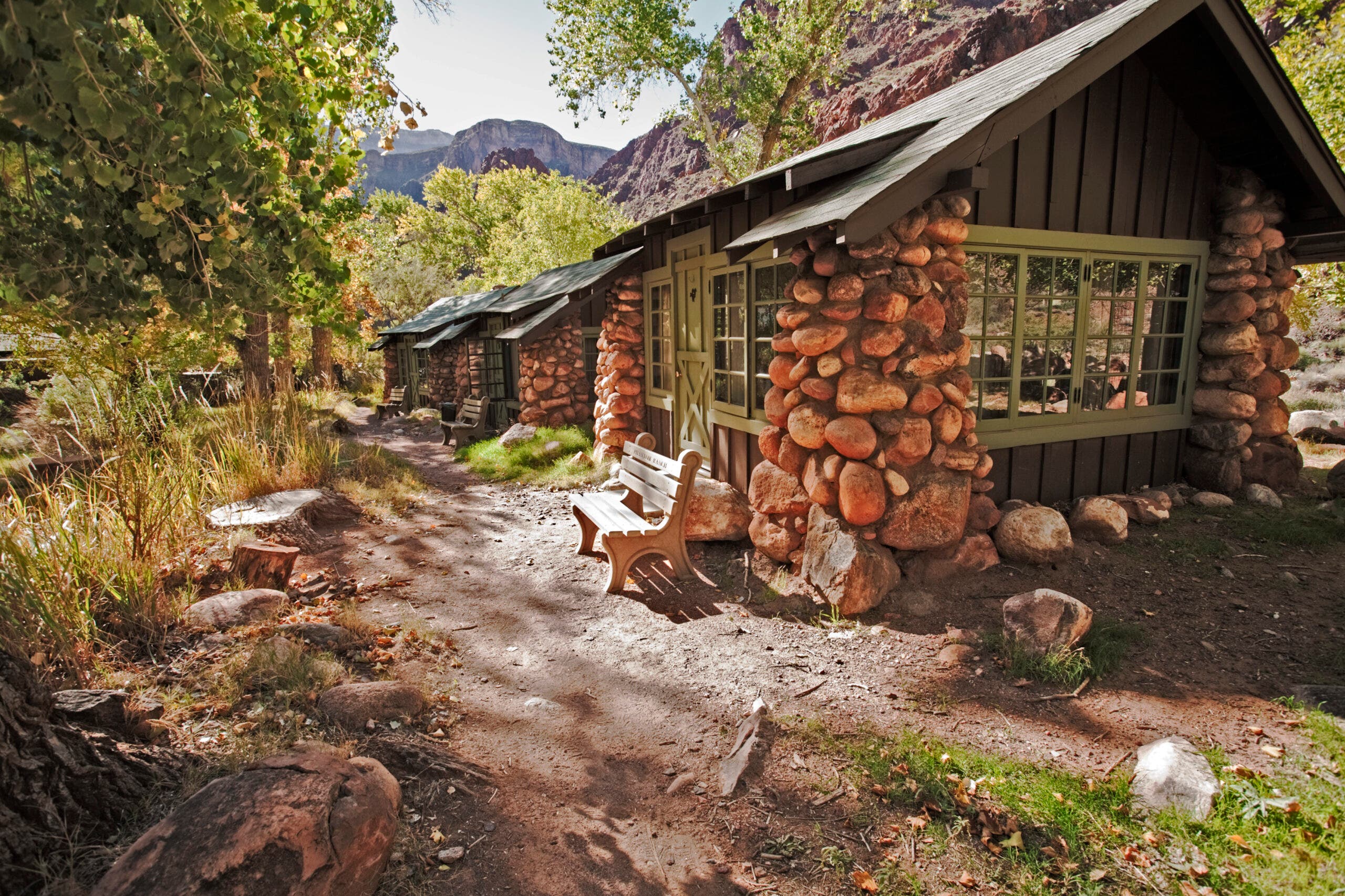
Constructed in 1922, Phantom Ranch sits nearly a mile below the rim of the Grand Canyon, nestled among cottonwood trees beside Bright Angel Creek. Inaccessible by automobile, the remote destination can only be reached via strenuous hiking trails, mule rides down steep switchbacks, or river journeys along the Colorado River.
Phantom Ranch maintains a rich collection of ghost stories, one of the most chilling originating from the historic bunkhouse utilized by local mule wranglers. The National Park Service has documented accounts passed down among ranch staff detailing a wrangler who walked into the bunkhouse one afternoon and spotted a former mule packer standing inside. The encounter would have been entirely ordinary except for the fact that the man she saw had died of natural causes years earlier—and she was currently sleeping in the exact bed where he had passed away.
Hikers and campers have similarly reported encountering shadowy figures walking past them along the trails, occasionally dressed in period attire such as men in full suits or women in ankle-length skirts. Other apparitions resemble ordinary hikers who approach travelers to ask for water before vanishing entirely. Visitors have also reported hearing the distinct crunch of heavy boots crossing gravel outside their cabins at night, only to find no one there upon investigation.
Even the name Phantom Ranch appears suspiciously tailored to the paranormal, though architect Mary Colter actually chose the moniker in the early 1920s by borrowing "Phantom" from nearby Phantom Creek and Phantom Canyon. The origin of the canyon’s original phantoms, however, proves more difficult to trace.
One historical thread leads to a prospector named John Shane. Early Phantom Ranch caretaker Noah Kelly recounted that Shane had been killed years prior near the mouth of a side canyon when a massive rock detached from the wall and crushed him. Following the accident, prospectors and hunters allegedly began observing a strange, moving light along the cliff face near the fatality site. Kelly claimed to have witnessed the phenomenon himself during a severe storm, describing a lantern-like light that appeared on the cliff, shifted positions, vanished, and reappeared with fluctuating brightness.
Written records confirm the narrative circulated early in the ranch’s history. When a visitor named Ralph Pierson stayed at Phantom Ranch in 1926, he noted that guests spent their evenings playing cards and watching for the phantom, with numerous individuals claiming to have spotted a whitish shape moving among the high cliffs. A Kansas City Star correspondent arriving the following year heard a nearly identical account of a white, veiled, human-like figure appearing on the mountain at night, though the writer discovered his cabin sat directly beneath the supposed apparition site.
Unlike some park myths grafted onto locations decades later, these apparitions were actively anticipated by visitors as soon as Phantom Ranch opened in the 1920s. What those early travelers actually observed on the canyon cliffs remains unanswered, but people have continued searching for the answer ever since.
Yosemite: The Haunted Ahwahnee
If any historic hotel within the national park system appears destined to harbor a ghost, it is the Ahwahnee. Opened in Yosemite Valley in 1927, the grand hotel features massive stone fireplaces, dark exposed timber, towering windows, and soaring public spaces. Across nearly a century of operation, it has hosted U.S. presidents, international royalty, and prominent celebrities.
According to generations of guests and employees, however, not everyone who checks into the Ahwahnee eventually checks out.
One of the hotel’s most prominent resident spirits is Mary Curry Tresidder. Mary was the daughter of David and Jennie Curry, who founded Yosemite’s Camp Curry in 1899. Having grown up in the valley, she later married Donald Tresidder and helped manage the Yosemite Park and Curry Company, which operated the Ahwahnee and various other park visitor facilities. Following the hotel’s development, the couple moved into an apartment on the Ahwahnee’s sixth floor in 1928.
When Donald passed away in 1948, Mary remained deeply committed to Yosemite, retaining her sixth-floor Ahwahnee apartment long after her retirement. In 1970, Mary went to sleep in that apartment and never woke up. As local lore suggests, she never truly left the premises.

Guests and employees have consistently reported sensing Mary’s presence throughout the hotel, particularly near the sixth floor. In certain accounts, guests awake to find someone gently tucking their blankets securely around them, while other versions suggest she attempts to wake visitors to dance.
She is not alone among the Ahwahnee’s reported spirits. Visitors and staff have frequently reported hearing footsteps echoing through empty hallways and noting unexplained presences throughout the building—phenomena the National Park Service itself characterizes as encounters with "friendly spirits." A ghost that tucks guests into bed and invites them to dance certainly avoids the more sinister reputation of traditional haunting tales.
The hotel lore also includes a famous creaky rocking chair. Following President John F. Kennedy’s official visit to Yosemite in 1962, during which he stayed at the Ahwahnee, park tradition holds that he requested a rocking chair for his room. Following his assassination the subsequent year, stories began circulating that the chair occasionally rocked entirely on its own.
Unlike Yellowstone’s invented headless bride, no single individual claimed responsibility for fabricating the Ahwahnee legends, and the tales lack a definitive starting point. The underlying history regarding Mary Curry Tresidder, however, remains fully documented: she grew up in Yosemite, helped manage the company behind the hotel, maintained a sixth-floor apartment for decades, and passed away there in 1970.
In the years following her death, accumulated guest experiences and staff observations transformed a dedicated steward of the park into an enduring part of its folklore. Perhaps that represents the true origin of a historic hotel ghost: someone must love a location deeply enough to spend not only a lifetime there, but an afterlife as well.
The Ahwahnee’s striking architecture has long captured imaginations beyond the park boundaries. When filmmaker Stanley Kubrick produced The Shining, interior elements of the Ahwahnee were directly referenced and recreated for the fictional Overlook Hotel, most notably its cavernous Great Lounge and elevator banks. It remains fitting that a historic hotel boasting its own authentic collection of legends helped inspire one of the most famous haunted settings in cinematic history.