Few people around the world recognize the Karrimor name today, and even fewer understand how deeply influential the brand once was to some of the most radical and daring climbers in British history. Born out of the very determination that their products helped climbers harness, the Karrimor legacy depended entirely on one man’s sheer tenacity in the face of serious adversity. Combined with a diehard love of cycling, it represents a generational story of grit, ingenuity, and survival that is well worth telling.
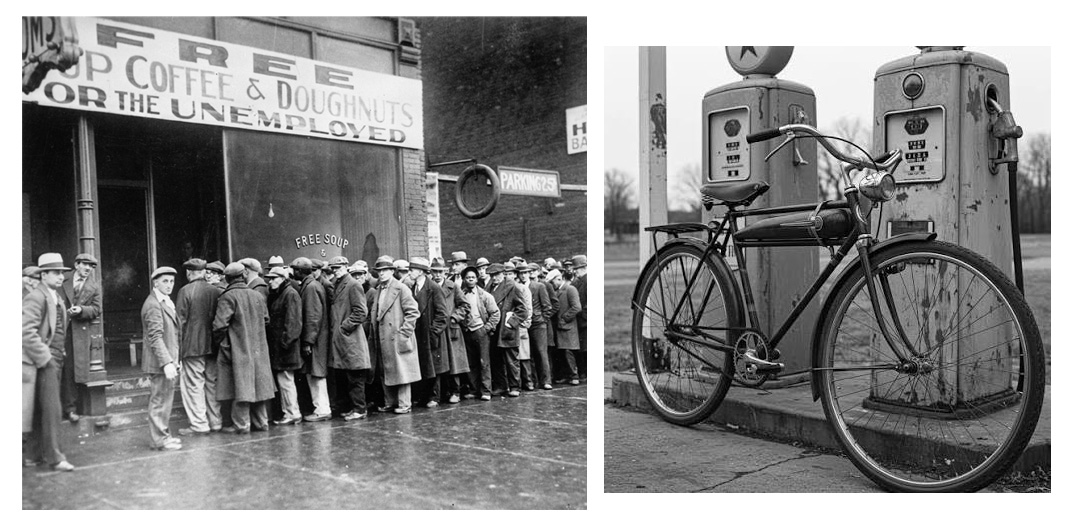
In the depths of the Great Depression, Lancashire, England, was suffering immensely. Its renowned cotton textile industry was collapsing, leaving people to struggle through intense poverty amidst widespread job losses and destitution. The constant economic blows and gruelling deprivation were enough to make almost anyone give up entirely. Yet, Karrimor founder Charles Parsons chose to do the exact opposite.
Despite the bleak outlook of the global economy, Charles found a way to channel his personal passion into productivity. With the help of a fellow enthusiast, he managed to open a small bicycle shop in the mill town of Waterfoot. Their arrangement was straightforward: his partner worked the daytime hours, while Charles took the evenings, tinkering late into the night on intricate repairs. However, a careless slip of the tongue from a customer soon sent Charles in an entirely new direction. The customer mentioned coming by the shop in the morning hours only to find it locked and abandoned. Realizing his partner was slacking off, Charles decided to chart his own course, breaking away to launch his very own shop right down the street.
Every single customer mattered during those harrowing economic times. In navigating this early hurdle, Charles Parsons revealed a resilient streak that would come to define the Parsons family for generations: absolute independence, unshakeable self-belief, and an uncompromising dedication to product quality.
Despite his hard work, tragedy struck late one night while Charles was working in the shop, resulting in a severe accident where hydrochloric acid was splashed directly into his eyes. Years later, during World War II, he was fortunate enough to undergo a promising surgical procedure in London in hopes of restoring his sight. However, when German air raids forced doctors to halt the operation mid-procedure, the surgery was permanently compromised. What should have restored his vision instead triggered a years-long journey of worsening medical complications.
True to form, Charles carried on. With outdoor gear becoming increasingly difficult to acquire and raw resources critically scarce, he and his wife, Mary, decided to confront the harsh realities of wartime Britain head-on. Whatever they could not source from the open market, they resolved to manufacture themselves.
Simple Origins
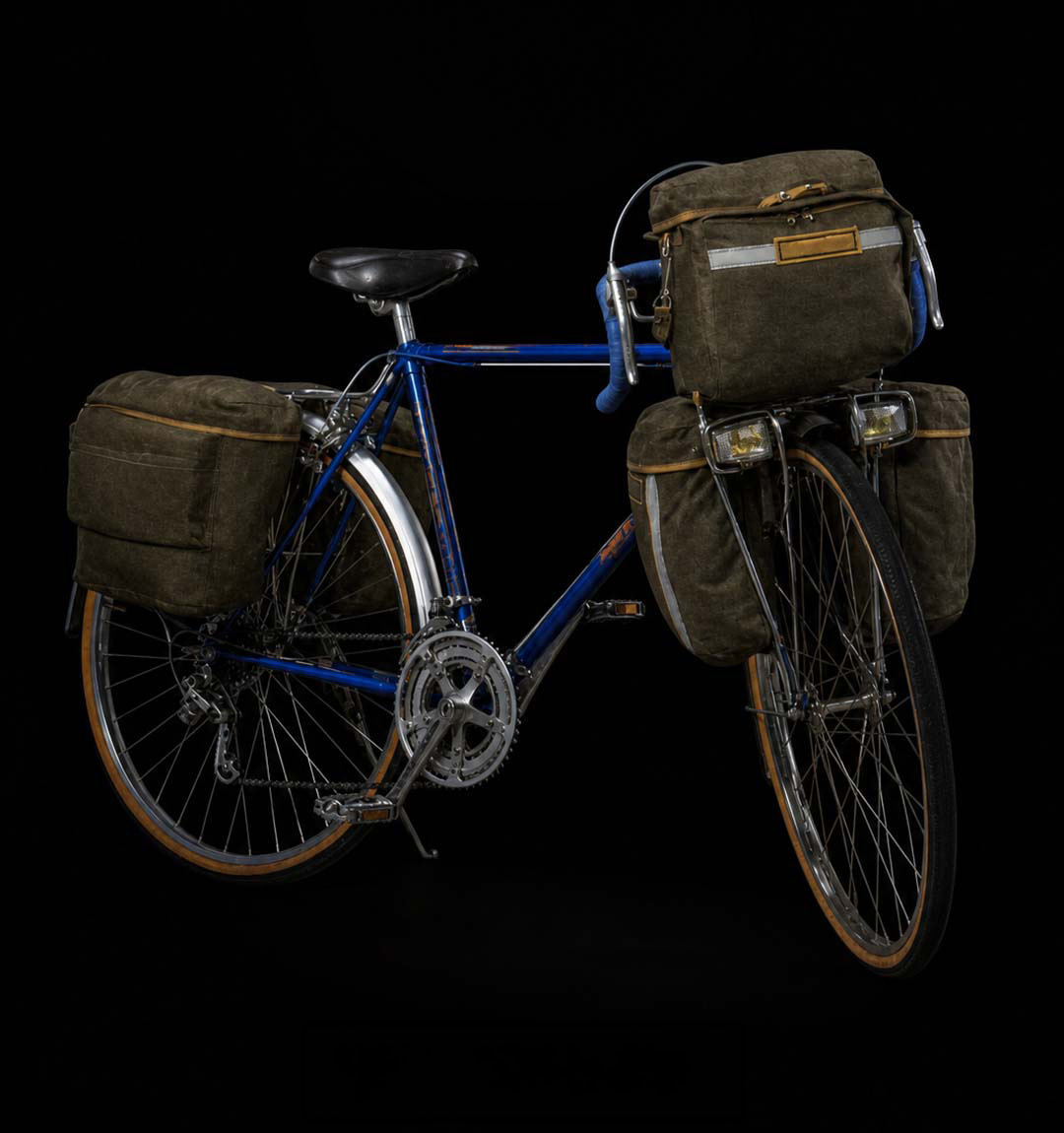
Both Mary and her sister, Grace, were highly skilled seamstresses. They began to hand-sew bicycle panniers and saddlebags using cotton-duck cloth—a durable, raw fabric that happened to be locally available at the time. Operating out of a small attic situated directly above the bicycle shop, they had little idea that they were laying the foundational groundwork for one of the most successful outdoor equipment brands of the upcoming era. They chose the name Karrimor, a direct phonetic adaptation meaning to "carry more."
By 1946, Karrimor was established as a formal brand. Their products were exceptionally durable, carefully tailored, and reasonably priced—qualities that a recovering post-war society desperately relied upon. The enterprise rapidly expanded from a modest workshop into a serious commercial operation, standing proudly shoulder-to-shoulder with established competitors like Dunlop and Carradice.
Yet, commercial success could not halt Charles’s declining health. His eyesight continued to fail him, and by the 1950s, he was completely blind. Fortunately, a capable successor had already emerged within the family: his young son, Mike.
Taking It to the Top
While a young and eager Mike Parsons was steadily working his way up through the ranks, the business faced a troubling downturn. Rapid social shifts and the swift deterioration of the traditional bicycle market meant the Karrimor brand was suddenly dwindling. Bicycles were falling out of favor as automobiles, walking, and outdoor hiking surged in popularity.
"British climbing and skiing opened up to the working classes," Mike later wrote in his blog, Outdoor Gear Coach. "Outdoor education pervaded schools, influenced by the ascent of Everest in 1953. Many new outdoor activities boomed."
The British Mountaineering Council (BMC) had formed in 1944 as the first organization of its kind in the United Kingdom. Following the war, they published Climbing in Britain, triggering a stratospheric shift for droves of returning servicemen and civilians. Alpinism was no longer preserved exclusively as a sport for the social elite; everyday people were now taking to the mountains in droves.
For traditional bicycle accessory companies, this cultural shift threatened a nosedive. By the late 1950s, the public was losing interest in cycling, translating to a sharp decline in demand for bicycle bags. Karrimor faced a critical ultimatum: sink or swim. The only viable direction left was upward.
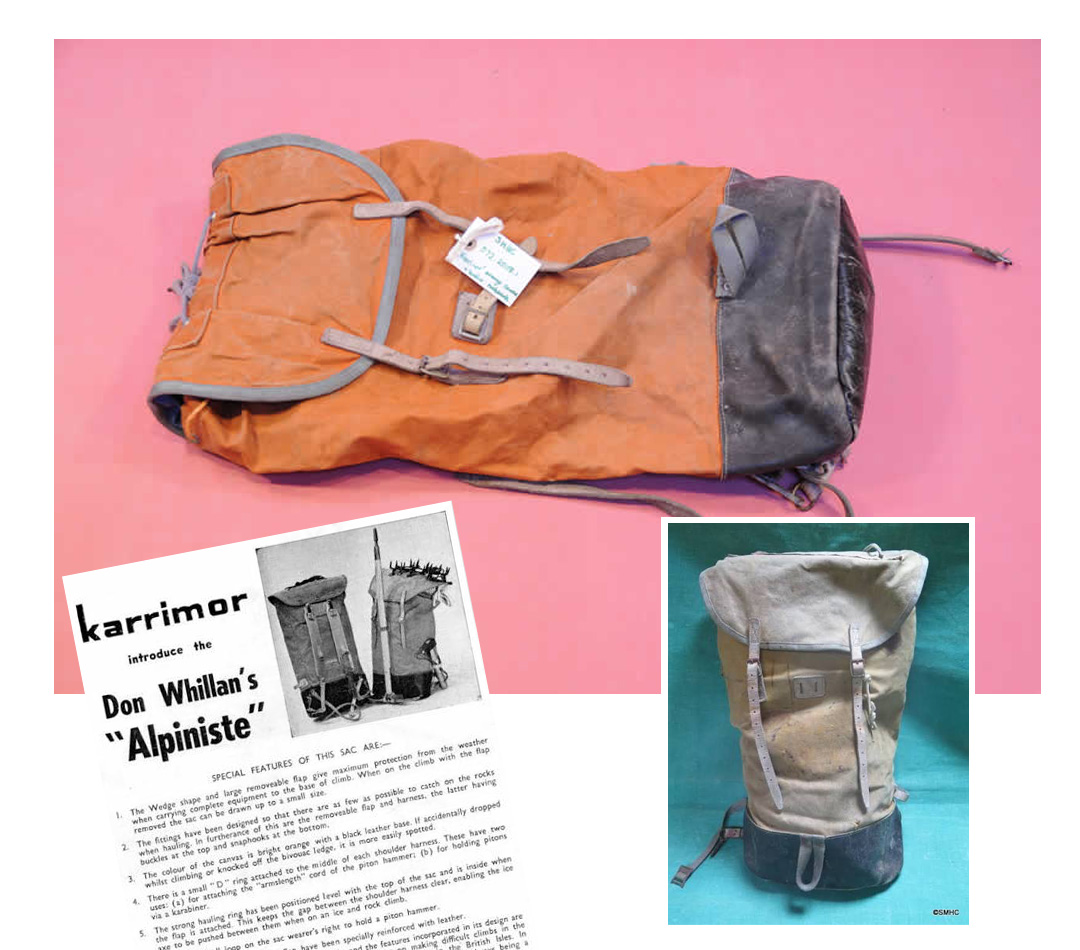
Mary’s sister, Grace, was still sewing bags upstairs in the shop when Mary capitalized on the French-inspired camping boom—characterized by a sudden rise in family camping trips driven by newly introduced paid leave—to introduce fresh ideas to the Karrimor catalog. Working-class climbers soon caught wind of the shop and began trickling through the doors to request custom-made gear. Renowned mountaineer Don Whillans was among the very first, stopping by one day to politely ask for a custom pack "like the one we were making for his mate Joe Brown." Thus, Karrimor’s defining rucksack era was officially born.
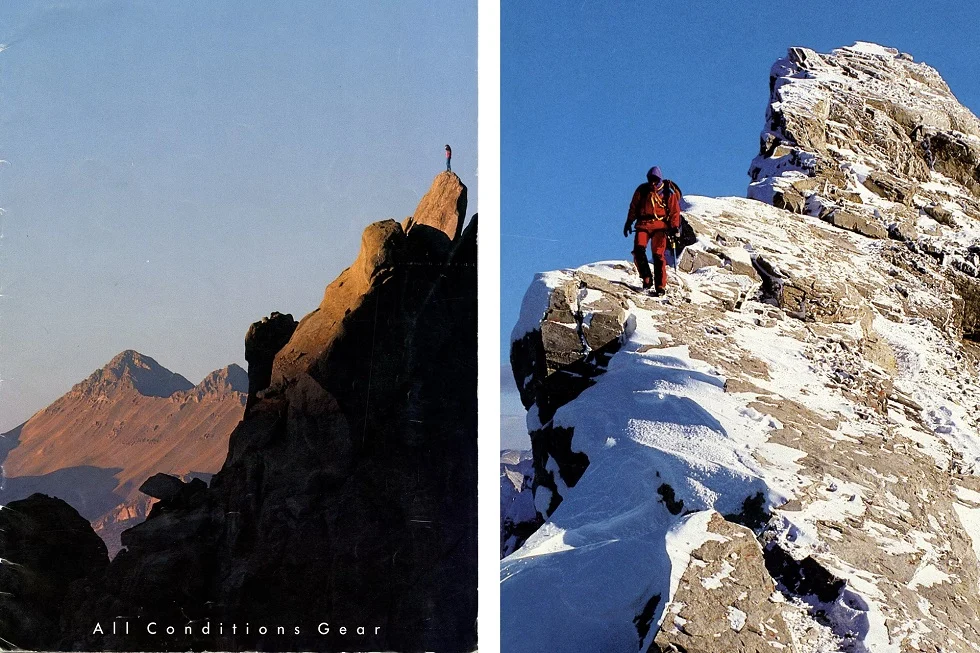
This new wave of talented, everyday alpinists marked the golden age of British climbing, an era often referred to as the "Vector Generation." Between 1960 and 1990, these blue-collar mountaineers attacked the rugged crags of the land with fearless strength and athleticism. No longer viewed as a gentleman’s pastime, they relied on basic yet remarkably effective gear and raw physical endurance to conquer the UK’s most challenging, untouched summits. Times were undeniably changing.
The Swingin’ 60s
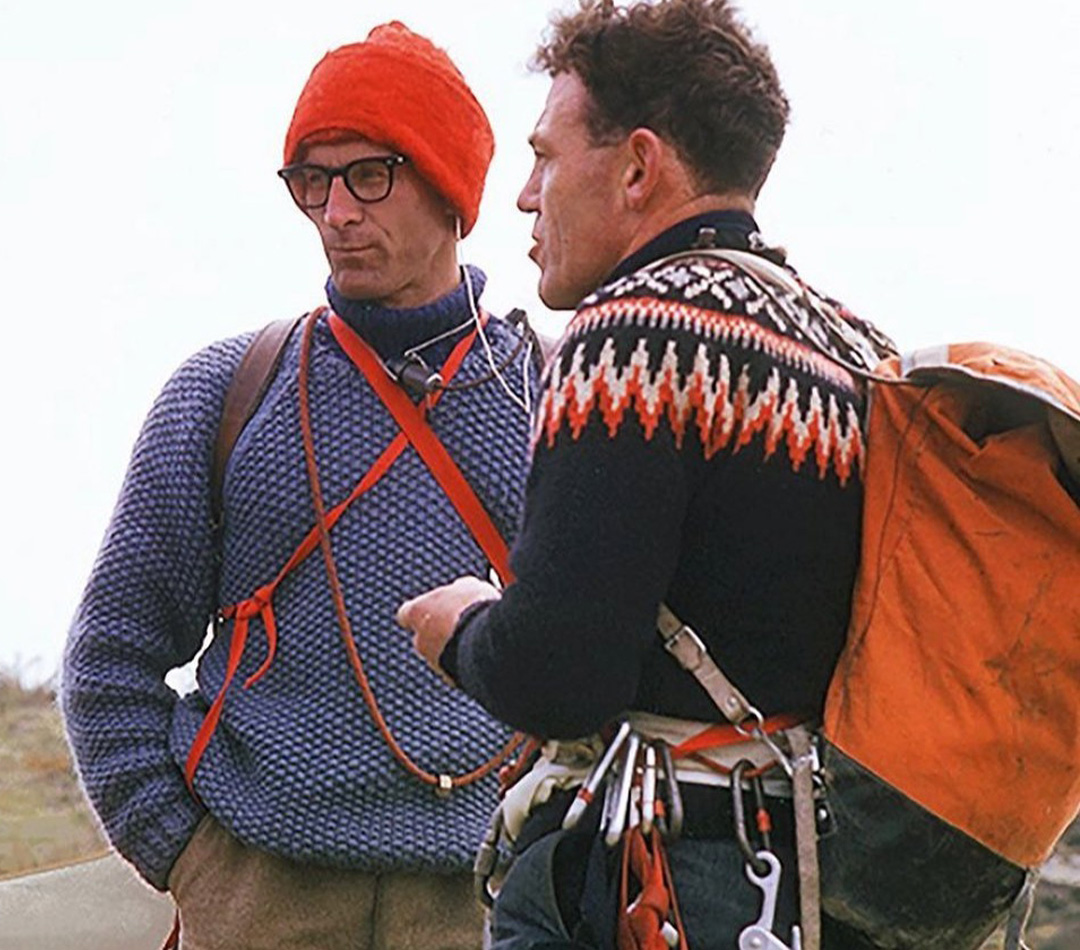
Still in his late teens, Mike Parsons had spent a full year tinkering in the Karrimor workshop, mastering mechanical skills such as handling cotter pins and building bicycle wheels. Spending long hours on the shop floor alongside the machinists, he placed product functionality at the absolute forefront of every design. He meticulously explored minute details and continuously refined products based on direct feedback from the trail-blazing mountaineers who bought them. This hands-on approach to design eventually propelled Karrimor to the forefront of the outdoor gear industry.
Mike understood that the greatest designers could never remain confined to a drawing board; they needed to be out in the elements. Instead of relying solely on traditional advertising, he forged authentic relationships with the very people pushing themselves and their equipment to absolute physical limits. What began as collaborative product creation naturally evolved into organic endorsement. By the 1970s, Karrimor was a household name.
Reflecting on those formative years, Mike Parsons noted, "At the start of the 1960s there was very little in terms of what we see today, so we were still using traditional materials of wax proof cotton canvas and leather. That’s where I learned my design skills — I got my hands on things and worked with people like Don Whillans."
To Everest and Beyond
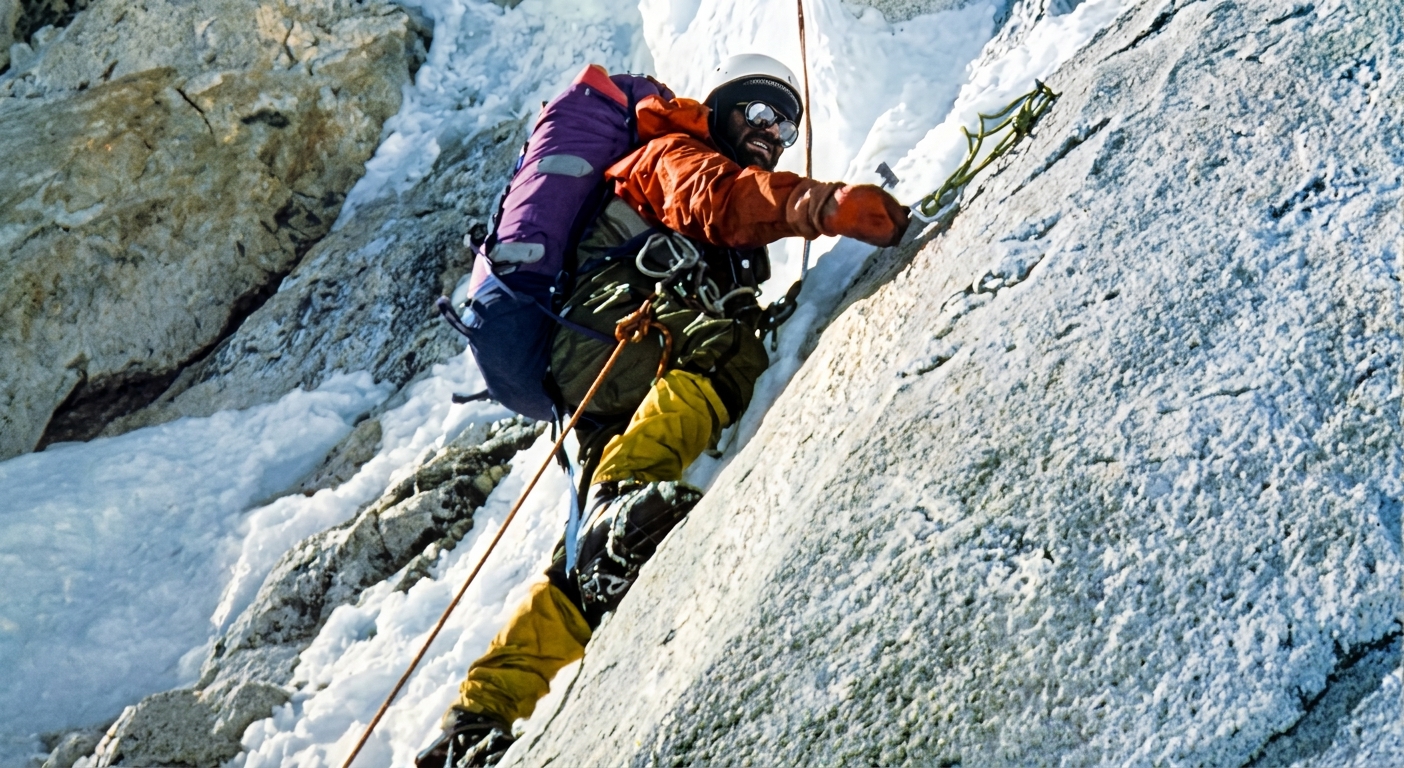
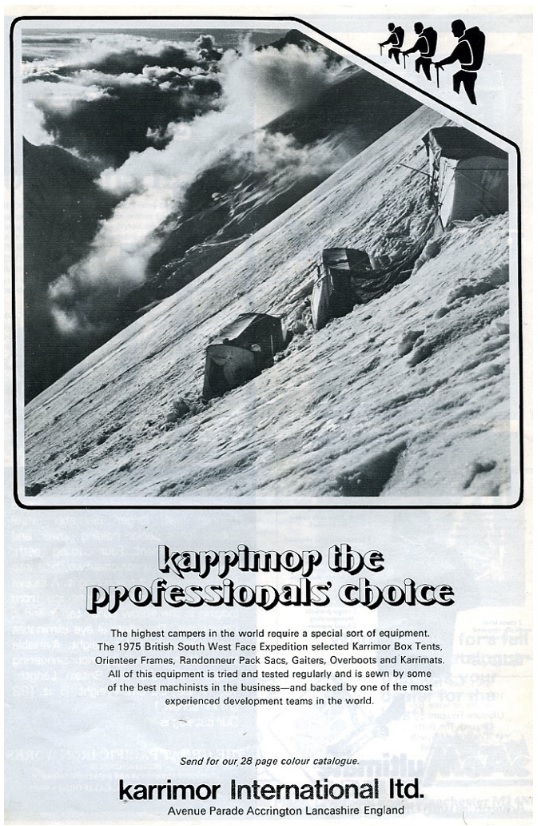
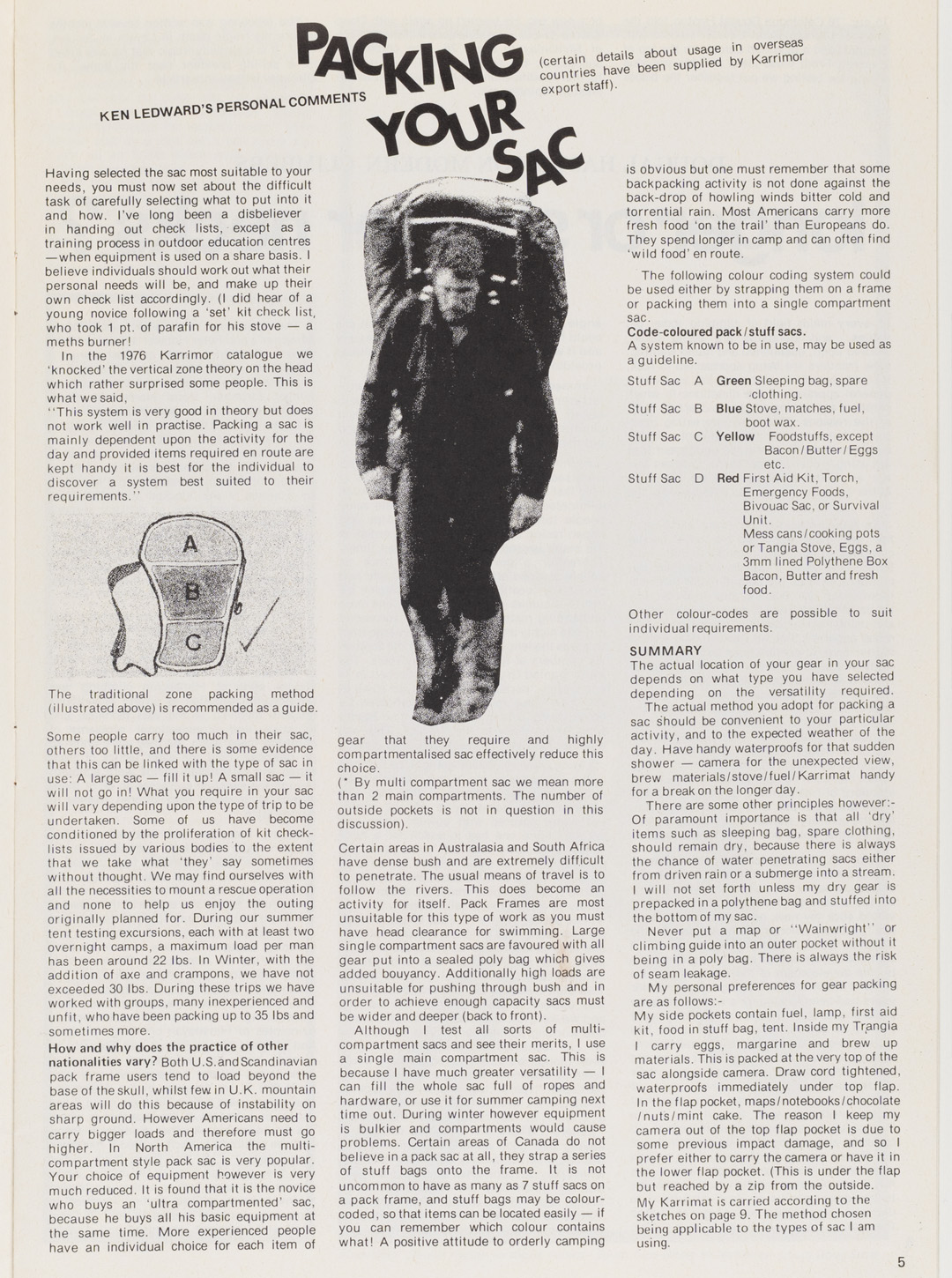
British mountaineer Chris Bonington formed one of the most famous alliances in Karrimor’s history when his team chose the brand’s gear to support their historic ascent of Everest. In 1975, they utilized cutting-edge Karrimor packs and tents to conquer the formidable Southwest Face. Their expedition gear included the Whillans Box Tent—a lightweight nylon and canvas shelter designed to maximize interior space in brutal high-altitude environments—alongside the iconic Jaguar and Alpiniste backpacks.
Coincidentally, that exact same year, Japanese mountaineer Junko Tabei reached the summit of Everest using a Karrimor pack frame. When the global climbing community witnessed Karrimor gear performing reliably under the harshest conditions on Earth, consumer confidence soared.
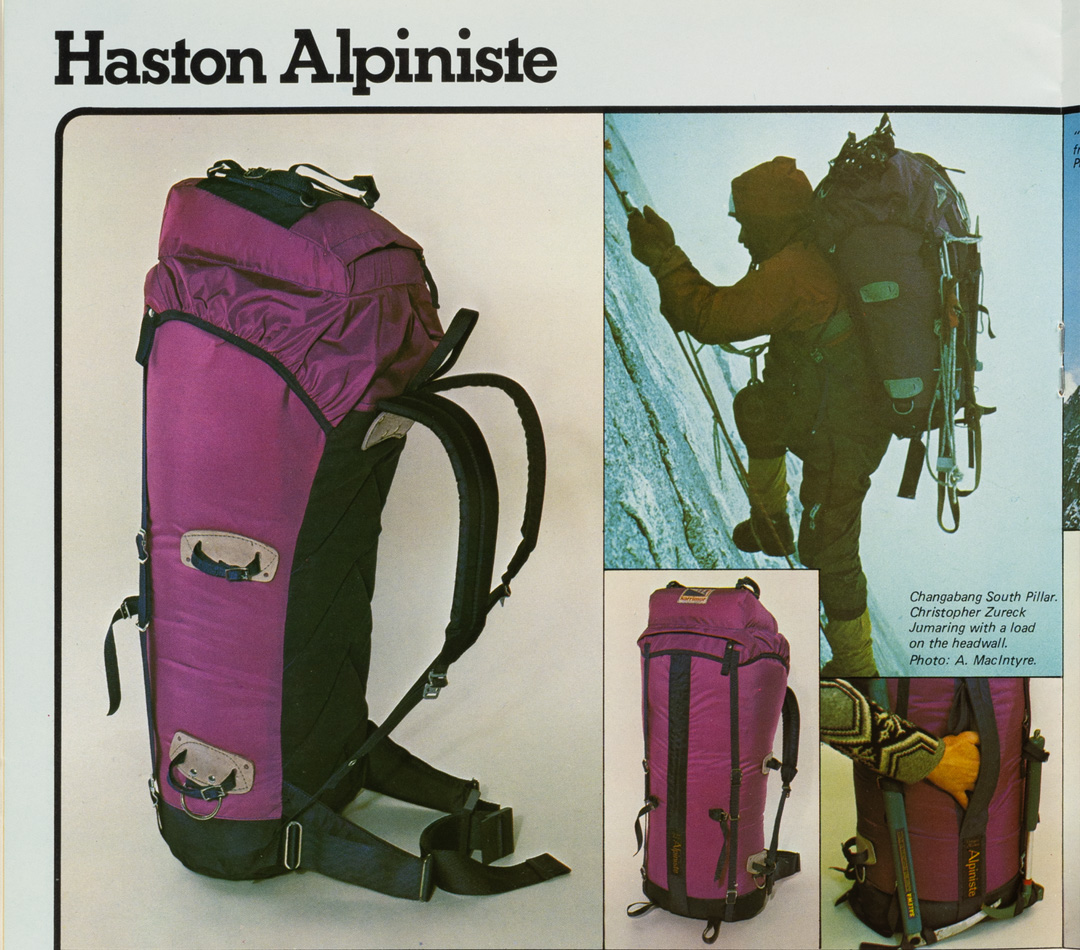
Some of Karrimor’s most legendary products emerged during Mike Parsons’ tenure as Director. Following Don Whillans’ direct request, the Whillans Alpiniste backpack became the ultimate collaborative pack for British climbers, popularizing rugged alpine carrying systems. Weighing approximately 1,300 grams with straps and constructed from heavy canvas featuring a durable suede base, it was slim, lightweight, and ideal for technical climbers.
During the 1970s, it was eventually superseded by the Haston Alpiniste rucksack—a no-frills Cordura nylon pack developed in close partnership with Scottish mountaineer Dougal Haston. Featuring twin ice-axe loops and an extra-long snow extension collar, the Haston pack was leaner, lighter, and stronger than anything that had preceded it. Complete with a removable back pad that doubled as a sleeping mat, the Haston pack is widely credited as the innovation that firmly cemented Karrimor’s global reputation.
The Karrimat
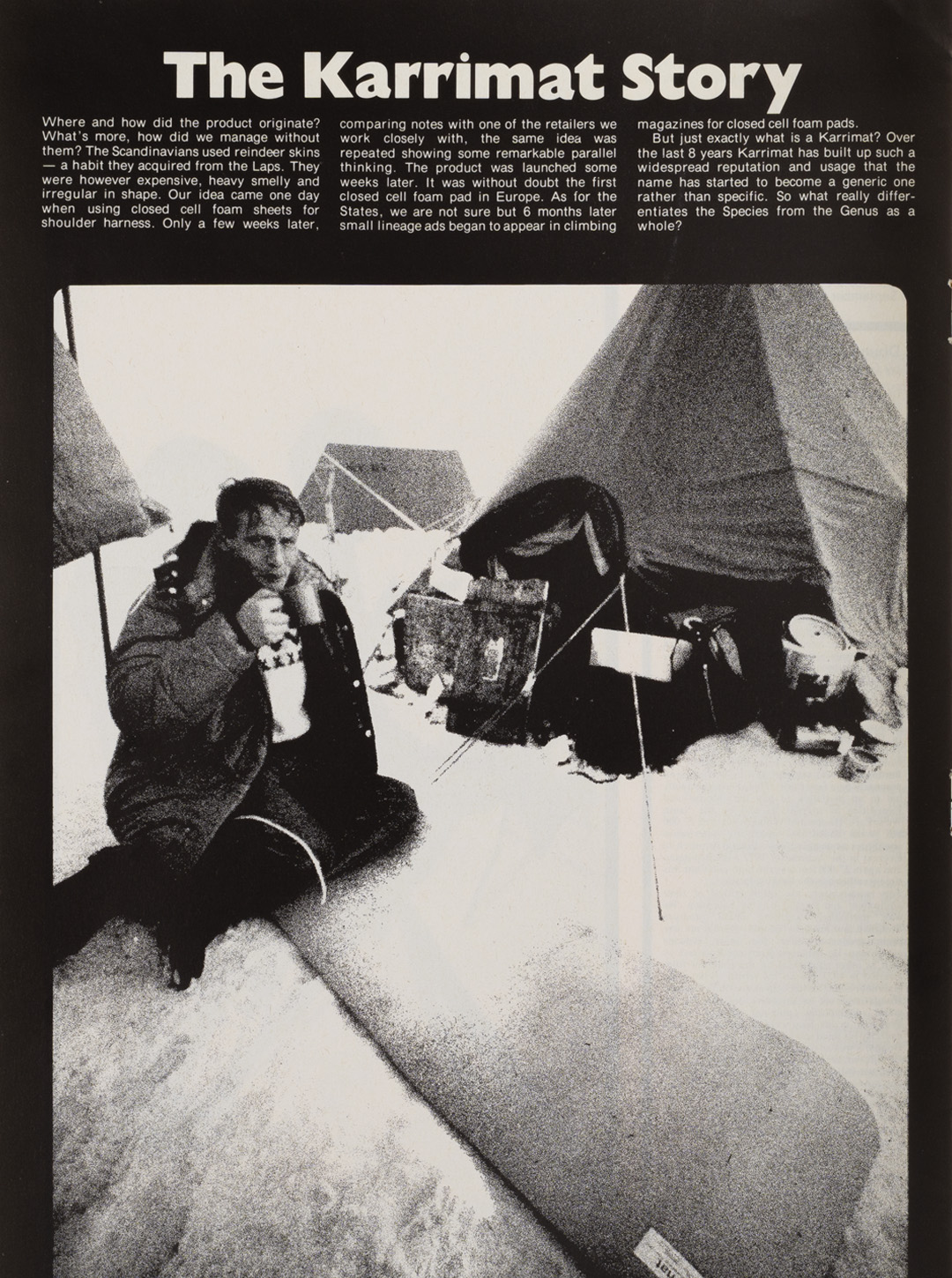
Perhaps the Karrimat sleeping pad takes the ultimate prize as Karrimor’s single most influential piece of gear. Created by Mike in the mid-1960s, its water- and cold-repellent closed-cell foam structure became an instant phenomenon. Its cultural impact was so profound that, much like the word "Hoover" became synonymous with vacuum cleaners, "Karrimat" became the universal colloquial term for any camping bed-roll.
Gear and a Great Idea
During the 1800s, Lancashire famously processed more than three-quarters of the world’s cotton, hosting over two-and-a-half thousand textile mills at its industrial peak. This deep, local manufacturing heritage ultimately helped Karrimor invent KS-100e—a breakthrough elastomer-nylon and polymer-coating process that effectively waterproofed fabrics without adding unnecessary weight or compromising the integrity of the gear.
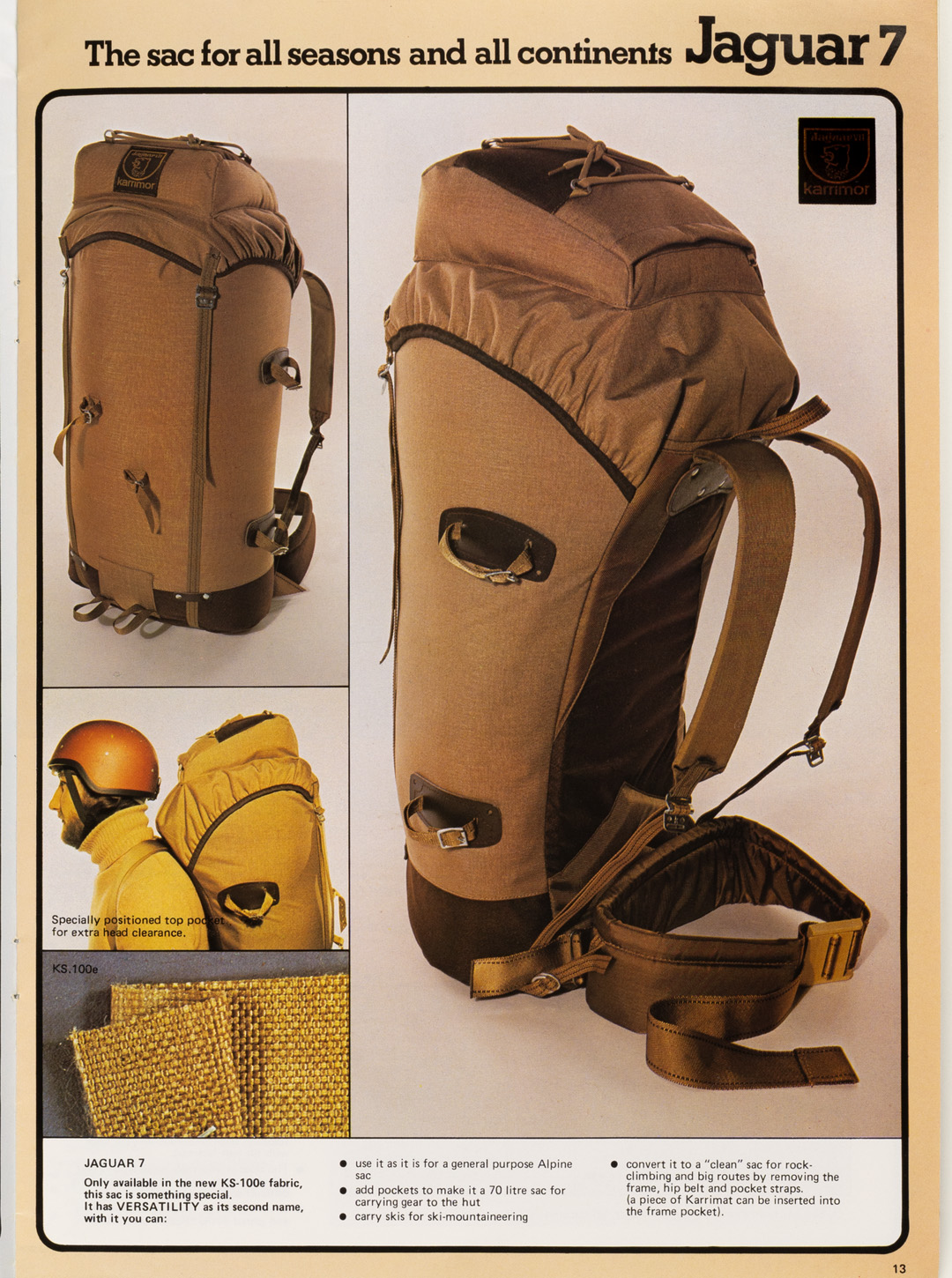
Utilizing a texturized, thick nylon core as a surface anchor, an outer silicone and polymer-blend coating worked in tandem with the pack fabric to prevent everyday wear and tear. Paired with a fluorocarbon Durable Water Repellent (DWR) finish to protect the underlying nylon structure, this innovation was an industry first. It made outdoor gear significantly lighter, tougher, and reliably water-resistant, prompting global competitors to attempt to replicate the technology for years to come.
However, market dynamics shifted rapidly in the 1990s as lower-cost imports from Asia began putting intense pressure on the domestic outdoor industry. Facing mounting competition from major brands like The North Face and Berghaus, the beginning of the end drew near. Mike Parsons officially departed the company in 1996, and by 2004, Karrimor entered administration before eventually being acquired by Sports Direct.
While the golden years of the original British enterprise had concluded, the underlying passion refused to die out entirely. Die-hard Karrimor enthusiasts often take comfort in knowing that while the UK counterpart shifted its focus primarily toward entry-level retail gear, Karrimor’s operations in Japan successfully maintained the original design philosophy and premium essence of the historic brand.
Reflecting on his lifelong dedication to endurance, Mike Parsons once shared with road.cc: "We rode one or two national blind championships. I also came something like 32nd in the Catford Hill Climb, which was the National Championships."
Buy the Ticket, Take the Ride
Charles Parsons took his final solo bicycle ride around 1950, finally conceding to the reality of his lost eyesight. Yet, in his later years, Mike managed to get him back in the saddle aboard a custom tandem bicycle that the two rode together, eventually culminating in family-wide rides.
The enduring values of the Parsons family proved impossible to shake, and Karrimor’s ultimate historical impact on the outdoor industry remains profoundly significant. From the humblest of wartime beginnings to supporting some of the greatest milestones in mountaineering history, the Karrimor story remains a golden chapter of British manufacturing.
This feature was written by Melbourne-based writer and performer Esther Rivers. Archival material was provided by the Outdoor Recreation Archive in Utah.