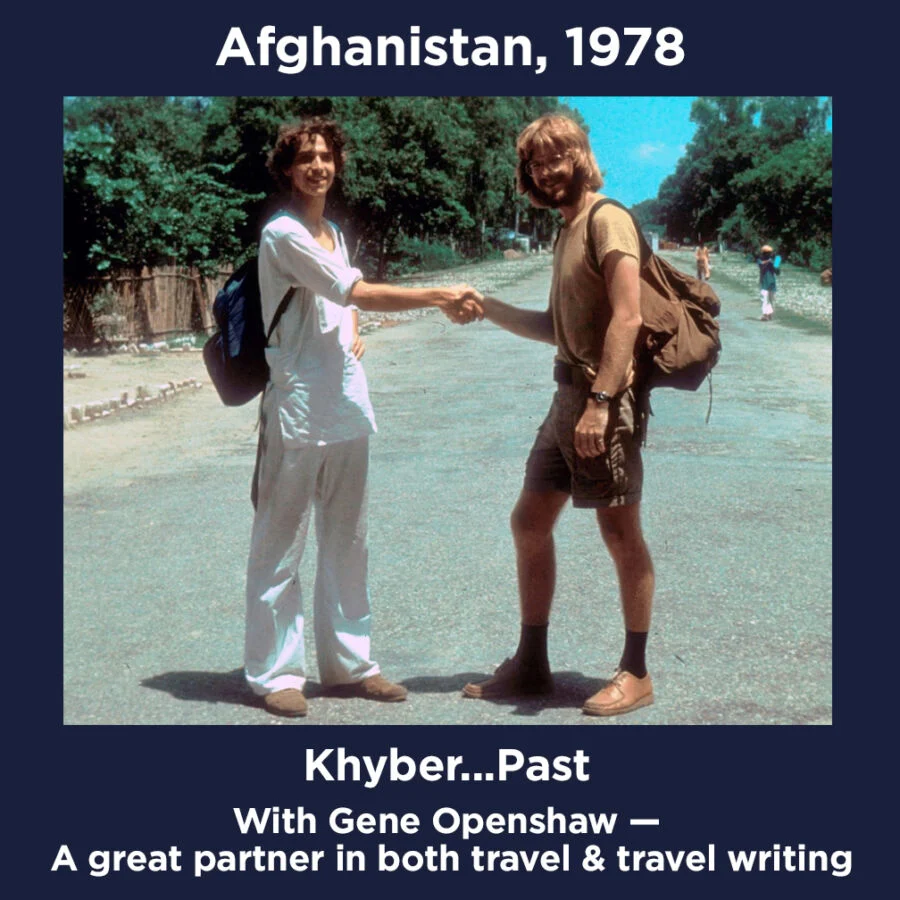
In the wake of the political upheaval and the fall of Afghanistan, travel icon Rick Steves has been reflecting on his formative experiences as a 23-year-old backpacker navigating the legendary "Hippie Trail" from Istanbul to Kathmandu. Decades before global events thrust the region back into the international spotlight, Steves and his travel companion, Gene Openshaw, traversed a landscape that he describes as both impoverished and fiercely formidable—a land historically misunderstood and persistently underestimated by foreign powers.
To provide a window into a bygone era of global exploration, Steves has shared his final journal entry from August 1978, detailing a day of epic travel from Kabul over the fabled Khyber Pass and into Pakistan.
Setting Off from Kabul
The journey began on the morning of Friday, August 4, 1978, in Kabul. Steves recalls waking up with immense anticipation for what lay ahead, checking off one of the top five items on his lifelong travel checklist. After a final large breakfast at the Sina Hotel, Steves and Openshaw caught an 8:30 bus bound for Pakistan.
The vehicle itself was quintessential to the era of overland adventure: a brightly yet badly painted, eccentric bus equipped with large, open windows that allowed passengers to hang half their bodies outside to take in the landscape. Crowded with a mix of local Pakistanis and fellow travelers embarking on the proverbial "Road to India," the bus offered an authentic and unfiltered view of the region.
Departing Kabul, the travelers were almost immediately greeted by a scenic mountain pass. While modest by Pacific Northwest standards, the terrain leading up to the border was the closest thing to lush greenery the young backpackers had witnessed during their time in Afghanistan. They passed a quiet lake devoid of boats, prompting Steves to ponder how many Afghans had ever experienced being out on the water.
A brief, twenty-minute lunch stop in Jalalabad kept the schedule moving. As the bus neared the border, a sense of apprehension grew among the passengers, though by this stage of their extensive backpacking journey, little could shock them.
Navigating the Borders
The Afghan border station proved to be time-consuming but straightforward. Steves and Openshaw whiled away the waiting time by eating a melon, wishing they had the spare cash for a Coca-Cola. In truth, they had managed their finances meticulously, arriving at the border with virtually no Afghanis left in their pockets. After waiting their turns to be searched, filling out the required paperwork, and securing their exit stamps, they reboarded the bus, only to pull forward a mere hundred yards to their official introduction to Pakistan.
The Pakistani border post was a decidedly more unruly environment. Travelers were funneled into a room where they were called up one by one to a desk, where a customs official laboriously "hunt-and-pecked" their vital statistics into a massive register before stamping their passports. With passports in hand, the travelers realized they were only halfway through the labyrinthine process, left to wander the chaotic grounds in search of the next checkpoint.
At one point, they stumbled into a ramshackle building featuring a dark room where two men abruptly jumped up from cots, inviting them to lie down—an offer the backpackers promptly declined. They quickly found themselves surrounded by persistent dope dealers and black-market money changers operating with such openness that their illicit trades almost appeared legal. After exchanging ten dollars for Pakistani rupees, Steves and Openshaw attempted to complete their mandatory baggage check to finish the formalities.
Frustrated by the overwhelming chaos, they ultimately skipped the baggage inspection and climbed back onto the bus. While waiting, they were continuously courted by hashish sellers and one particularly persistent individual trying to offload four grams of cocaine for thirty dollars. Steves simply snapped his photograph and told him to get lost.
Conquering the Khyber Pass
With the administrative hurdles finally cleared, the bus set off to conquer the legendary Khyber Pass. Though physically resembling any other rugged, rocky mountain pass, the geographic feature carried immense psychological weight for Steves, who had dreamed of the location for years.
As the bus climbed higher, Steves hung out the window, desperately trying to absorb every detail: every sharp turn in the road, every fortress-crowned hill, every stray goat, every gaily painted truck rumbling past, and every traditional mud hut. He observed the rugged inhabitants of the treacherous corridor, wondering about their lives and stories. Dry, rocky graveyards marked by wind-tattered flags dotted the hillsides. As threatening clouds gathered on the horizon, the environment began to shift, transitioning from the arid Arab side of South Asia toward the humid, green landscapes of the Indian subcontinent.
After crossing the Khyber Pass, the bus stopped at a tribal village to pay a toll. Steves observed armed local men gathered in circles, ignoring the traffic entirely as they traded goods and shared stories.
The Train Journey to Rawalpindi
Arriving shortly afterward in Peshawar, the travelers discovered a direct train to Lahore departing in an hour. Finding nothing in Peshawar to compel them to stay, and feeling the powerful pull of India drawing them closer, they decided to press on. After some confusion regarding ticketing procedures, they purchased $3.50 first-class tickets for the twelve-hour journey, grabbed a quick sixty-cent dinner, and secured their spots inside a crowded carriage.
The primary distinction between first and second class amounted to padded seats and an extra $1.50—an expense the backpackers deemed well worth it for a twelve-hour ride. Pulling out nearly on time at 5:50 p.m., Steves welcomed the hot, muggy breeze blowing through the window as he settled in to read George Orwell’s Animal Farm.
As night fell, however, the pastoral reading experience was interrupted by an onslaught of insects. Operating under a lighting system that grew brighter only when the train moved faster, the dimly lit carriage became a battleground. Vowing "death by ruthless squashing to any bug that lands on me," Steves spent hours dispatching insects against his skin.
Recognizing the journey was dragging on, Steves and Openshaw opted to break up the overnight trip to Lahore by stopping at Rawalpindi halfway through, planning to catch an early morning train to finish the journey.
Stepping into the muddy, puddle-strewn streets of Rawalpindi near midnight, the prospects for lodging appeared bleak. Every hotel they approached was fully booked, leaving other stranded travelers similarly frustrated. Fortunately, Steves managed to secure a basic single room featuring a shower next door—though Openshaw neglected to mention the presence of local lizards until the following day.
Despite being a meager room barely worth the ten rupees ($1) they paid, it served its purpose. After a cooling shower, Steves found a comfortable spot amidst the uneven contours of his cot and quickly fell asleep, reflecting on a successful day that had delivered significant mileage, a new country, and the historic crossing of the Khyber Pass.