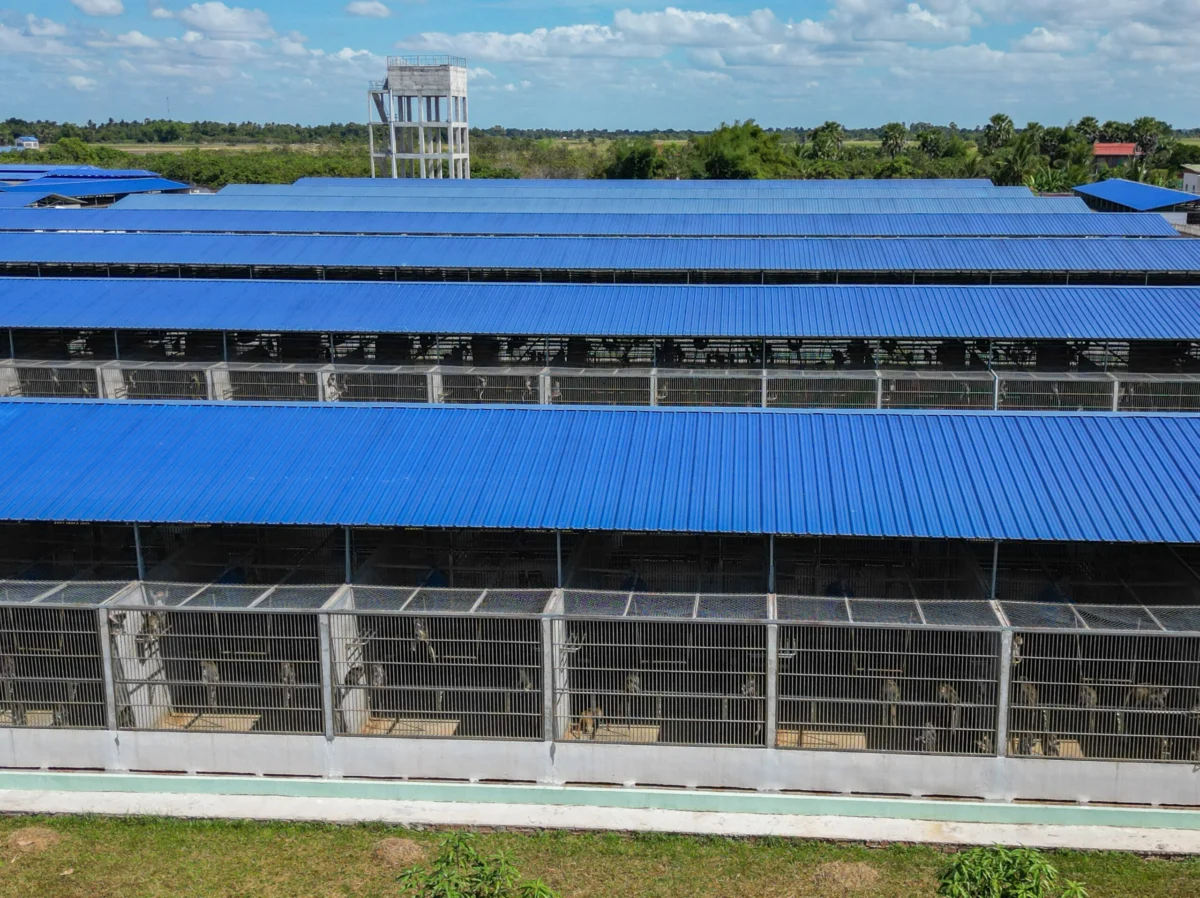
The climate of Vietnam’s Central Highlands, rising high above the country’s muggy coast and river deltas, wasn’t lost on erstwhile French colonists. In the early 20th century, seeking relief from tropical lethargy and illness, they carved a health resort from pine forests at 1,600 metres elevation. They named it Dalat, establishing a cool-weather sanctuary in the heart of Southeast Asia.
As it turned out, apart from its benefits for human well-being, Dalat proved to be a remarkable place to cultivate crops that struggled immensely at sea level. Vegetables and fruits such as avocados, artichokes, and strawberries thrived in the refreshing mountain climate. Flowers like orchids, roses, and hydrangeas flourished as well, while coffee farms and cashew orchards gradually proliferated on the steep-sided mountain slopes.
Much to the frustration of the French, however, wine grapes did not fare as well in the immediate vicinity. Being fiercely devoted to their wine culture, the colonists held high hopes that the upland climate might eventually yield something akin to the Vitis vinifera of their European homeland—a merlot, perhaps, a robust cabernet, or a crisp sauvignon blanc.
Through many fits and starts, that ambition has finally materialized, even though the French colonists are long gone.
Today, the Ladora Winery, operated by Ladofoods, is firmly established in greater Dalat. While its products may not always align with the traditional palates of many Western wine connoisseurs, it stands out as a pioneering enterprise. As Tu Lê Huy, president and co-founder of the Saigon Sommelier Association, affirmed, it remains the "only one with a proper vineyard and winemaking" infrastructure of its kind. Indeed, Ladora operates as the sole start-to-finish commercial winery anywhere in the territory of the former French Indochina.
Ladora successfully manages its own viticulture and wine processing pipeline. The grapes—including cabernet sauvignon, shiraz, merlot, sauvignon blanc, and the hybrid Cardinal varietal—are cultivated across 125 hectares of vineyards situated near Phan Rang, not far from the ancient ruins of the Champa Empire. Immediately following their twice-yearly harvest, the grapes are trucked 60 kilometers uphill to the Ladofoods processing facility. There, they undergo de-stemming, crushing, fermentation, pressing, filtering, aging, and bottling.
The early French settlers had originally found local grapes far too tart for viable winemaking. Even with vineyard cuttings imported directly from Europe, the intense regional heat and humidity produced only low yields of bitter berries. Consequently, they shifted their focus toward crafting sweeter fruit wines, notably apple and strawberry varieties. Local populations were already well aware that tropical fruits, including bananas and pineapples, could be fermented to yield a high-proof, if barely palatable, household liquor.

Following the normalization of diplomatic relations with the West during the 1990s, wine grapes made a triumphant reappearance in Vietnam, supported heavily by Australian and European investment alongside modern agricultural technology. The key to this renewed operational success lay in separating the agricultural production zone from the processing facility.
"Dalat is too rainy, too fertile for grapes," explained Huy, one of the three Vietnamese professionals who established the Saigon Sommelier Association in 2017, which has since expanded to 120 members. "Dalat is great for tea and coffee, but not good for grapes. That’s why Lado grows its grapes in Ninh Thuan province."
Wine in Asia
Across the broader landscape of Vietnam and neighboring nations, the alcoholic beverage sector continues to evolve. In Hanoi, the MAM Distillery, established in 2019, blends traditional rice wine with fermented fruit juices, incorporating 15 distinct flavors ranging from kumquat and raspberry to lemon. Meanwhile, Sân Tinh, founded in the capital by a Swiss winemaker in 2000, produces small-batch rice infusions recognized for their distinct herbal qualities.
Other domestic ventures have faced distinct challenges. The DalatBeco wine company, launched in 2007, has frequently imported fruit from France to offset persistent struggles regarding the quality and consistency of grapes produced by local independent growers, despite maintaining a joint-venture partnership with winemaking experts in Avignon.
"A lot of bulk wine importers bottle their own wine here," Huy noted, highlighting a common industry practice within the country.
Geographically speaking, the nearest full-scale wineries to southern Vietnam are located nearly 1,000 kilometers away from Dalat, situated in Thailand’s Khao Yai hills northeast of Bangkok. Cambodia maintains a notable fruit winery in Battambang province, while other Asian countries continue to make gradual progress in developing their respective viticultural sectors.
A prominent champion of these regional developments is American wine educator and author Liz Thach, a certified Master of Wine and a professor at California’s Sonoma State University.
"I am pleased to see the growth of wineries in Asia, along with consumer interest in wine," Thach said. "China actually has a very old wine culture and over 400 wineries, with some of them producing excellent award-winning wines. Bali now has four wineries, and I recently visited one of them and was extremely impressed with the quality of the wine."
She added, "Vietnam has also been producing wine for many years, and they have become very creative in pairing wine with the delicious Vietnamese cuisine. Wineries are growing in number in Thailand, Japan, Korea and India. I believe there is an exciting future for wine in Asia."
Huy expressed a more tempered view regarding Chinese wines compared to their Japanese counterparts.
"China is still very much in the early stage of winemaking," he observed. "I tried some; it still has a lot of tannin and lacks character. But Japan makes some nice whites, which they’ve crossed with native grapes suitable to the climate."
Profit and Projection
From a strictly commercial standpoint, wine production remains far from being a dominant economic juggernaut in Vietnam. The domestic consumption of imported wines significantly surpasses that of home-grown brands. In 2023, the national wine market yielded approximately $229 million in revenue, translating to about $2.30 per capita. By stark contrast, United States wine revenue exceeded $56 billion, with a per capita consumption rate of roughly $58. Nonetheless, steady growth in the Vietnamese wine market is projected at a rate just under 4% annually through 2027.
Financial figures released by Ladofoods underscore the disruptions the domestic industry experienced in 2022 due to the fallout from the Covid-19 pandemic. As Vietnam’s leading commercial wine producer, the company netted $10.15 million in sales in 2021, but that figure dropped significantly to $7.85 million in 2022. Industry indicators suggest that subsequent figures will reflect a recovery exceeding $9.2 million, equivalent to roughly 223 billion Vietnamese dong.
According to tasting-room manager Ngoc Dung, roughly 40% of Ladora’s total production is exported to neighboring Asian markets. Japan accounts for the lion’s share of these exports, followed closely by South Korea. Smaller consignments are regularly shipped to Thailand, Cambodia, Malaysia, Singapore, Laos, China, and Taiwan, leaving the remaining 60% of production dedicated to the domestic market.
"The Vietnam market is definitely an entry-level market," Huy said, characterizing local consumer habits. "They are only starting to get the idea of wine pairing. There’s a niche market of well-educated and really wealthy Vietnamese for whom classic Bordeauxs are number one."
He noted shifting regional preferences across the country: "They’ve started to drink white with seafood. But for the most part, white wine is not working well here. It’s better in the north because North Vietnamese have a different palate. They like more acidity but not sweet. Central Vietnam likes more spice. The South likes sugar."
A Visit to Ladora
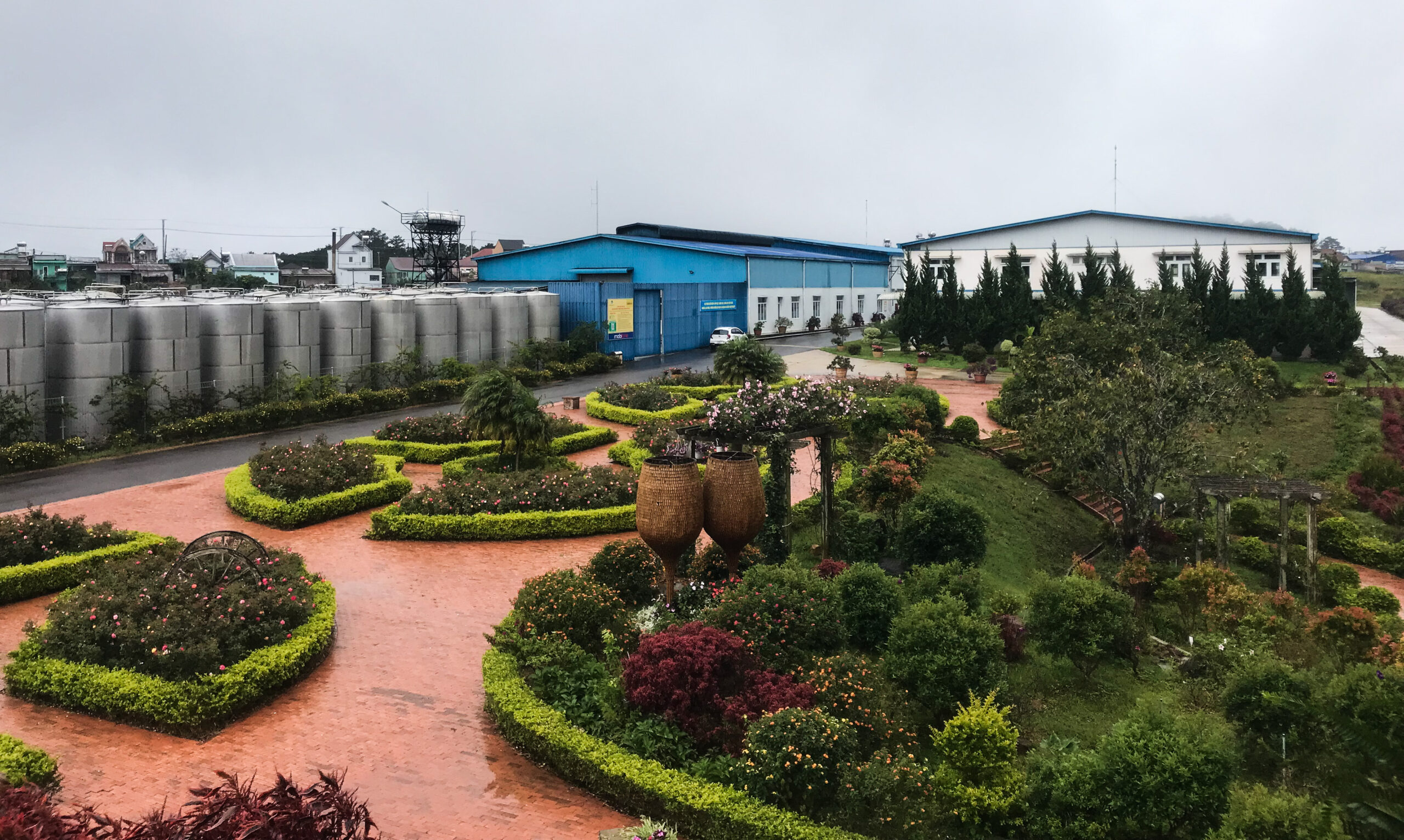
The Ladora Winery is located 28 kilometers east of Dalat city within the highland terrain of the Phat Chi district. The elegant Chateau Dalat sits atop a manicured garden knoll at the center of a building complex that overlooks a landscape of greenhouses supplying colorful flowers to markets in Dalat and Ho Chi Minh City.
Descending 25 steps beneath an earth-covered mound reveals an extensive and elaborate underground wine cellar. Oak barrels filled with aging cabernet sauvignon, shiraz, and merlot, alongside stainless-steel vats containing sauvignon blanc, are stacked neatly against the subterranean walls. A central stack of unlabeled red wine bottles occupies the middle of the chamber, accompanied by a long tasting table intended for visiting tour groups.
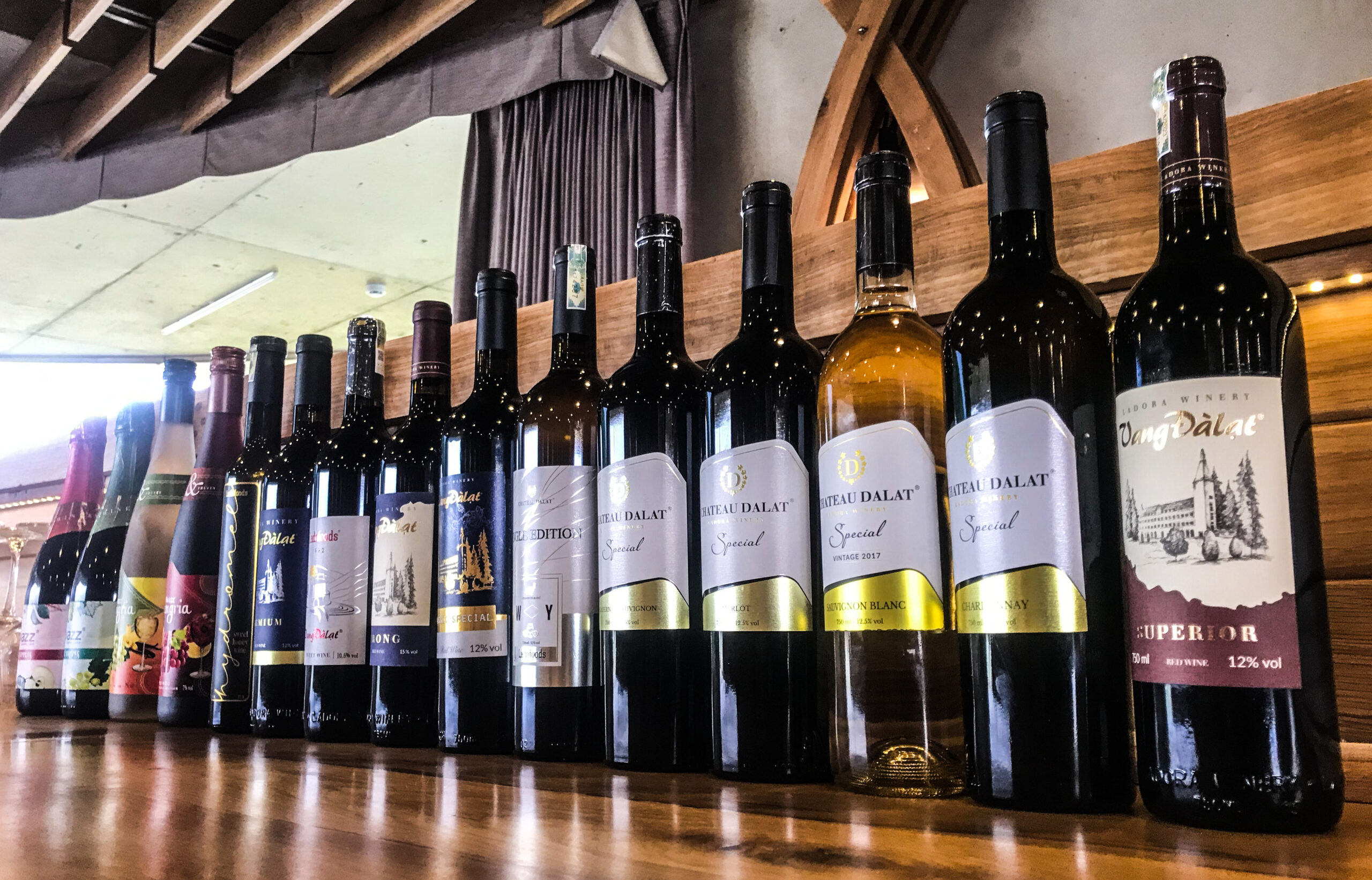
Assistant winemaker Nguyen Lan explained that the facility produces two principal categories of wine from the same harvest to cater to distinctly different consumer preferences. The Chateau Dalat brand is formulated to appeal to those with a European preference, maintaining an alcohol volume around 12%. Conversely, the Vang Dalat brand, which blends traditional grapes with the hybrid Cardinal varietal, typically exceeds 15% alcohol content. Ladora also manufactures a sweet, lower-alcohol Nouvo Sangria and a sparkling Vivazz fruit wine.
"Mostly, Asians like the sweeter wines," Lan explained. "So we add mulberries, whose sugar increases the alcohol content while making the colour a bit lighter."
"In Dalat, there’s just not enough sugar in the natural wine," sommelier Huy reiterated, reinforcing the technical reasoning behind the regional blending practices. "The mulberry adds more sugar and more colour."
European consumers, by contrast, tend to favor unblended Chateau Dalat varietals, which are produced under the direction of head winemaker Lê Binh alongside visiting European consultants. Select bottles from these premium lines have received formal recognition at international wine competitions held in Hong Kong and San Francisco.
A Sample Tasting
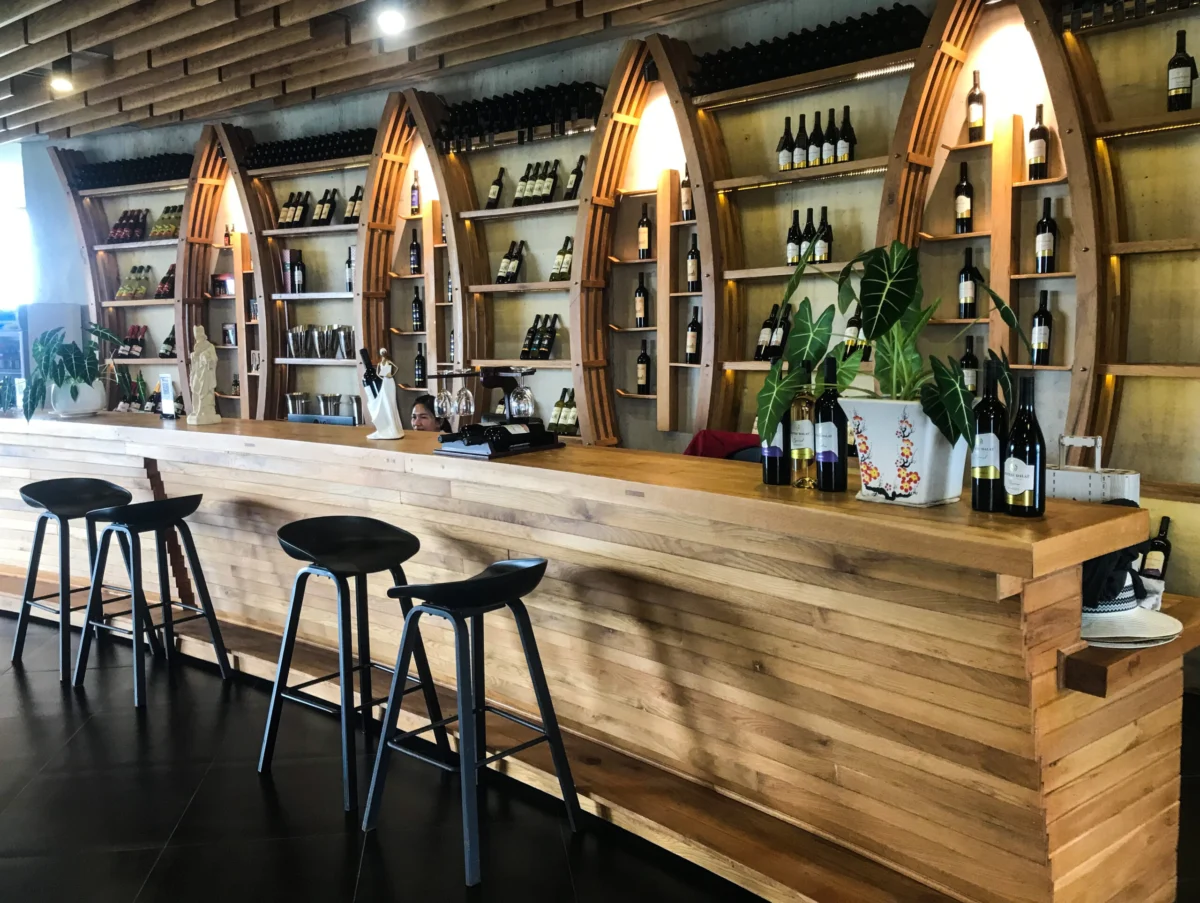
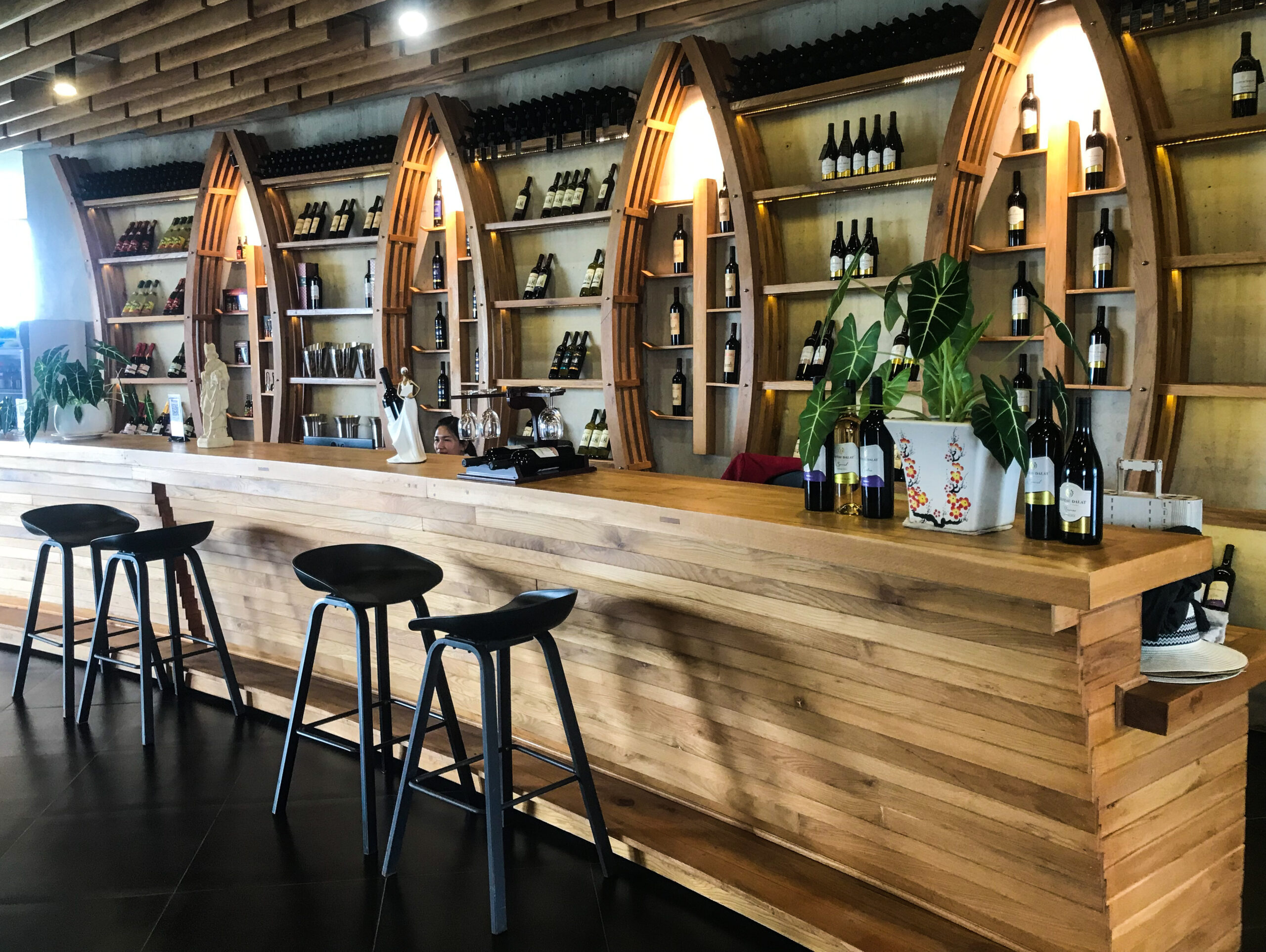
A visit to Ladora’s sophisticated, Czech-designed tasting room typically begins with a multimedia presentation introducing the Ninh Thuan vineyards. The company directly owns approximately 20% of the grape-growing land in the region, while the remaining 100 hectares belong to independent local farmers contracted to supply Ladora exclusively. Modern drip irrigation systems ensure that the vines receive adequate hydration throughout the prolonged dry season, while flocks of domestic ducks are deployed to patrol the vineyard hedges and naturally manage insect pests.
Annual grape yields average between 10 and 15 tonnes per hectare, according to Lan. The harvested fruit is transported uphill to the modern Central Highlands processing plant, where indoor temperatures are meticulously maintained between 18 and 20 degrees Celsius.
Sampling the extensive Ladofoods catalog in a single session is a formidable task, as the company produces more than two dozen distinct labels. A representative tasting serves primarily an instructional purpose. The 2017 Chateau Dalat Special sauvignon blanc, for instance, is exceptionally dry with a tart profile and distinct aromas of lime and passion fruit, making it an ideal pairing for shellfish.
The Vang Dalat Classic Special utilizes a 70-30 blend of Cardinal grapes and mulberries. Despite exhibiting high acidity and peppery spice notes, it finishes with a surprisingly mellow character. "It’s my favorite," Lan remarked. Meanwhile, the Vang Dalat Strong, boasting a 15% alcohol content, combines 85% Cardinal grapes with 15% mulberries, yielding a lighter ruby hue and sweet berry aromas reminiscent of jam. "Korean guests love this one," Lan noted. Because of their mulberry content, these Vang Dalat selections do not carry a specific vintage date.
Adopting a more traditional approach, the 2018 Chateau Dalat Reserve cabernet sauvignon is aged for a year and a half in French-made American oak barrels, presenting subtle black currant notes at a retail price of $14. Aged for an additional six months, the 2019 Chateau Dalat Signature shiraz offers an earthy, full-bodied profile featuring rich tannins and a white-pepper finish, retailing at $34.
"Japanese and Koreans love this one," Lan said.
Despite these offerings, domestic perception remains a hurdle. "Most people in Vietnam have the idea that import wine is better than wine from Vietnam," Lan admitted. "So it’s hard to change their mind."
Some local experts share a similar skepticism regarding the commercial offerings. Huy suggested that domestic mass-market products occasionally lack artistic originality, offering a wry assessment of the industry’s origins: "Welcome to the government company." Formerly a state enterprise, Ladofoods now operates as a publicly traded joint stock corporation.
Looking Ahead
Today, as a picturesque city populated by nearly half a million residents, Dalat remains a popular destination for both domestic and international travelers. It functions simultaneously as a cool-weather health retreat and a major educational hub, with local universities gaining renown for their academic contributions to biotechnology, nuclear physics, and architecture. Beautiful public gardens encircle the city’s urban lakes, while its bustling street market is celebrated throughout the country.
Despite this vibrant tourism culture, permanent winery tasting rooms remain absent in Dalat itself, even though there are no explicit legal prohibitions against them. While regional wines are widely available across local retail shops and within Ladofoods’ dedicated showroom in Ho Chi Minh City, consumers currently lack the opportunity to sample products prior to purchase—a dynamic that industry observers view as an untapped marketing opportunity.
Foreign investors have periodically evaluated the feasibility of establishing alternative wine-producing regions elsewhere in Vietnam, but Huy remains skeptical about such prospects materializing.
"In the North, we don’t have a delta big enough for vineyards," he explained. "It’s only rocks."
He added that while the Bana Hills near Danang possess environmental conditions well-suited for wine grapes, logistical and regulatory hurdles present an insurmountable barrier. "The best climate is in the middle of a national reserve—and money cannot talk in the national reserve. There was interest from an Italian winemaker, but the wine would have had to be priced at $70 a bottle. There would be no way to sell it."