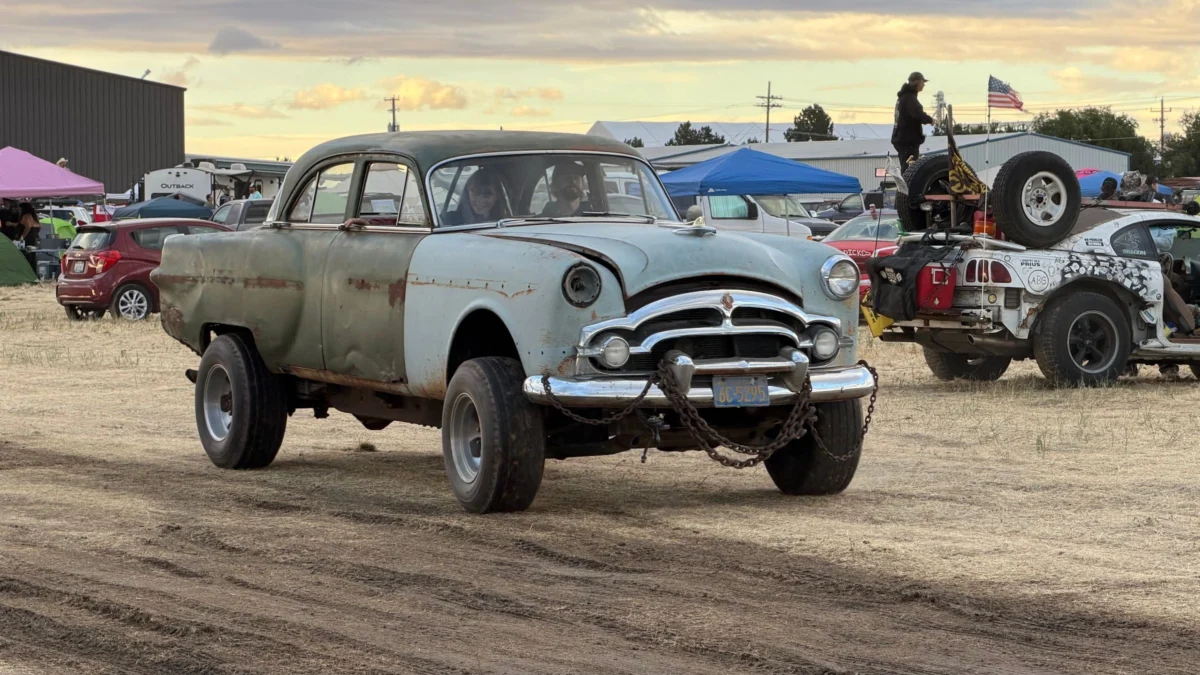
A whining growl interrupted the morning silence just after six o’clock in the high desert of central Oregon. The day’s first emissary—a buzzing minibike—darted past, launched from an eclectic armada of custom-built vehicles, beat-up sedans, and improvised contraptions. Around the campsite, participants were busy reawakening their doomed creations using little more than cans of WD-40, basic hand tools, and a heavy dose of mechanical optimism.
They are Gamblers with a capital G, living by their own car-centric lexicon and a remarkably meager rule set, the primary tenet being simple: Don’t be a dick. They are gearheads, sharp-witted jokers, and iconoclasts who take pride in fixing broken things, usually internal combustion engines that long ago passed their prime.
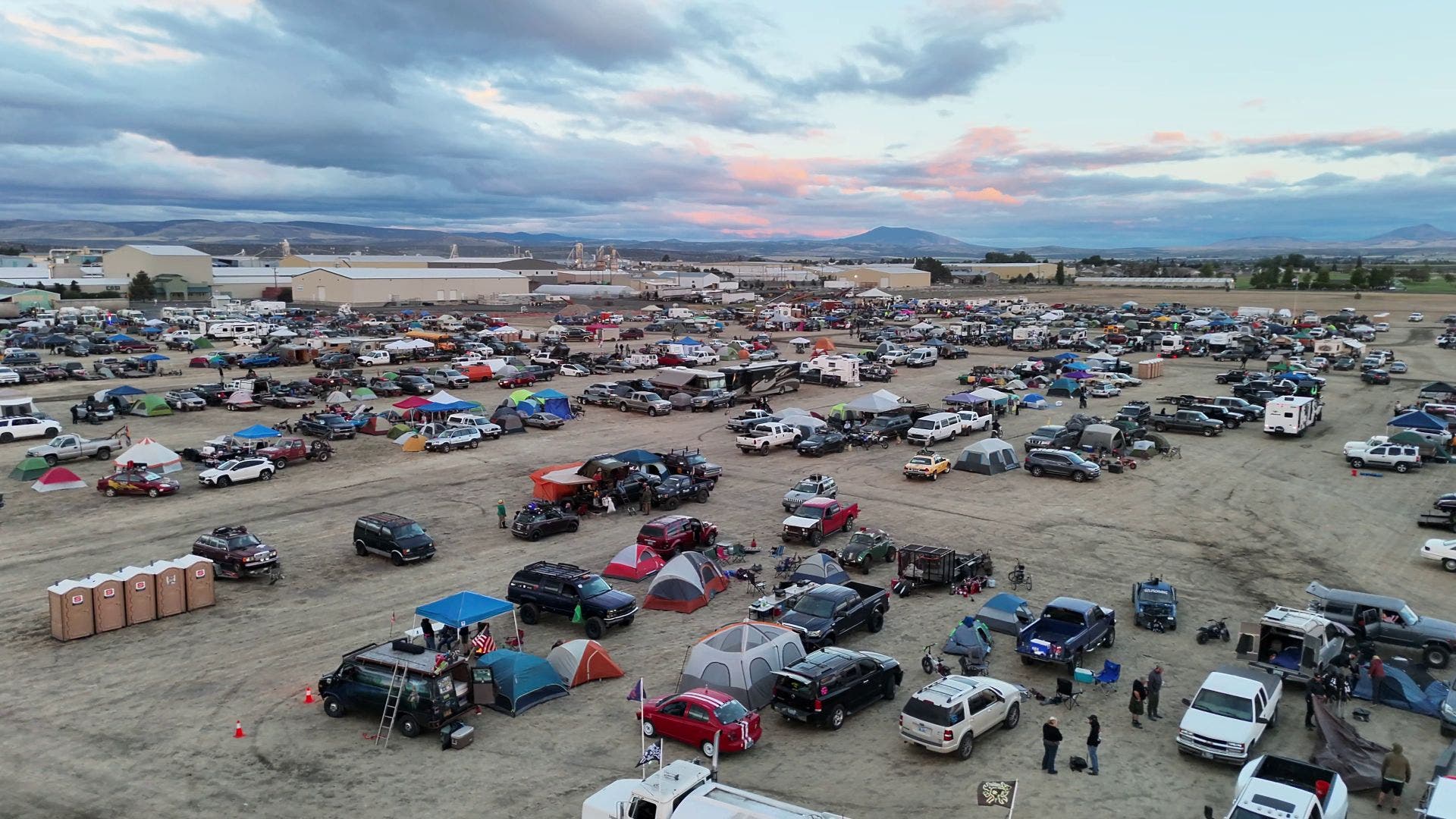
On this late June weekend in Madras, Oregon, they congregated four thousand strong as part of a sweeping, nationwide movement to clean up trash-filled public lands. The annual Gambler 500 event, also known as the OG 500 or simply Gamblertown, started small in Oregon just over a decade ago. Over the years, it has grown into a massive gathering that participants often describe as equal parts Burning Man and the Baja 1000.
Attendees modify vehicles of every conceivable sort—ranging from old cars and trucks to delivery vans and retired school buses—turning them into all-terrain adventure machines. Some participants dress in outlandish costumes as they venture deep into the backcountry to collect trash, enjoy the outdoors, and experience nature. Today, there are active Gambler chapters in every state, successfully blending off-road rambling with hands-on environmental stewardship.
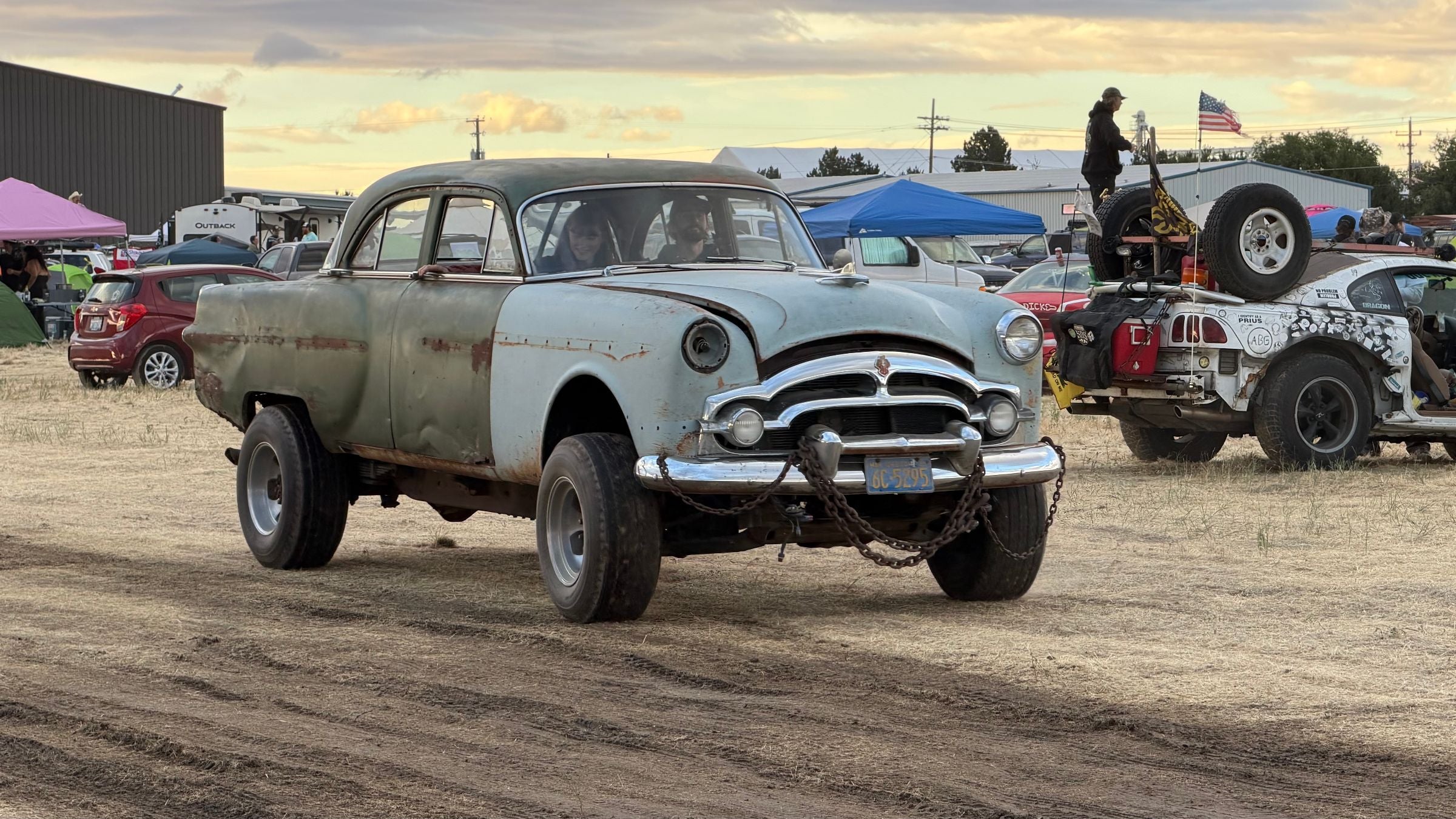
Invariably, these gatherings draw frequent comparisons to the Mad Max movie franchise. The oddest of vehicles—affectionately referred to as hoopties, beaters, or worse—sprout bizarre appendages like plastic gnomes, giant spiders, or even propane-powered flamethrowers. Yet while the cinematic comparison provides a comforting cultural reference point, the comparison quickly falls apart. The Mad Max films are packed with dystopian characters actively trying to kill one another, whereas the Gamblers are waging war against an entirely different enemy: illegal litter and abandoned trash on public lands.
To organize these efforts, participants rely on the Sons of Smokey, the Gambler 500’s dedicated nonprofit wildlands cleanup arm. Through a publicly available mobile application, users can mark illegal dump sites on public lands, allowing drivers to follow digital waypoints and remove everything from scattered household garbage to abandoned boats, appliances, and recreational vehicles.
While no comprehensive federal report fully captures the total extent or financial cost of the trashing of U.S. public lands, academic studies consistently highlight illegal dumping as a persistent and growing problem. The federal Bureau of Land Management oversees approximately 245 million acres of public land, primarily concentrated across twelve western states, alongside millions more acres managed within state and federal parks and forests. During routine patrols and organized cleanups, agency staff and volunteers frequently encounter major illegal dump sites stemming from unauthorized urban encampments, individuals seeking to evade local disposal fees, and other sources.
Arriving at Gamblertown the day before the morning minibike wake-up calls, a visitor surveying a sixty-acre field of mowed, yellowing grain stalks would immediately notice the eclectic nature of the early arrivals. There was a desert-tan van adorned with a mounted trophy buck skull on its roof and a giant faux cigarette protruding from the front grill, another van emblazoned with classic Pac-Man characters, and an assortment of primer-colored cars covered in defiant stickers and spray-painted slogans. Against this chaotic backdrop, a standard, plain black modern SUV looked forlornly out of place.
"Driving Some Cars Around Until They Die"
The Gambler 500 was born in an Oregon bar back in 2014, originating as a cross between a casual question and a running joke: Just how far could a beater car—specifically one purchased for $500 or less—actually make it off-road?
"In the beginning, it was just me and a buddy saying, ‘Hey, it will be fun driving some cars around until they die,’" recalled founder Tate Morgan.
Approximately a dozen members of a loose-knit club calling themselves the Gamblers kept the annual tradition alive, adopting specialized slang such as "ABG" (always be gambling) and declaring that "pavement is lava" in reference to staying off-road as much as possible. Their rallies followed preset waypoints, departing in staggered starts from the parking lot of a suburban Portland saloon.
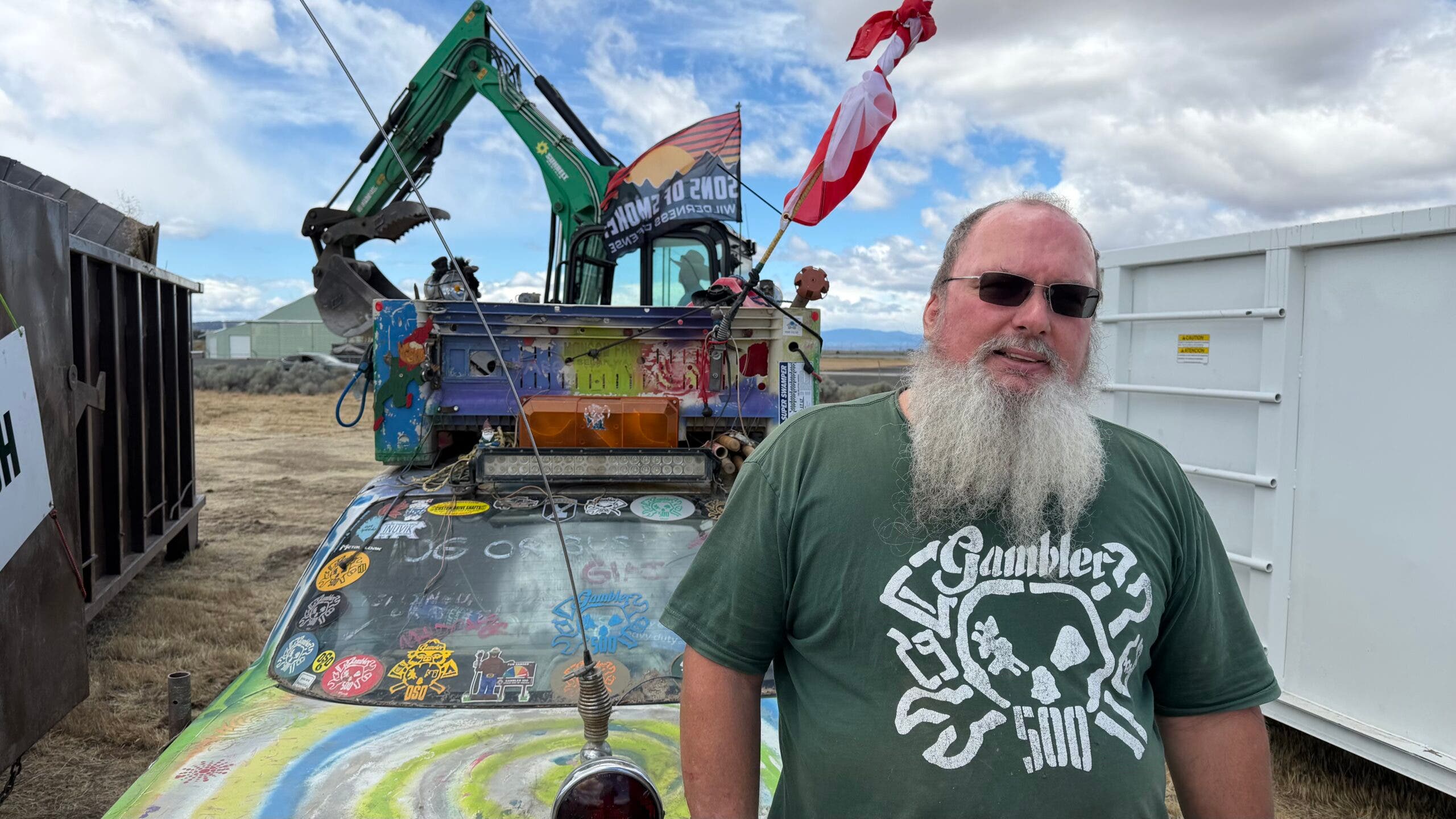
Morgan cuts an imposing figure at six-foot-four and 240 pounds, with glacier-blue eyes, unruly graying hair, a salt-and-pepper beard, and a permanent black ring of motor oil embedded beneath his fingernails. His direct conversational style mixes casual profumity with vocabulary words like prescient, ubiquitous, and propensity.
Reflecting on the past, Morgan described facing two major personal collisions a decade ago that tested his resilience and raised serious questions about the future of both his own health and his newfound hobby. The first was a diagnosis of testicular cancer, and the second was the unexpected viral internet attention generated by a video covering the 2016 Gambler 500 event.
When the following year’s rally rolled around, Morgan expected a modest turnout of a few dozen people, or perhaps a couple of hundred at most. Instead, three thousand participants descended upon central Oregon, resulting in immediate logistical chaos, massive traffic lines, parking headaches, and a flurry of citations issued by U.S. Forest Service officers for permit violations and an abandoned broken-down vehicle.
Faced with mounting pressure, Morgan had to decide whether to kill his creation or breathe new life into it. Having grown up in Eugene, Oregon, as a dedicated environmentalist influenced by activist and author Edward Abbey and his 1975 novel The Monkey Wrench Gang, Morgan understood Abbey’s call for people to defend the earth through direct action. However, rather than resorting to destructive tactics, Morgan chose to build bridges. If participants wanted to continue enjoying affordable outdoor recreation, he decided, they needed to give something meaningful back to the land.
How an Ancient Subaru Earned Its Nickname
Gathered around their camp in Madras, participants like Brett Hrouda and his friends shared the stories behind their vehicles and their goals for the weekend.
"We’re here to pick up some trash and do dumb shit," said Hrouda, a 47-year-old maintenance director and invoicing manager from near Roseburg, Oregon.
For his friend Tom Parker, the event is all about harmless shenanigans—which is precisely why Parker and his wife, Liz, left their children at home for the massive annual gathering, knowing it would feature dusty roads, heavy vehicle traffic, and plenty of social drinking after dark.
Hrouda explained that he finds genuine peace driving through the backcountry, following dirt roads wherever they happen to lead—at least until a trail leads to an illegal trash pile, where his patience quickly runs out. Demonstrating their deep disdain for litterbugs, Tom Parker proudly displays rings tattooed across his fingers bearing aggressive anti-litter slogans.
To be clear, the organization strictly promotes legal solutions, cleanup efforts, and community education rather than vigilantism. Official event flyers explicitly instruct participants not to engage with or collect trash from active, unhoused populations.
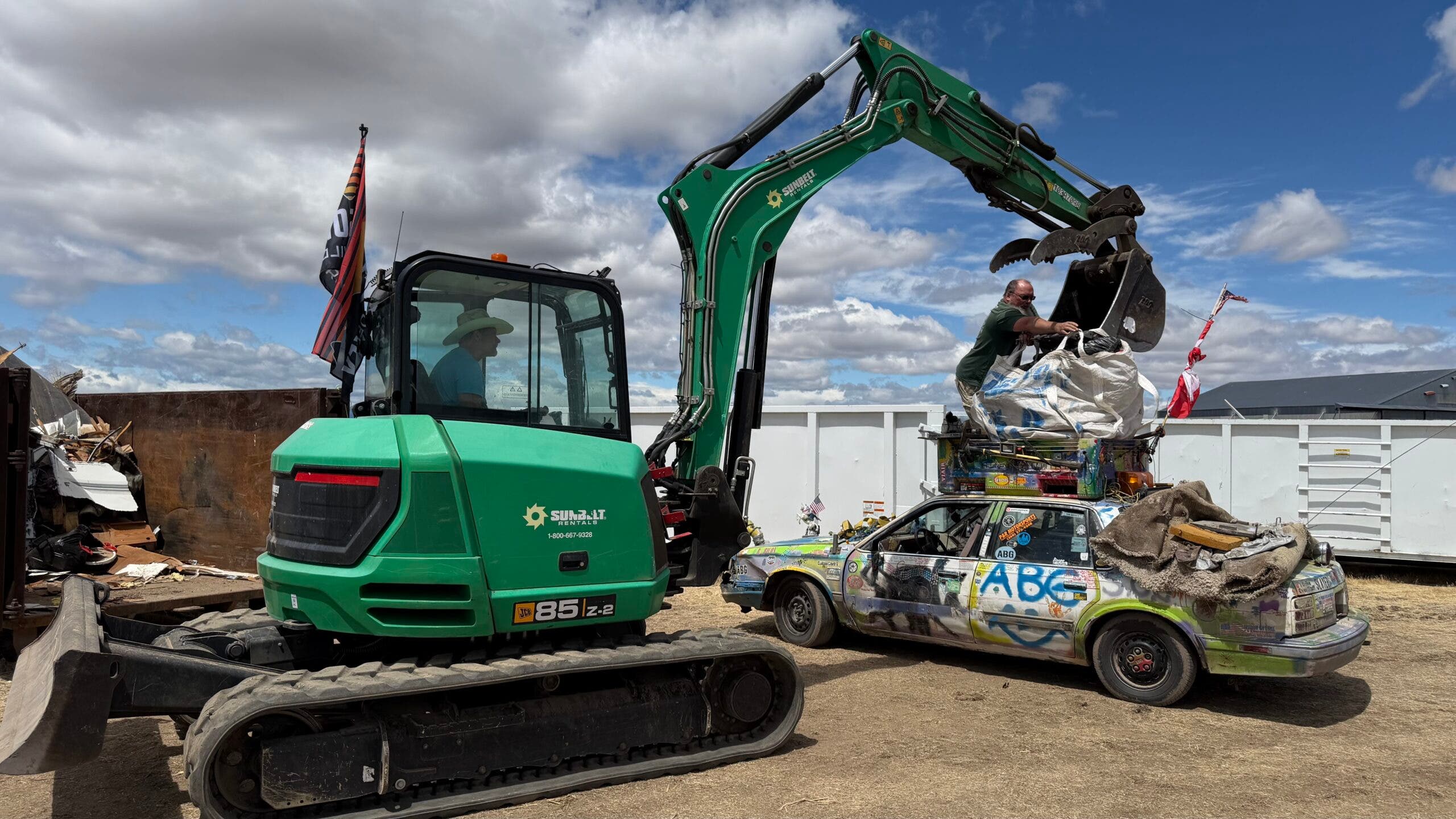
For Liz Parker, the event serves as an effective educational tool for the next generation. "What I love about this is that our kids are in the habit now of saying, ‘Mom, there’s trash in that ditch,’" she noted. "They see it and call it out. We’re passing stewardship on to the next generation."
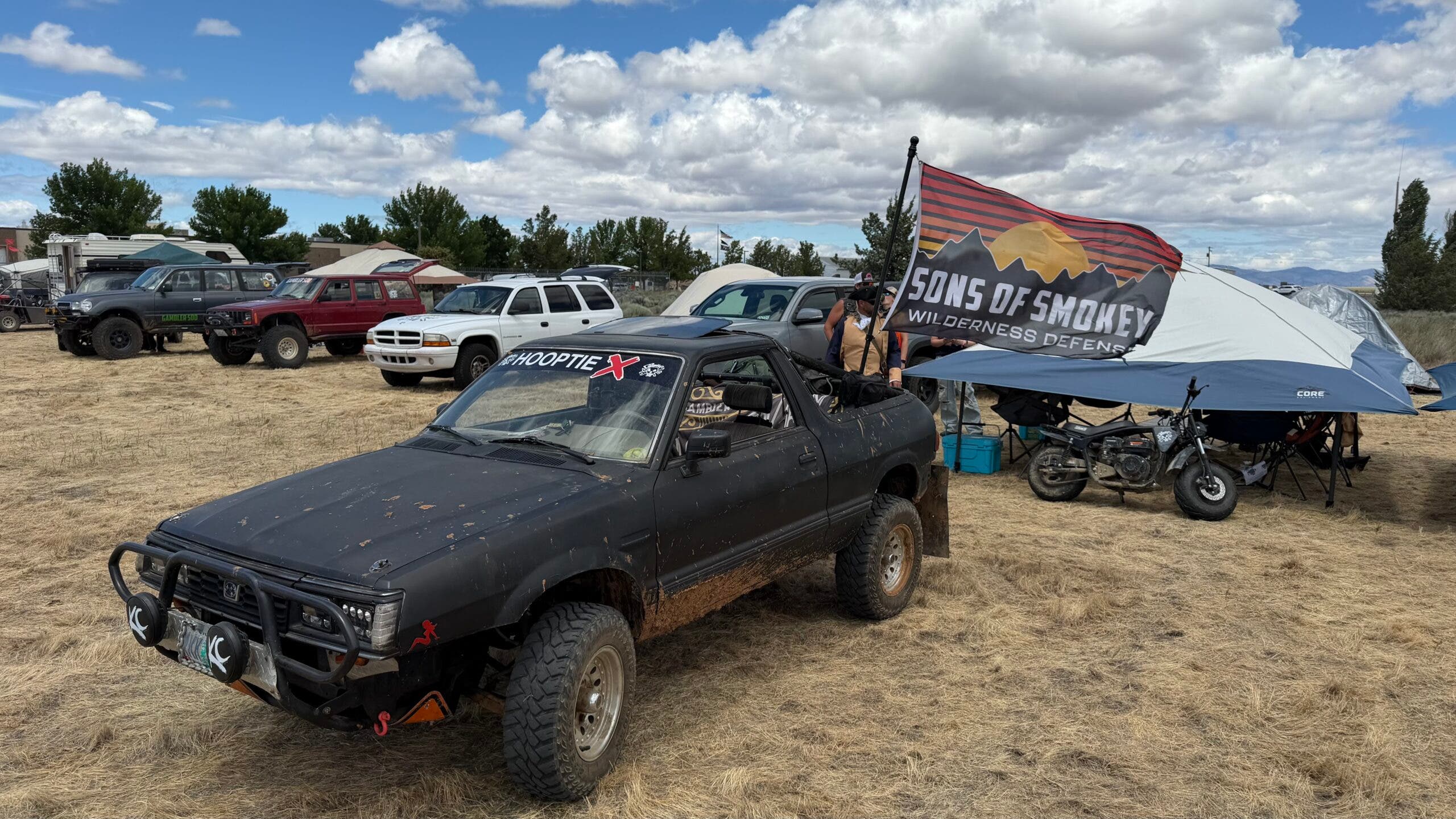
Tom Parker, a 40-year-old power-line arborist from Camas Valley, Oregon, originally purchased his first Gambler vehicle—an old Subaru—for $350 and drove it hard for three years until it finally began spewing thick clouds of smoke. He later acquired a 1985 Subaru GL hatchback, which had been chopped down into a makeshift pickup truck, by trading an old dirt bike.
The vehicle remained unnamed until the previous year’s rally, when Parker and his friends strapped an abandoned sofa and other roadside junk onto the back of the Subaru. Upon returning to camp, they were horrified to discover that a wild rat had hitched a ride inside the sofa and scurried into the vehicle’s cab. Panic ensued as Liz Parker struggled to unbuckle her seatbelt while her husband slammed on the brakes. Though the rodent did not survive the chaotic encounter, it earned the vehicle its permanent nickname: the Subarat.
Maintaining a Frankenstein Fleet
Keeping a collection of unconventional motorized contraptions running throughout the weekend requires constant mechanical attention. Nearby campsites featured an array of makeshift machines, including a rickshaw built from a scooter frame and spare wood, a riding lawnmower towing a rickety wooden cart, and a reverse trike constructed by combining bicycle and ATV components secured with scrap wood and twine.
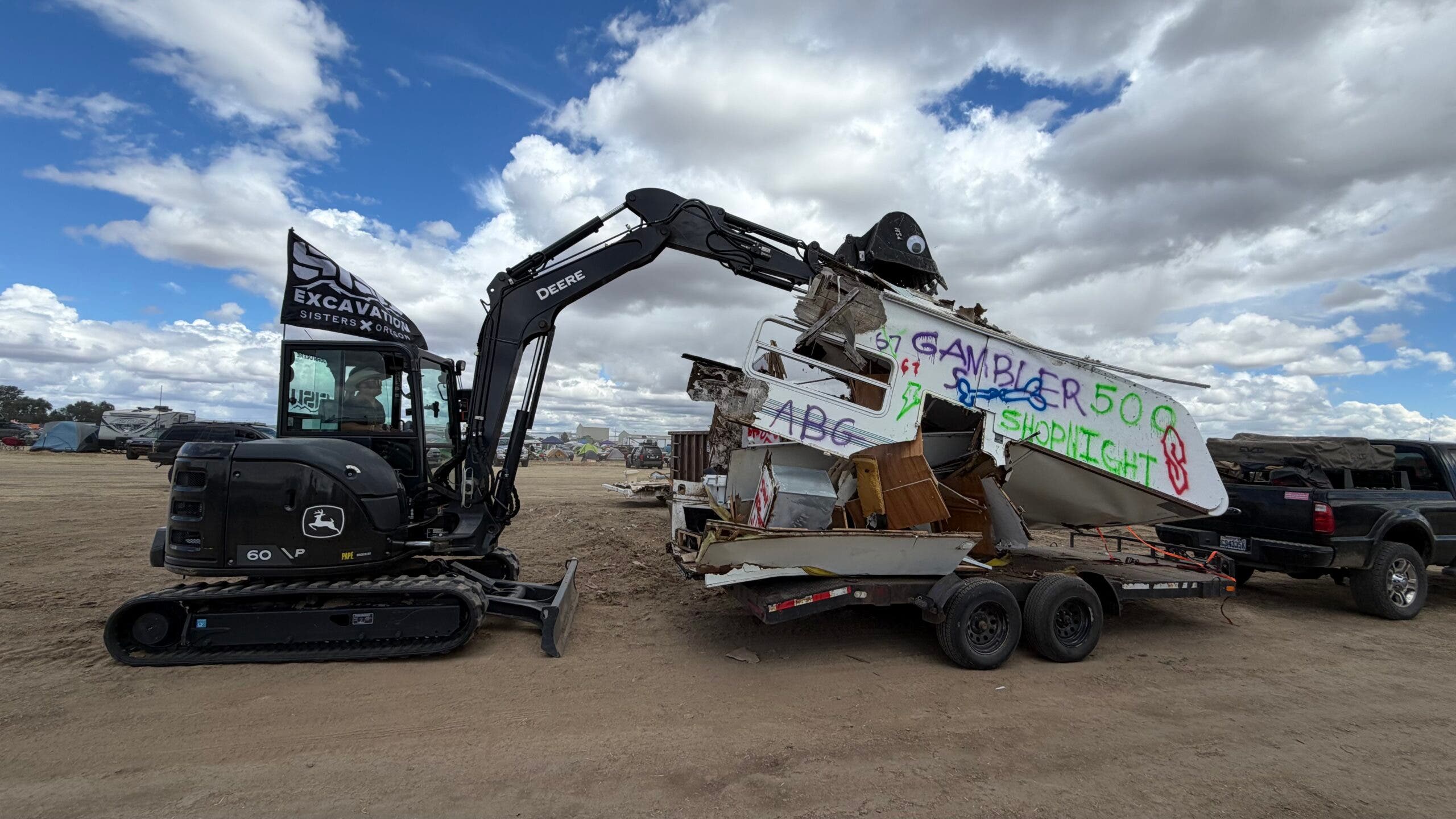
While maintaining this fleet, participants actively scouted marked illegal dump sites using the Sons of Smokey mobile application, hunting for prominent items to haul back to camp. Teaming up with local friends, technical experts spent their time balancing camp repairs with heavy-duty trash recovery operations.
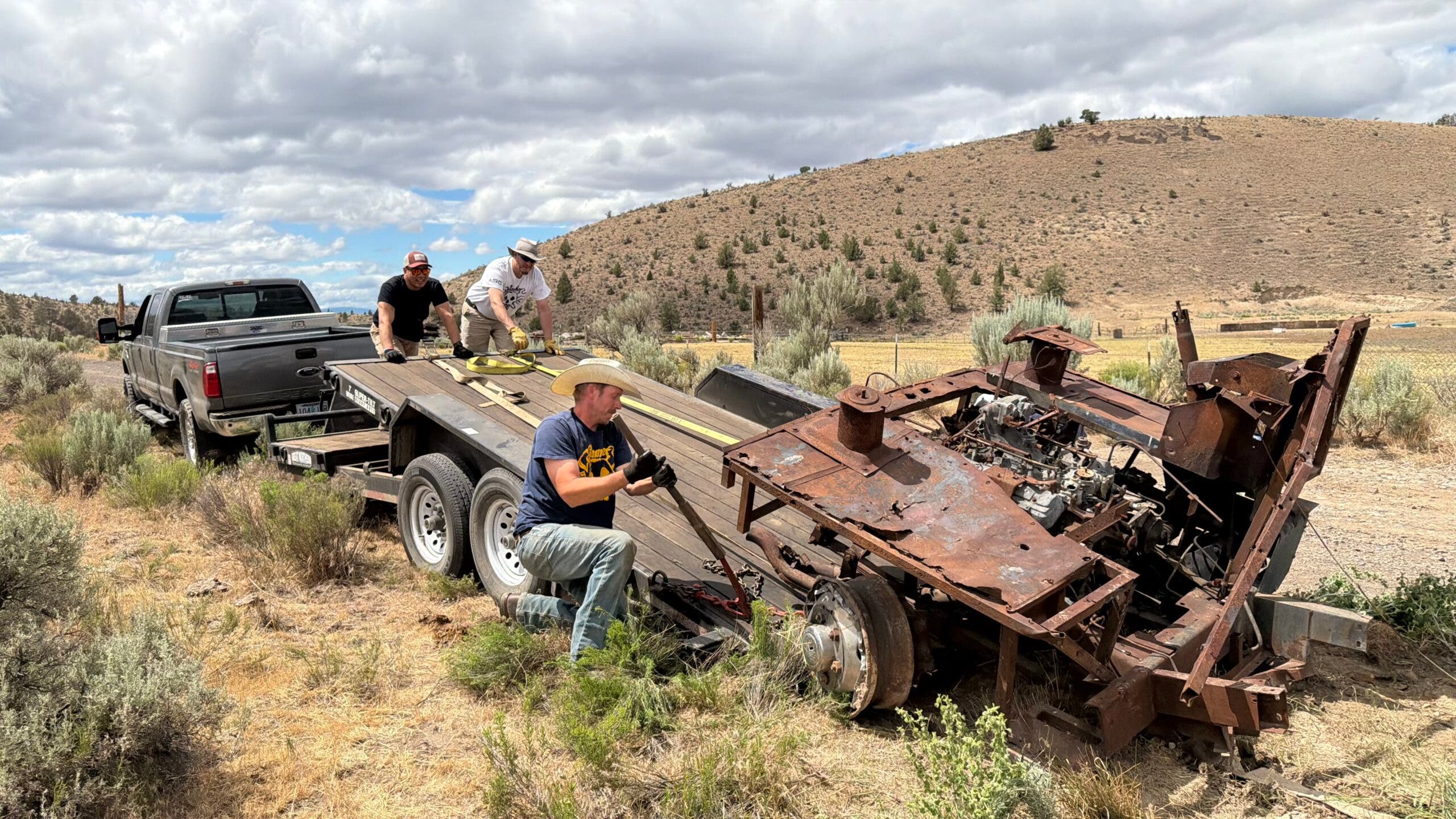
Later in the weekend, small convoys loaded flatbed trailers and headed out across rough gravel backroads to tackle remote dump sites flagged by the mobile app. Arriving at a target site listed as the "back half of a truck," volunteers instead discovered the rusted, semi-embedded front end of a heavy commercial semi-truck, complete with its motor, weighing nearly a ton. Lacking heavy machinery, the crew rigged a system of heavy-duty ratchet straps and chains, slowly hoisting the massive metal mass onto a tilted flatbed trailer before hauling it back to camp for eventual delivery to a metal recycler.
Expanding the Movement Nationwide
Following the rapid growth after 2017, Morgan worked to establish independent Gambler chapters across the country while deliberately refusing to turn the organization into a profit-driven corporation. Instead, he secured corporate sponsors to help offset operational costs for the flagship annual gathering.
The establishment of Sons of Smokey formalized the community’s primary mission: facilitating the collection and disposal of trash from public lands while fostering a non-partisan movement dedicated to outdoor stewardship. Over the years, the network has successfully removed more than six million pounds of trash from public lands across the United States.
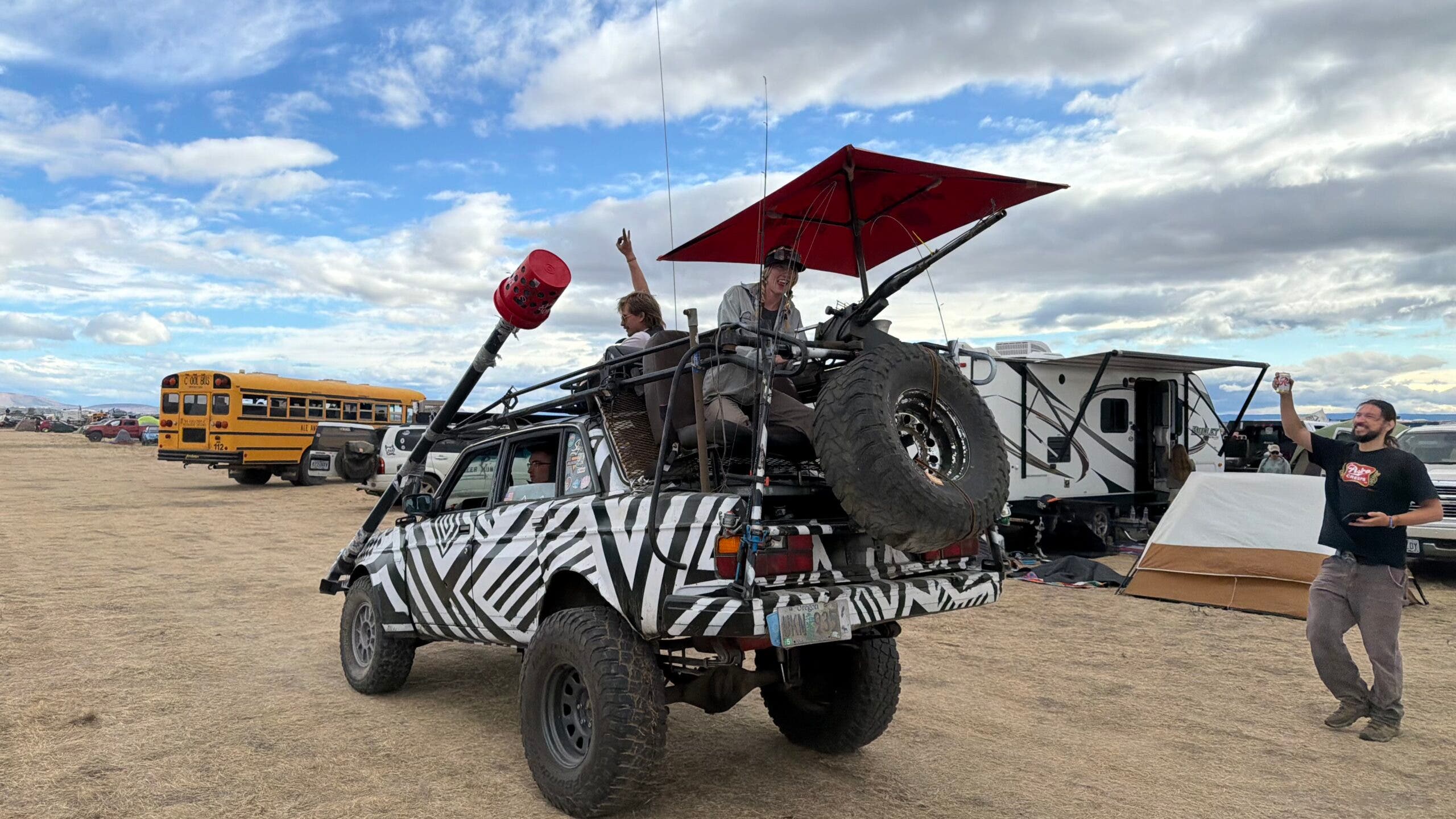
While the event no longer strictly enforces the original $500 vehicle price cap, Morgan continues to champion the underlying philosophy of making functional machines out of discarded parts. By keeping event registration fees minimal and allowing out-of-state chapters to use the Gambler name for free, he has successfully cultivated a loyal community.
"By making it about trash and conservation stewardship, I’m also betting that everyone who comes out isn’t blinded by politics," Morgan said. "We might disagree on a lot of stuff, but if you keep that and your hate speech to yourself, it’ll be fine."
Cycles of Ruin and Renewal
As the weekend operations continued, convoys of volunteers fanned out into surrounding canyons and public lands to tackle remote dumping grounds. Arriving at locations like Willow Creek Canyon, participants frequently encountered heartbreaking scenes of widespread degradation—scattered cans, broken glass, mattress springs, and abandoned auto parts strewn across pristine landscapes.
Despite the complexities of illegal dumping—which stems from a mix of personal laziness, economic desperation, and lack of accessible disposal options—volunteers remained focused on practical solutions. Working alongside military veterans, mechanics, and outdoor enthusiasts, participants spent hours filling industrial trash bags and securing heavy debris to vehicle roofs and trailers.
By the conclusion of the Madras event, the four thousand attendees had generated staggering environmental recovery statistics, collecting more than 391,000 pounds of trash, fourteen abandoned cars, eight recreational vehicles, four boats, and over 2,500 discarded tires.
While land managers and federal officials have increasingly praised the visible impact of these volunteer cleanup efforts, environmental advocacy groups raise ongoing concerns regarding the broader ecological impacts of off-road vehicle recreation on sensitive wildlife habitats, cultural resources, and public land ecosystems. Representatives from conservation organizations argue that while cleaning up trash is beneficial, motorized off-road activity can contribute to habitat fragmentation and resource degradation.
Morgan acknowledges that the actions of a minority of off-roaders have historically created negative perceptions, but he maintains that the tangible results of the organization’s cleanup efforts speak for themselves. With word-of-mouth participation and social media outreach continuing to expand, regional land management agencies and conservation groups in states like Utah, Idaho, and Arizona have increasingly looked toward partnerships with the Gambler community to tackle severe backcountry dumping challenges that local agencies lack the staff to address alone.
As the event drew to a close and participants packed up their battered vehicles, broken trailers, and recovered scrap metal, the high desert slowly returned to its natural quiet. Heading back out onto the asphalt toward home, the transient community left behind millions of pounds of debris that would otherwise have continued to decay across America’s public lands, proving that sometimes even the most unconventional subcultures can drive meaningful environmental renewal.