Madrid is increasingly emerging as one of Europe’s most rewarding autumn destinations, offering travelers a compelling mix of world-class art, expansive green spaces, a thriving culinary scene, and a vibrant nightlife that defies the traditional early-evening shutdown found in many other European capitals. As the intense summer heat gives way to crisp, golden weather, the Spanish capital settles into a rhythm that is ideal for both cultural exploration and leisurely urban strolling.
For travelers looking to escape the increasingly grey and chilly onset of winter in northern Europe, November provides a distinct meteorological and cultural sweet spot. The city enjoys comfortable daytime temperatures that are well-suited for extended walking tours, paired with a packed calendar of artistic, architectural, and sporting events.
Madrid Does Autumn with Exceptional Flair
While certain European destinations can feel subdued or melancholic once the summer tourist season concludes, Madrid maintains a lively and inviting atmosphere year-round. November brings a distinct golden hue to the city’s thoroughfares and parks, transforming the urban landscape with rich shades of yellow, orange, and red.
The comfortable climate allows for an ideal daily itinerary: spending the morning exploring the historic center, pausing for an unhurried midday meal, and walking off the calories in the vast expanses of El Retiro before settling into a traditional tavern for an early evening vermouth. Because Madrid is exceptionally walkable and benefits from frequent crisp, sunny autumn days, it provides a welcome refuge for visitors seeking an active yet relaxed city break.
A Global Capital for Art and Culture
Cultural enthusiasts will find that Madrid boasts some of the most significant art collections on the continent. The city’s famed "Golden Triangle of Art" anchors its cultural offerings, housing institutions of international renown. The Prado Museum serves as the primary repository for classic Spanish masterpieces, while the Reina Sofía holds iconic modern works, most notably Pablo Picasso’s Guernica. Complementing these giants is the Thyssen-Bornemisza Museum, which bridges historical gaps with an extensive survey of centuries of European and American art.
Beyond the major institutions, the city offers a more intimate look at its creative heritage through house museums such as the Sorolla Museum, the Lope de Vega House Museum, and the Museo Cerralbo. These spaces provide visitors with a rare glimpse into the private lives and historic residences of Spain’s celebrated artists, writers, and nobility. Having these spectacular indoor havens readily available also provides a practical advantage for travelers should the autumn weather turn brisk.
El Retiro and the City’s Green Spaces
Central to the Madrid experience is Parque de El Retiro, a sprawling 350-acre green space located in the heart of the capital. Designated alongside the Paseo del Prado as a UNESCO World Heritage site known as the Landscape of Light, the park takes on a particularly serene character in November.
Visitors frequently spend hours meandering beneath the changing autumn canopy, visiting the striking Crystal Palace, circling the central lake, or engaging in leisure activities such as hiring a traditional rowing boat. Alongside El Retiro, destinations like Parque de El Capricho offer romantic 18th-century gardens, winding pathways, and hidden historical structures that provide a peaceful counterpoint to the bustling central thoroughfares.
A Culinary Landscape Centered Around All-Day Dining
In Madrid, dining is treated not merely as a scheduled mealtime activity, but as an integral component of the urban culture and sightseeing experience. The city’s food markets function as vibrant social hubs. The Mercado de San Miguel, situated adjacent to Plaza Mayor, offers a wide array of tapas and gourmet specialties, while the Mercado de San Antón in Chueca pairs food stalls with a contemporary rooftop terrace. For more neighborhood-centric experiences, the Mercado de Vallehermoso and the Mercado de San Fernando in Lavapiés blend traditional vendors with independent food and drink enterprises.
Traditional taverns further define the city’s culinary identity. Historic establishments such as Bodega de la Ardosa, founded in 1892, and Casa Alberto, established in 1827, remain popular venues for classic regional fare, including tortilla de patatas, cocido madrileño, and locally produced vermouth. Similar institutions like Casa Labra and Taberna de la Dolores preserve centuries-old culinary traditions within meticulously preserved historic interiors.
A Packed Cultural and Event Calendar
November marks a high point for Madrid’s cultural programming. The annual Madrid Autumn Festival brings international contemporary theatre, dance, and performance art to various venues across the city, running alongside the established JAZZMADRID festival.
Architectural enthusiasts also benefit from events such as Open House Madrid, which grants public access to over one hundred historically and architecturally significant buildings that typically remain closed to general visitors. In addition to the performing arts and architectural exhibitions, the city hosts major sporting events, including prominent football fixtures at the Santiago Bernabéu Stadium and the Wanda Metropolitano, as well as equestrian showcases like IFEMA Madrid Horse Week.
Rooftop Panoramas and Evening Traditions
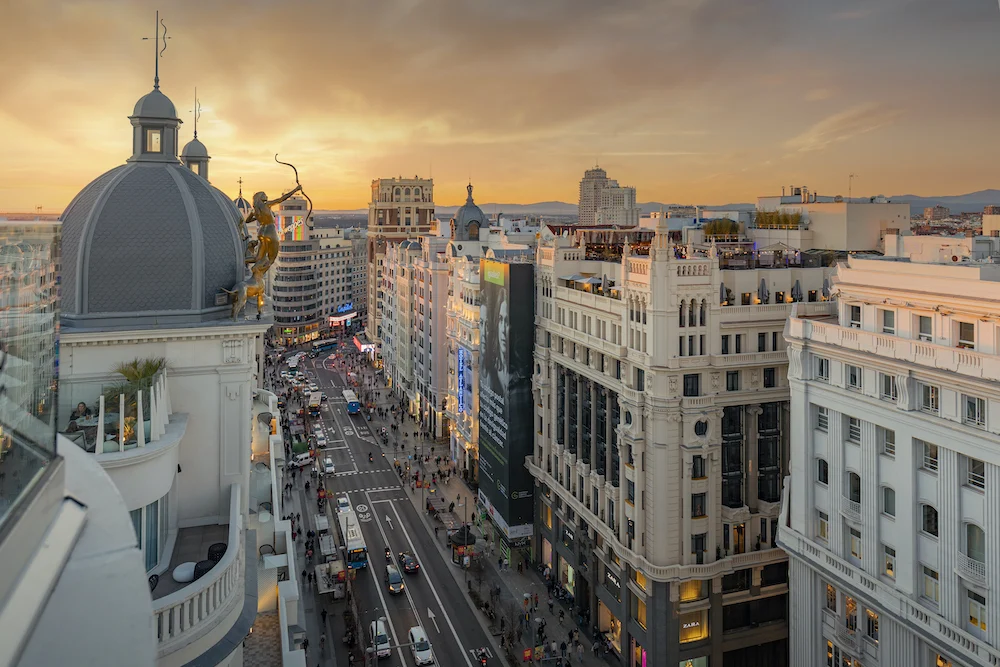
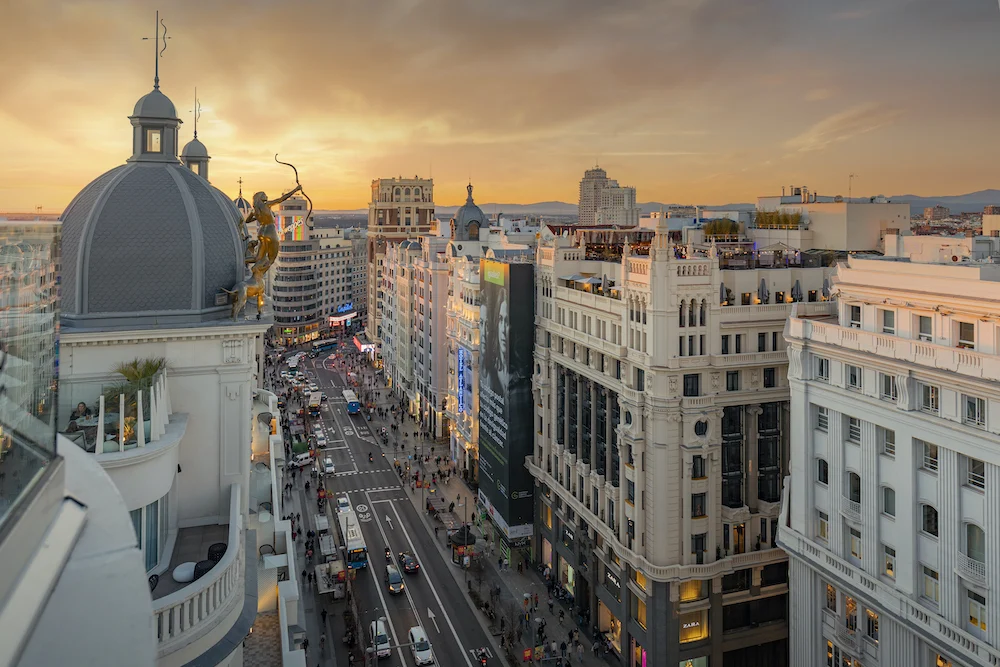
The urban landscape of Madrid transforms visibly as daylight fades, making the city’s extensive network of rooftop bars a popular destination around sunset. Venues such as the Azotea del Círculo, Picalagartos Sky Bar, Ginkgo Sky Bar, and the more budget-friendly Hat Rooftop offer panoramic views over iconic architecture, including the Metropolis building, Gran Vía, and Plaza de España.
Gran Vía itself—frequently styled as the Spanish Broadway—comes alive at night with illuminated theatres, flagship retail stores, and bustling pedestrian traffic. This nocturnal vibrancy underpins Madrid’s famously unhurried evening culture, where dinners, social gatherings, and late-night strolls routinely extend well past midnight.
Exploring Beyond the Obvious Sights
Beyond the primary tourist corridors, Madrid’s distinct neighborhoods—such as Malasaña, Chueca, and Barrio de las Letras—offer varied architectural styles, independent boutiques, and localized atmospheres. Exploring these areas without a rigid itinerary allows visitors to uncover lesser-known architectural gems, including the Baroque interior of the Church of San Antonio de los Alemanes, often referred to as Madrid’s Sistine Chapel, and the diminutive Ermita de San Antonio de la Florida, which features ceiling and dome frescoes painted by Francisco Goya.
For outdoor recreation, the Madrid Río park system and the massive Casa de Campo woodland provide extensive cycling and walking infrastructure, demonstrating the city’s capacity to blend urban sophistication with expansive natural environments.
Practical Information for Visitors
Madrid-Barajas Airport serves as the primary international gateway, offering direct connections to the city center via an efficient public transit shuttle system and metro network. While a stay of at least three full days is generally recommended to properly experience the major cultural sites without rushing, the city’s compact central layout and reliable public transport make both extended stays and short weekend trips exceptionally manageable.
With a wide array of accommodations distributed across central districts like Centro, Malasaña, and Barrio de las Letras, travelers can easily tailor their visit to personal preferences. Advance booking is strongly advised for popular museums, specialized guided tours, and specific cultural or sporting events scheduled throughout the autumn season.