MELAKA, Malaysia — Across the bustling urban landscape of Southeast Asia, Hainanese chicken rice stands as one of the region’s most recognizable and enduring street foods. Yet, within the historic and culturally rich enclave of Melaka, Malaysia, this ubiquitous dish takes on a uniquely localized form that continues to draw culinary pilgrims from around the globe. High on nearly every local recommendation list is Kedai Kopi Chung Wah, a humble, family-owned establishment situated on a prominent corner facing Jonker Street, where the timeless craft of shaping rice into hand-formed spheres remains the daily standard.
Melaka, Malaysia: A Historical Crossroads of Culture and Cuisine
To understand the culinary significance of Melaka, one must look far beyond contemporary tourism trends. The city’s strategic geography along the Strait of Malacca has made it a magnet for international travelers since the middle of the 15th century, drawing merchants and voyagers from across Asia and as far away as Europe.
When ocean-faring ships from China finally reached these shores, they brought with them profound cultural and gastronomic influences that permanently altered the local palate. While Hainanese chicken rice is distinct from Peranakan cuisine—a separate culinary tradition celebrated throughout Melaka and wider Malaysia—it represents a vital chapter in the migration of Chinese flavors into Southeast Asia. This cross-pollination of cultures created a vibrant food scene where generations of tradition continue to thrive in small coffee shops and open-air markets.
Hainanese Rice Balls: Tradition Shaped by Hand
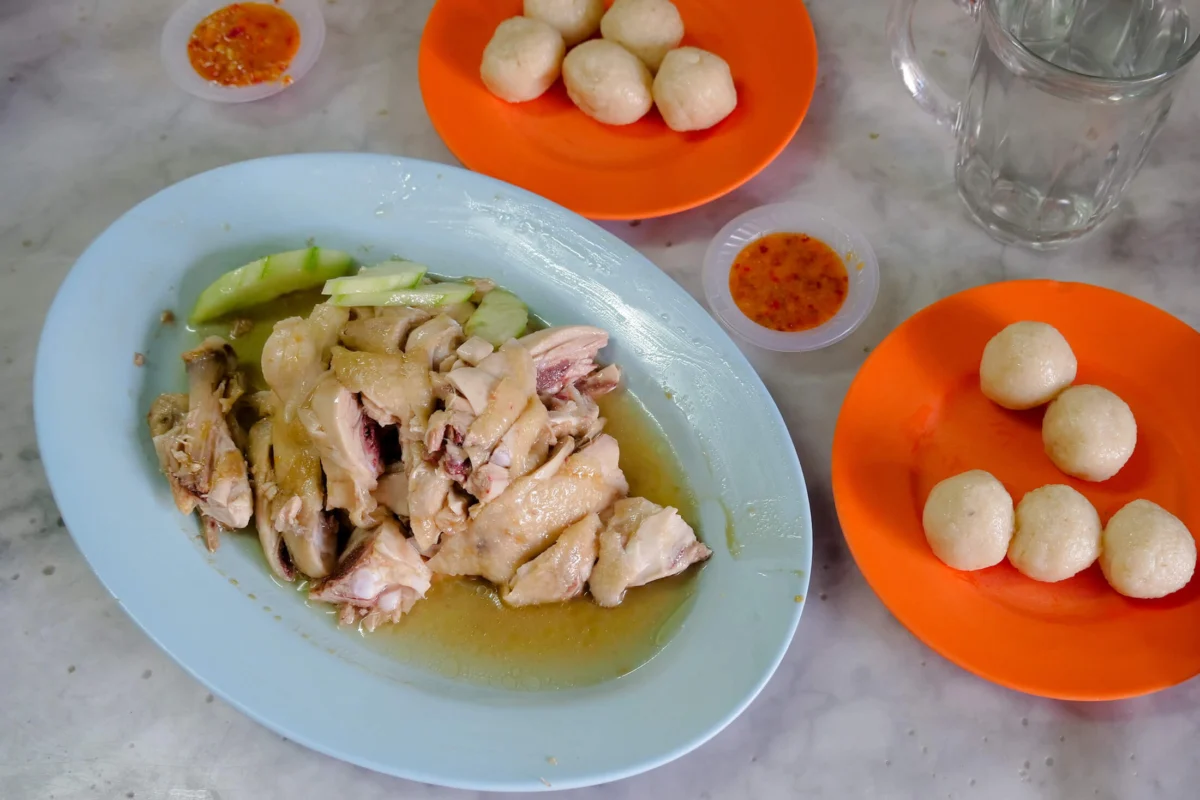
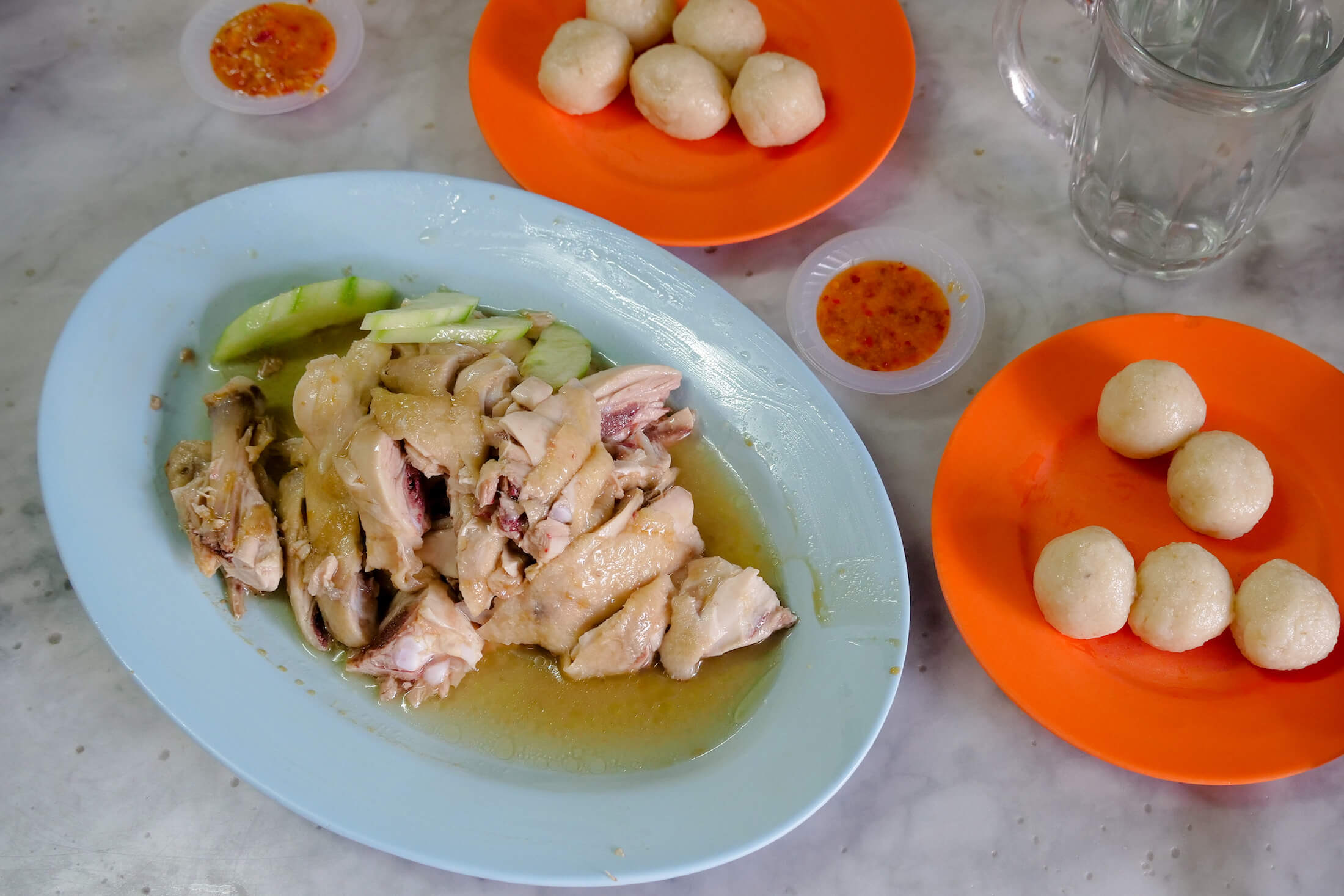
At first glance, the presentation at Kedai Kopi Chung Wah diverges sharply from conventional dining habits. Rather than resting loosely on a porcelain dish, the rice is tightly packed into small, firm spheres by hand. The preparation demands an extraordinary level of timing and manual labor, transforming a standard staple into a remarkably cohesive culinary item.
Remarkably firm to the touch, these white rice balls retain their shape so effectively that servers can effortlessly roll them onto a customer’s plate. The visual and textural experience is distinct from standard white rice; the individual grains are nearly indistinguishable, bearing a texture and density that might easily lead a first-time diner to mistake it for glutinous or sticky rice.
Historical research into the origins of the practice reveals a practical heritage. Hainanese families originally formed the rice into compact spheres as a portable solution for picnics and expeditions into the hills. Today, this ingenious travel-friendly snack survives as a cherished tradition, brought abroad to Malaysia and preserved through the dedicated labor of local Chinese-Malay families.

Navigating the Rush: How to Order at Chung Wah
Stepping through the doors of Kedai Kopi Chung Wah places a visitor inside a fast-paced environment where efficiency is paramount. The ordering process is delightfully straightforward, designed to manage the steady stream of patrons that frequently forms a queue outside the entrance long before the doors open.
Upon entry, diners tally the number of people in their party, which directly determines the allocation of rice ball plates. Next, patrons select their preferred quantity of chicken, offered strictly in half or whole portions. The kitchen operates with remarkable speed, often matching the pace of customers as they navigate the dining room to find an available table alongside the servers carrying plates of food. Because of its immense popularity, the establishment functions as a destination for exceptional dining rather than a venue for leisurely, extended gatherings.
Behind the Scenes: The Labor of Perfection
Although Hainanese chicken rice often appears deceptively simple on the surface, achieving the iconic standard found throughout Southeast Asia requires rigorous preparation. The dish serves as a practical demonstration of the culinary adage that attention to detail defines the final product.

Skipping foundational steps in the cooking process is not an option for the proprietors at Chung Wah. The multi-generational family works diligently behind the scenes to maintain standards that honor their culinary heritage. From the careful handling of the poultry to the meticulous shaping of the rice, the operation reflects a deep commitment to preserving authentic flavors in an evolving modern landscape.
The Chicken and the Distinctive Sauce
Once seated, diners are served chicken that is best enjoyed while still steaming hot. The meat is chopped with swift precision by kitchen staff working to keep pace with the midday rush, and the resulting pieces feature a remarkably soft skin infused with subtle notes of garlic and smoke.
While the chicken itself provides a solid foundation, the culinary experience is elevated significantly by the accompanying dipping sauce. Heavy on the garlic and anchored by a sharp vinegar base, the sauce delivers a complex profile of spicy, tangy flavors that bridge the gap between traditional Chinese preparation and distinctly Malay tastes. The resulting combination transforms a simple meal into an unforgettable regional specialty.

The Atmosphere of Kedai Kopi Chung Wah
True to its designation as a kopi—the Malay word for coffee—the shop shares aesthetic and operational similarities with traditional regional cafes. Patrons frequently accompany their meals with iced coffee or traditional Chinese tea, beverages that complement the hearty flavors of the table.
Located right across the flower-filled bridge on a corner overlooking Jonker Street, Kedai Kopi Chung Wah opens its doors promptly at 9:00 a.m. Visitors are advised to arrive early to minimize wait times, as popularity remains consistently high throughout the morning and early afternoon hours. While parking in the surrounding area can occasionally present minor logistical challenges, the culinary reward inside justifies the effort.
Kedai Kopi Chung Wah operates daily from 9:00 a.m. to 3:00 p.m. on weekdays, extending its hours until 4:00 p.m. on weekends. Located at a prominent corner on Jonker Street in Melaka, the restaurant continues to offer a window into the enduring culinary history of Malaysia, anchoring generations of tradition within a single, superb meal.