For millions of travelers across the globe, a trip to Europe is a long-awaited milestone. However, for those who require a Schengen visa to enter the 29-member zone, the planning process often begins long before booking flights or hotels. With travel demand surging and administrative landscapes shifting, prospective visitors are increasingly looking at 2024 visa statistics to refine their travel plans for late 2025 and early 2026. Understanding where applications are most likely to be approved is not just a matter of convenience; it is a strategic necessity that can save travelers significant time, financial resources, and the frustration of a rejected application.
While official data for the current year remains in compilation, the comprehensive statistics from 2024 provide the most reliable roadmap for navigating the complexities of the Schengen visa system. Last year, the Schengen area processed over 11.7 million visa applications, a figure that underscores the immense popularity of the region as a global travel destination. Across all member states, the average approval rate hovered around 52.2 percent. However, this average masks significant disparities between individual nations. Some countries maintained notably higher approval rates, signaling a more accessible path for applicants who meet all necessary requirements.
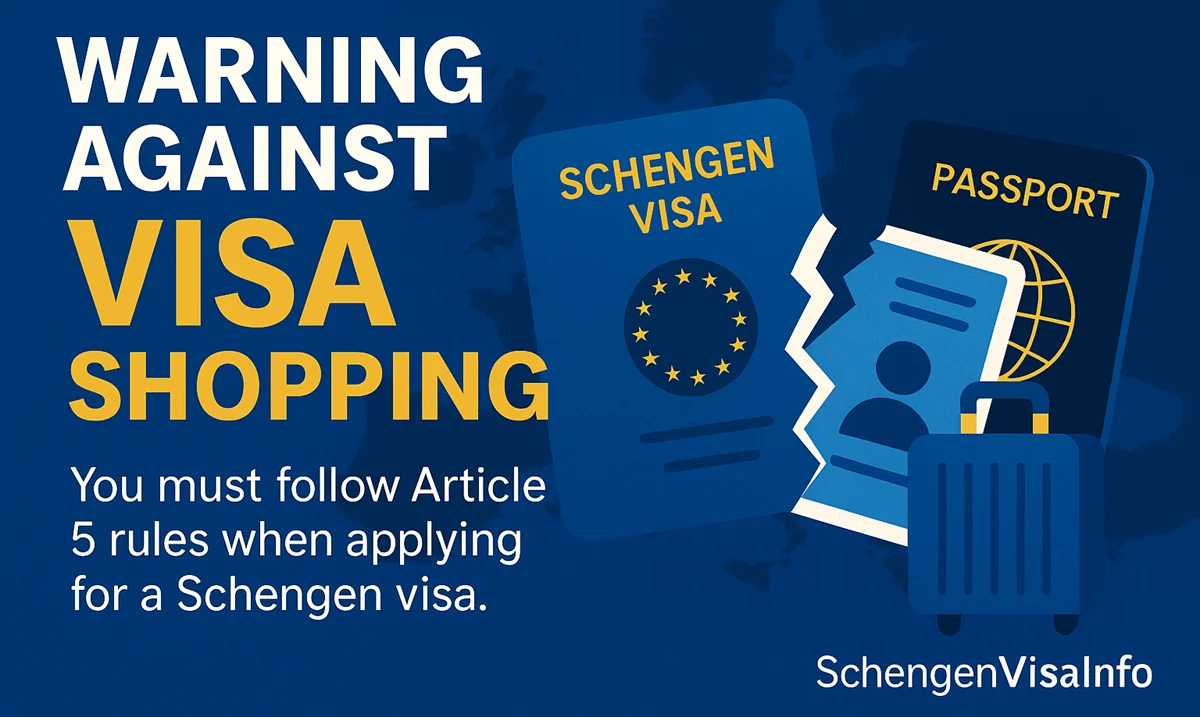
Understanding the Rules: The Danger of "Visa Shopping"
A common mistake among travelers is the temptation to target a specific country simply because its historical approval rates appear favorable, even if that nation is not the primary destination of their trip. This practice, known as "visa shopping," is strictly prohibited under the Schengen Visa Code. The regulations governing the Schengen Area are designed to ensure that applicants submit their documentation to the embassy or consulate that has the legal authority to process their request based on their actual travel itinerary.
When planning a journey, the application must be submitted to the embassy or consulate of the country that serves as the sole destination of the trip. If the travel plan involves visiting multiple Schengen countries, the application should be directed to the country where the traveler intends to spend the most time. In instances where the duration of the stay is equal across several countries, the application must be filed with the country representing the traveler’s first point of entry into the Schengen Area.
Adhering to these rules is vital. Submitting an application to the wrong diplomatic mission frequently results in the application being returned without processing or, in more severe cases, an outright rejection. Such administrative failures can leave a negative mark on a traveler’s record, potentially complicating future attempts to enter the Schengen zone. For those uncertain about their specific requirements, utilizing specialized tools like the Schengen Visa Wizard can help clarify exactly which consulate is the correct point of contact.
Shifts in Approval Trends and Policy Dynamics
The landscape of visa approvals is not static. A notable observation from the 2024 data is that several countries that held top-tier approval rankings in 2023 saw their positions shift. For instance, major players such as Germany, Latvia, Poland, and Lithuania dropped out of the top ten list of countries with the highest approval rates. While individual nations do not typically release specific justifications for these changes, analysts suggest that a combination of factors—ranging from surging application volumes that strain administrative resources to evolving national security policies and internal staffing adjustments—likely played a significant role.
The high volume of applications in 2024 serves as a cautionary tale for travelers planning their 2026 itineraries. As demand remains robust, the pressure on consulates increases, often leading to longer processing times and a more rigorous, selective approach to document verification. Consequently, the importance of applying well in advance cannot be overstated. By submitting applications early, travelers can mitigate the risks associated with administrative delays and ensure that any potential requests for additional documentation do not derail their travel plans.
The Influence of Nationality on Approval Odds
Beyond the choice of the consulate, an applicant’s nationality remains a significant factor in the success of a visa application. The variance in approval rates across different nationalities is often tied to a complex web of diplomatic relations, the volume of applications originating from a specific country, and the historical consistency of documentation provided by those applicants.
For example, 2024 saw a remarkable success rate for Liberian citizens. With 125 applications filed, 122 were granted, resulting in a 97.6 percent approval rate. While the absolute volume of applications from Liberia is relatively small compared to high-demand regions, this figure highlights a highly favorable climate for those applicants. Similar trends were observed among several other nationalities, where lower application volumes often correlated with higher success rates, suggesting that smaller, more manageable application pools can lead to more favorable outcomes.
Conversely, some nations face significantly lower approval rates, which can present a steeper challenge for prospective travelers. For instance, applicants from Comoros faced an approval rate of only 36 percent, with 1,037 visas granted out of 2,853 requests. These figures serve as a reminder that systemic challenges exist for many, and applicants from these regions must be particularly meticulous in their preparation. Thoroughness in documenting the purpose of the trip, financial stability, and proof of intent to return home is essential to bridging the gap and improving the likelihood of a successful outcome.
Best Practices for Future Applicants
It is a common misconception that a country with a 90 percent approval rate offers a "guaranteed" visa. Approval is never certain, and even in the most favorable jurisdictions, a poorly prepared application will almost certainly be rejected. The fundamental requirements—such as a valid travel itinerary, evidence of sufficient financial means, and comprehensive travel insurance—are non-negotiable.
For those looking toward the remainder of 2025 and the early months of 2026, the strategy remains consistent: prioritize accuracy and early preparation. As the European Union continues to work toward the implementation of a digital visa platform, the administrative process may eventually become more streamlined. However, until such a system is fully realized and universally adopted, the existing requirements remain in full force.
As the final quarter of 2025 approaches, historical data points toward countries like Iceland, Switzerland, and Romania as consistent, reliable options for applicants, provided they are indeed the intended destinations. The key to a successful experience lies in viewing the visa process not as an obstacle to be circumvented through "visa shopping," but as a standard administrative procedure to be approached with transparency and diligence. By selecting the correct consulate based on the actual itinerary, ensuring all documentation is comprehensive, and allowing sufficient time for processing, travelers can significantly improve their odds of securing entry to the Schengen Area and ensuring their European travel plans proceed as intended.