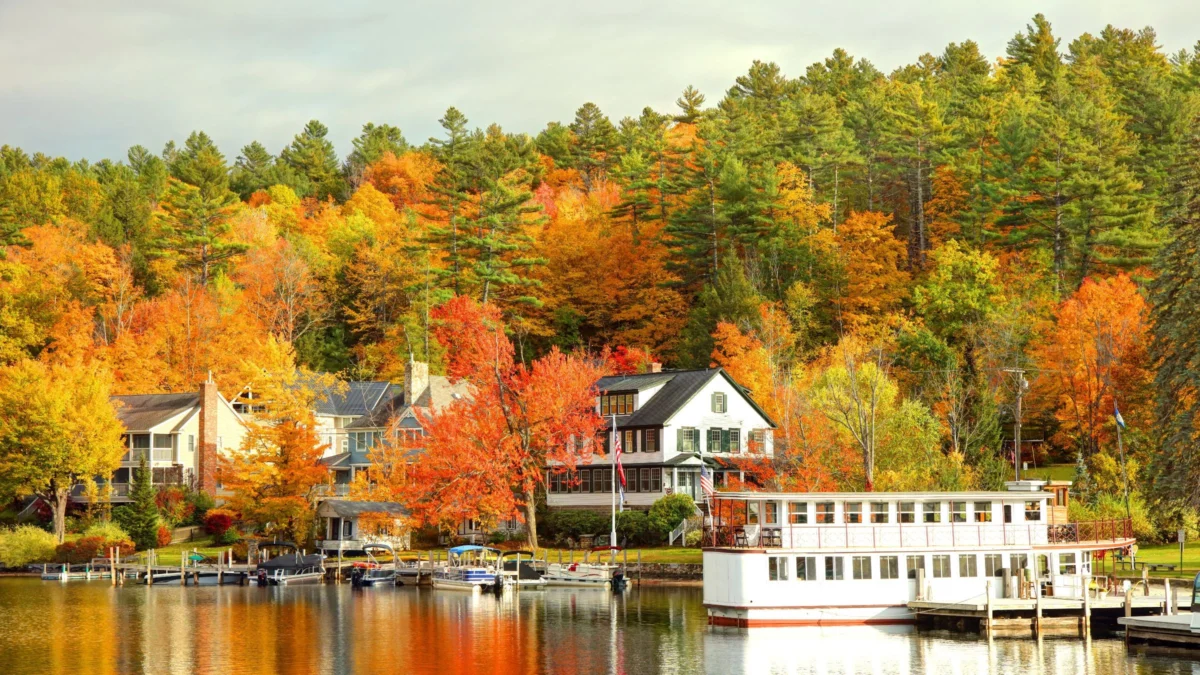
Beyond the vibrant explosions of crimson, gold, and orange fall foliage that draw millions of leaf-peepers to northern New Hampshire each autumn, the majestic peaks of the White Mountains conceal a much darker, more mysterious past. Interwoven with the region’s breathtaking vistas and popular hiking corridors are the physical remnants of an abandoned lumberjack town, the twisted wreckage of a wartime bomber, eerie sites associated with a globally famous UFO abduction, and centuries of haunting local lore.
While casual tourists often focus exclusively on the scenic overlooks and crisp mountain air during the peak autumn travel season, outdoor enthusiasts and historians exploring the region’s trails frequently stumble upon anomalous terrain features and quiet memorials that tell a completely different story. From the vanishing settlements of the early logging industry to military tragedies hidden deep within dense pine forests, the White Mountains serve as a natural museum of forgotten history and persistent folklore.
Local historians and regional preservationists note that these five distinct locations continue to capture the public imagination, bridging the gap between New Hampshire’s natural beauty and its enduring legacy of strange happenings.
The Livermore Ghost Town
Deep within the forest, beneath layers of decomposing leaves and thick emerald moss, lie the silent architectural fragments of Livermore. Long before the region was designated for protected recreation, this remote corner of the White Mountains hummed with the industrial activity of a bustling 19th-century lumber town.
Incorporated during the height of the New England logging boom, Livermore was designed to house the workers who stripped the surrounding slopes of their virgin timber. Yet, the community’s lifespan was surprisingly brief. A little less than a century after its incorporation, shifting economic realities, depleted resources, and the ravages of time left the settlement entirely vacant.
Today, hikers navigating the trails off Route 302 via Sawyer River Road occasionally encounter the quiet, undeniable markers of the past: scattered red bricks, deeply rusted iron artifacts, and moss-covered stone foundations swallowed entirely by the encroaching forest. These subtle traces transform a standard wilderness hike into an eerie journey through a forgotten chapter of industrial history, reminding modern visitors of the fleeting nature of human settlements in the unforgiving northern terrain.
Mount Waternomee Bomber Crash Site
Further south, in the town of Woodstock, another physical remnant of the past lies embedded into the unforgiving slopes of Mount Waternomee. A challenging, rugged trek through the dense forest reveals a sobering sight: the shattered aluminum fuselage, twisted wings, and heavy engines of a U.S. Army Air Forces Douglas B-18A bomber.
The aircraft met its tragic end on a snowy day in January 1942. Having taken off on a routine mission to patrol the North Atlantic for hostile German U-boats, the bomber was attempting to return to its airfield in western Massachusetts when severe weather set in. Miscalculations in flight paths and unexpected high-altitude winds pushed the plane drastically off course, sending it blindly over the rugged peaks of the White Mountains.
The aircraft slammed violently into the side of Mount Waternomee, instantly etching itself into the local history books. Miraculously, despite the remote location and brutal winter conditions, local residents and rescue parties managed to reach the site during a blinding snowstorm to rescue the surviving crew members.
More than eight decades later, the wreckage remains largely where it fell, heavily integrated into the mountain’s ecosystem. Carefully placed American flags left by respectful hikers honor the crew and acknowledge the inherent dangers of New England’s weather. The site stands as a powerful testament to both the sacrifices made during wartime home-front patrols and the absolute indifference of the alpine wilderness to human machinery.
Barney and Betty Hill UFO Abduction Marker
The sense of isolation and mystery that pervades the northern forests extends far beyond tangible wreckage and ghost towns into the realm of modern legend. With minimal light pollution illuminating the night skies above northern New Hampshire, the cosmos often feels remarkably close, providing an ideal backdrop for one of the most famous and influential UFO abduction accounts in modern history: the experience of Barney and Betty Hill.
More than half a century ago, the couple was driving home through the White Mountains following a vacation in Canada. As they traveled along U.S. Route 3—the primary north-south artery through the region—they noticed a strange, intensely bright white light moving erratically across the night sky. According to their subsequent accounts, the object appeared to follow their vehicle closely, zipping through the darkened sky before descending near the highway.
The encounter took a deeply unsettling turn when the couple’s car began to emit strange, low-frequency vibrations accompanied by an ear-piercing series of beeps. In the wake of these sensory disturbances, the Hills reported experiencing a profound block of missing time. Haunted by subsequent anxiety, disturbing fragmented memories, and unusual physiological symptoms, the couple ultimately reported the incident to military authorities, thrusting themselves into the international spotlight and cementing the White Mountains as a focal point for extraterrestrial lore.
Today, motorists driving along Route 3 can retrace the exact path of the Hills’ journey. A historical marker erected in Lincoln highlights the famous incident, offering modern travelers a chance to pull over, read the plaque, and ponder one of the 20th century’s most enduring modern myths against the backdrop of the quiet, shadowy mountain highway.
Profile Lake and the Ghost of the Profile House
At the base of a towering granite cliff in Franconia Notch, Profile Lake reflects the dramatic topography that has inspired writers, poets, and travelers for generations. It was here that the famous rock formation known as the Old Man of the Mountain once gazed out over the valley, serving as an iconic symbol of the state until its natural collapse in May 2003.
In the late 19th and early 20th centuries, the prestige of the Old Man drew elite travelers from across the country, prompting the construction of the Profile House. This sprawling, ultra-luxurious resort accommodated hundreds of guests who came to marvel at the stone visage and hike the surrounding notch. However, the grand hotel’s existence was cut short when a catastrophic fire swept through the property, leveling the structures completely and leaving virtually no trace that a luxury resort ever stood on the grounds.
Decades later, the famous rock formation itself succumbed to the relentless freeze-thaw cycles of the New England climate, despite numerous decades-long stabilization efforts by engineers and state workers. Although the craggy cliff face no longer resembles the human profile that captivated early American intellectuals, the site remains spiritually tied to its literary past. Writers like Nathaniel Hawthorne immortalized the geological oddity in short stories such as "The Great Stone Face," and visitors walking the paved paths near the lake today are invited to reflect on the impermanence of both grand human architecture and enduring geological landmarks.
Mount Chocorua and Pequawket Lore
Rising sharply above the landscape in the town of Albany, the rocky, bald summit of Mount Chocorua is instantly recognizable from miles away. Yet, beneath its popular hiking trails and panoramic valley views lies a dark narrative rooted in the tumultuous era of colonial settlement.
The mountain derives its name from Chief Chocorua, a Pequawket leader whose tragic life and death have been passed down through generations via various iterations of local folklore. While details vary depending on the storyteller, the most prevalent version of the legend concludes with a violent confrontation between the indigenous leader and a local white settler, resulting in the chief’s death on the heights of the mountain he once called home.
Over the years, hikers traversing the moderate loops that wind toward the summit have occasionally reported hearing strange, unexplainable sounds echoing through the timbered slopes, spawning local ghost stories that persist to this day. A historical marker located off Route 16 in nearby Tamworth officially recounts the Chocorua legend, ensuring that the complex and often painful history of the region’s early displacement remains part of the narrative for those who visit the valley.
Whether viewed as historical fact or embellished folklore, these five distinct locations ensure that a journey through the White Mountains offers far more than just brilliant autumn foliage and standard outdoor recreation. Beneath the canopy of the forest lies a deep, layered archive of human ambition, tragedy, and enduring mystery.