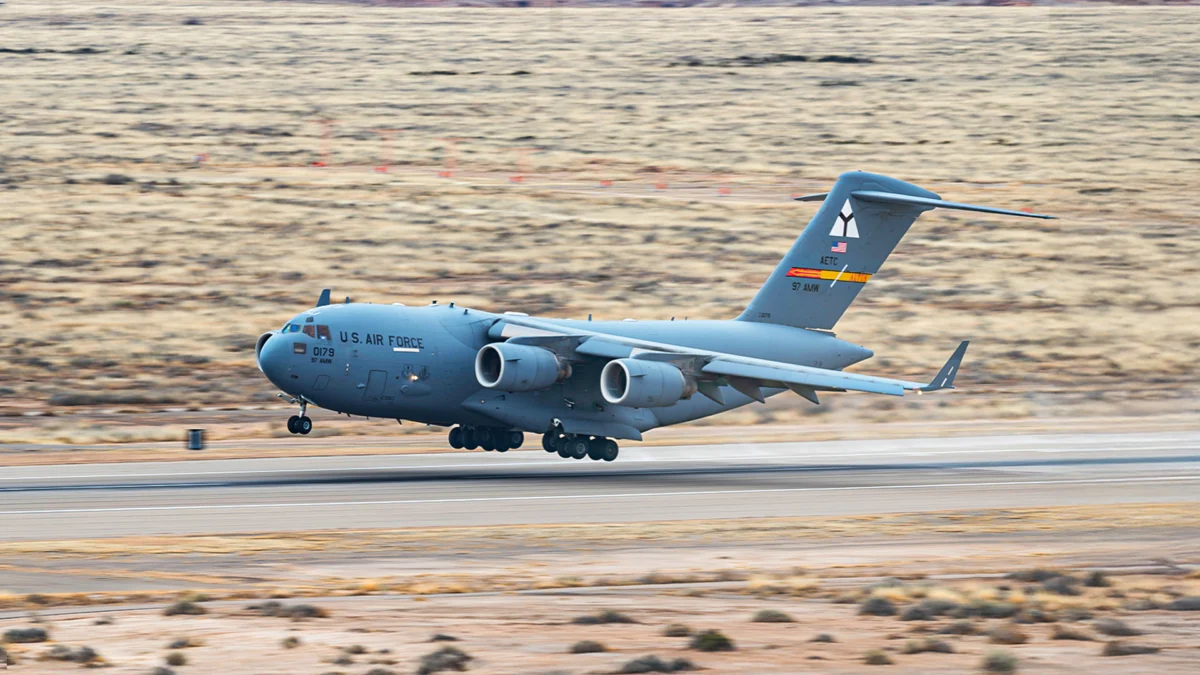
When the McDonnell Douglas C-17 Globemaster III entered service in 1991, it was envisioned as the ultimate middle ground between the massive, strategic heavy-lift capabilities of the Lockheed C-5 Galaxy and the rugged, tactical performance of the C-130 Hercules. Designed to perform ‘direct delivery’ missions unlike any other plane in the world, the jet was engineered to drop M1 Abrams tanks, paratroopers, and Apache helicopters directly into active theaters. Over the decades, it has cemented its status as one of the most valuable strategic tools in the United States Air Force’s arsenal.
Powered by four formidable Pratt & Whitney F117 engines and featuring unique ‘externally blown’ titanium flaps, the C-17 delivers nonstop intercontinental flights from the American heartland directly to the front lines. Yet, while the Globemaster was built to master the art of tactical troop insertion, some of its most historic and defining moments have unfolded during humanitarian relief efforts, complex disaster evacuations, and vital scientific support missions. From the frozen permafrost of Antarctica to the searing sands of Iraq and the chaotic tarmac of Kabul, the C-17 has continually proven to be the indispensable backbone of America’s global airlift fleet.
Operation Northern Delay in Iraq: The Largest Paratrooper Drop in C-17 Combat History
In many ways, the execution of Operation Northern Delay on March 26, 2003, stands as a watershed moment for modern air mobility tactics and strategy. This historic mission marked the first time the C-17 conducted a large-formation combat airdrop in real-world conditions, validating the Globemaster’s core design principles and tactical purpose in a 21st-century context.
During the opening days of the Iraq War, the Pentagon needed to insert the 173rd Airborne Brigade into northern Iraq to secure Bashur Airfield. The strategic objective was to tie down six Iraqi divisions, preventing them from reinforcing Baghdad against the main coalition advance pushing up from the south. While the aircraft is celebrated globally today for its modern humanitarian utility, this high-stakes combat operation was precisely what McDonnell Douglas engineers built it to achieve.
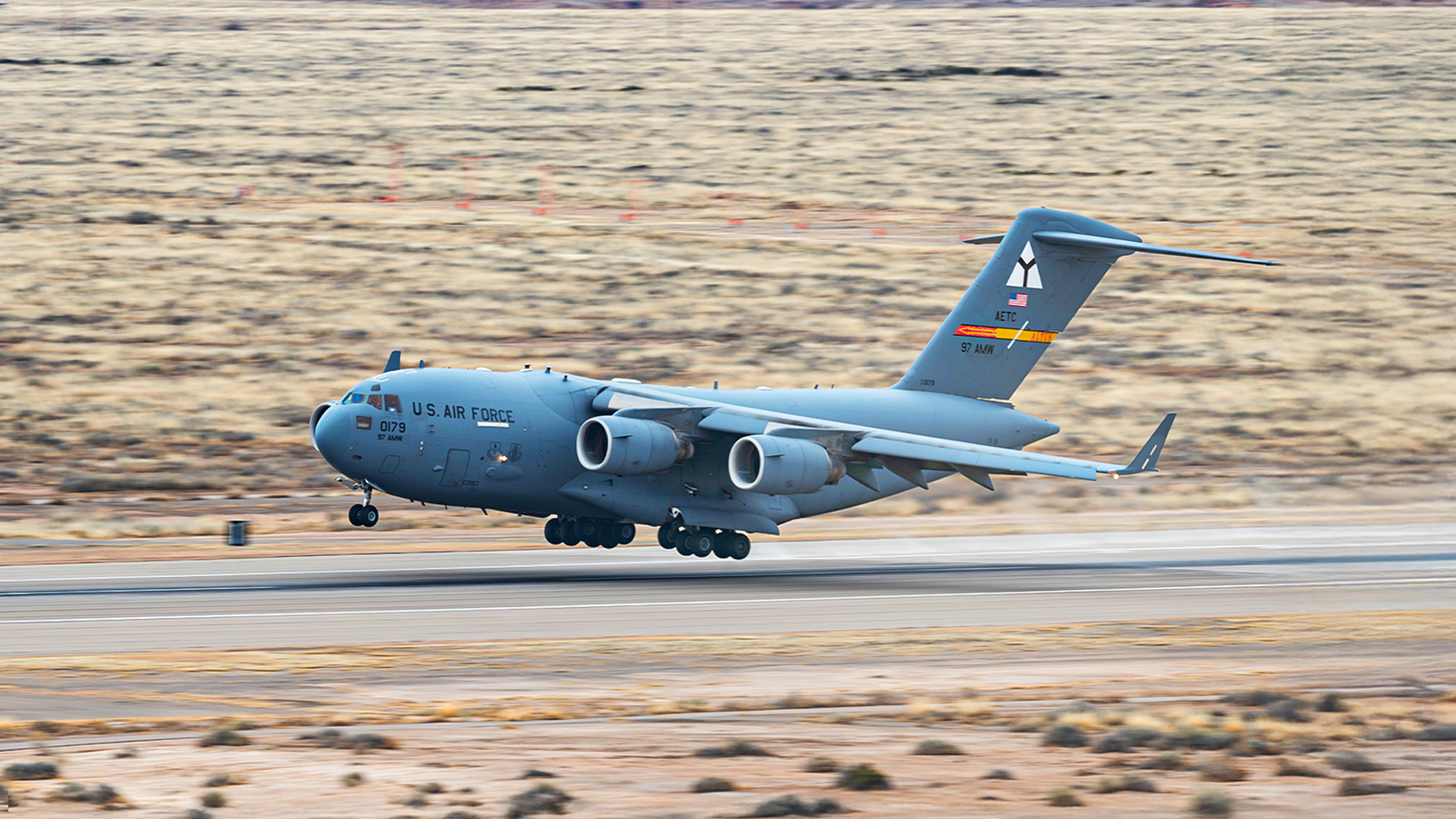
This mission represented the first time in aviation history that a strategic, brigade-sized combat airdrop was executed entirely using C-17s. A formidable fleet of 17 aircraft was assembled at Aviano Air Base in Italy, drawing airframes and crews from the active-duty 62nd and 437th Airlift Wings alongside the reserve 315th and 446th Airlift Wings. The aircraft took off into the night, flying a complex, low-altitude route designed to penetrate heavily defended Iraqi airspace.
Flying in a tight formation with lights completely blacked out, crews relied entirely on night-vision goggles and specialized formation-flight instrumentation. Escorted by a powerful strike package of F-14s, F-18s, and EA-6B Prowlers, the C-17 fleet executed a low-altitude mass tactical drop. Within minutes, 996 paratroopers successfully hit the ground to reinforce the special operations forces that had spearheaded the initial airfield takeover.
Over the ensuing two weeks, the C-17 fleet operated a continuous, high-intensity air bridge, effectively airlifting an entire armored battalion onto the site. The aircraft landed on a single 6,700-foot runway carrying immense payloads, including M1A1 Abrams tanks and M2 Bradley infantry fighting vehicles. By the time the operation stabilized, total mission metrics climbed to 2,175 personnel, 408 vehicles, and over 3,000 tons of heavy cargo delivered directly to the frontline.
Operation Deep Freeze in Antarctica: Transforming an Extreme Itinerary into Routine Operations
While combat airdrops capture headlines, one of the C-17’s most technically challenging, albeit understated, missions involves moving scientists, researchers, and vital supplies to McMurdo Station in Antarctica. The task itself is routine, but very few aircraft in the world possess the specific capabilities required to reach the United States’ primary Antarctic research facility. Every southern summer, jets fly out from Washington state, transiting through Christchurch, New Zealand, toward the bottom of the world.
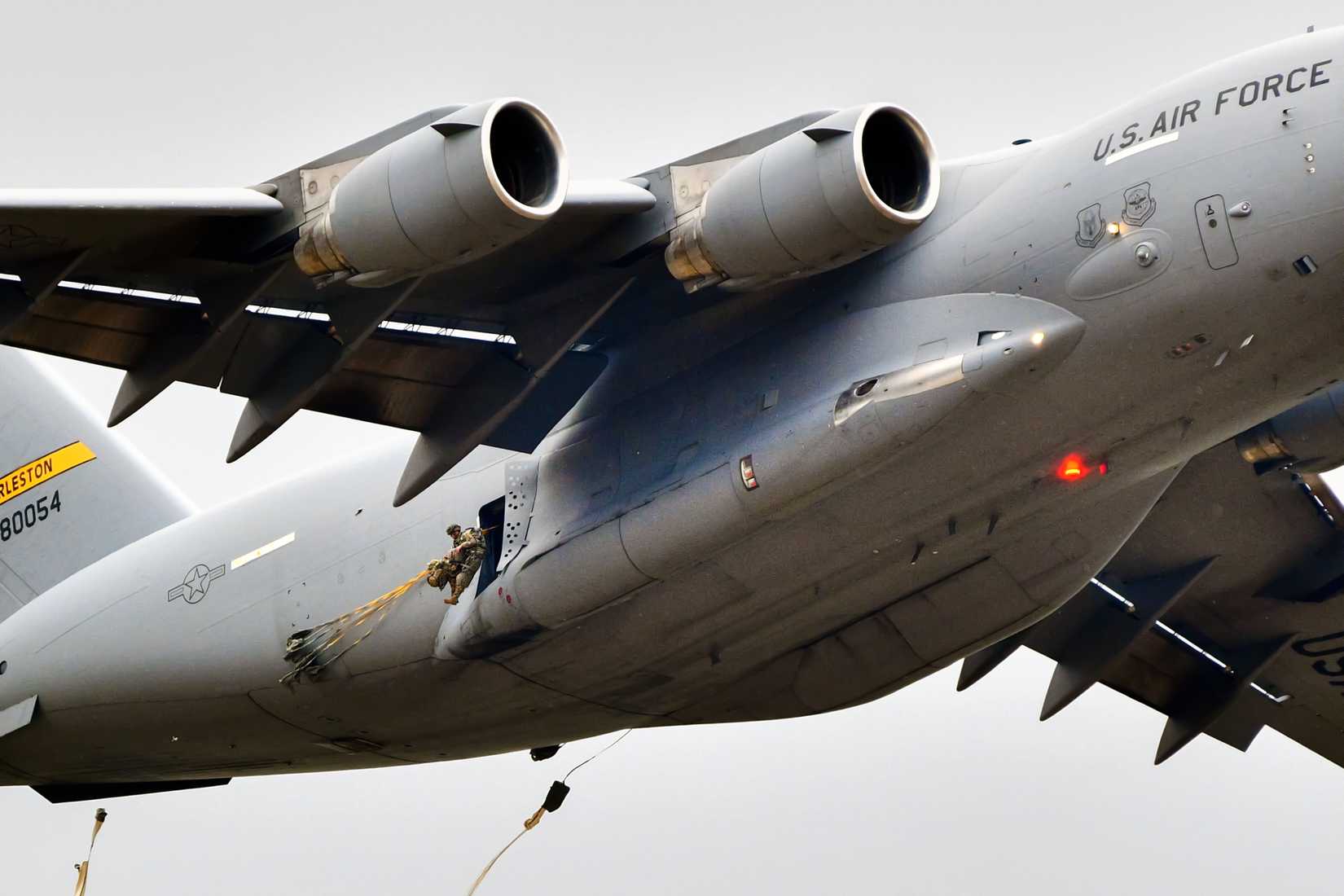
The Lockheed C-5 Galaxy made history when it first touched down on the frozen continent in 1989. However, the colossal jet remains prohibitively expensive to operate, and the punishing Antarctic environment places extreme mechanical stress on both the airframe and the crude airfield, significantly increasing operational risks. The C-17 emerged as the ideal ‘Goldilocks’ airframe for this mission: it does not push structural and operational limits to the extreme like the C-5, yet it can deliver vastly superior payloads compared to a C-130 in a single sortie.
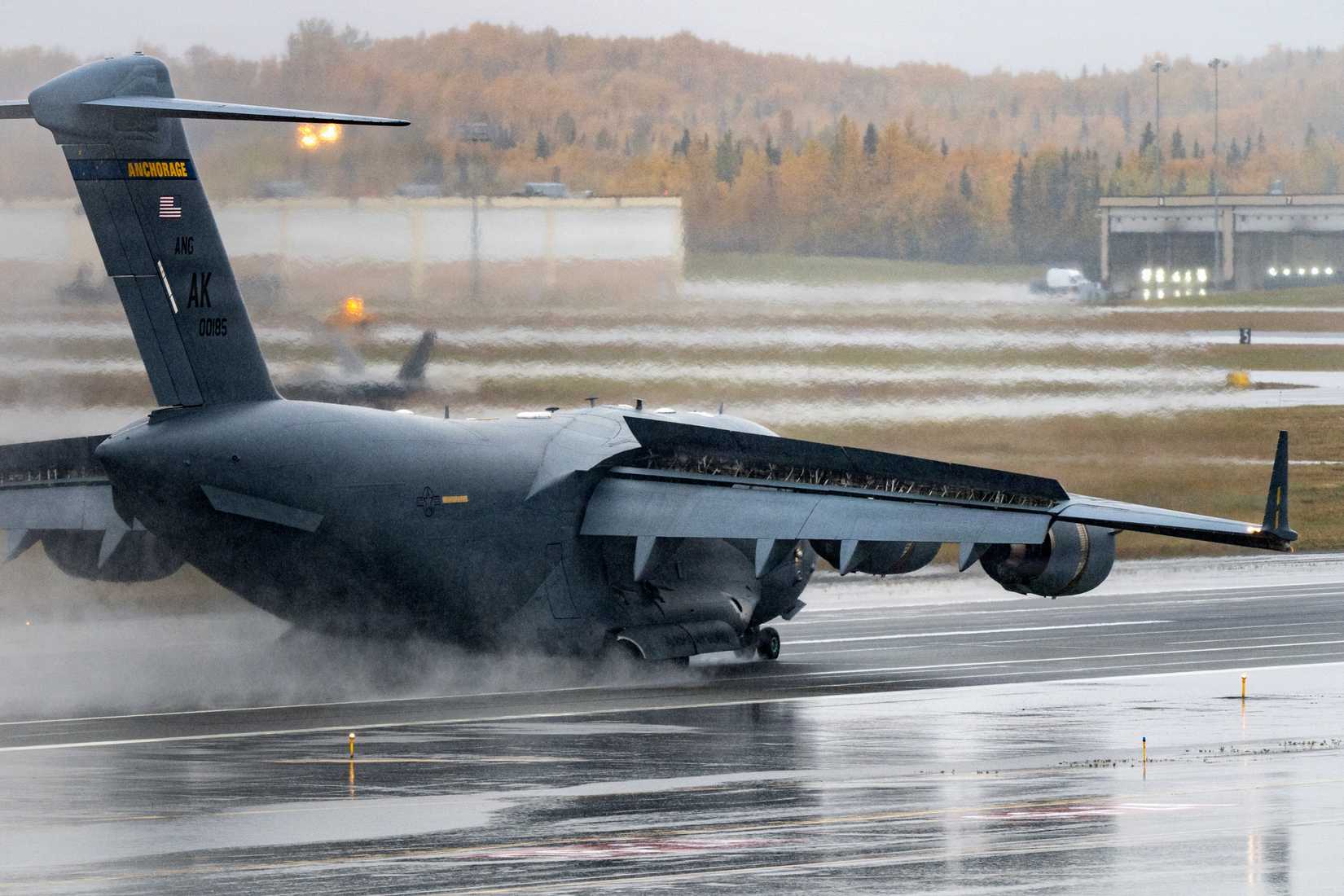
The secret to this capability lies in the aircraft’s propulsion and aerodynamics. By directing hot jet exhaust directly through and over the double-slotted titanium flaps, the C-17 effectively doubles the wing’s lift compared to a standard commercial airliner. As a result, the massive aircraft can slow down to an approach speed of just 115 to 130 knots. This blown flap system works in tandem with the C-17’s unique upward-directed thrust reversers, making it not only possible but significantly safer to land a heavy aircraft on the sea-ice runway at McMurdo’s Phoenix Airfield.
Weighing roughly 290 tons at maximum takeoff weight, the C-17 is considerably lighter than the C-5, yet it features a sophisticated 14-wheel landing gear system. The main landing gear utilizes two six-wheel bogies designed to spread the plane’s massive weight across a wide surface area, drastically reducing ground pressure on fragile ice surfaces. On every flight, Globemaster aircrews routinely deliver over 100,000 pounds of vital scientific equipment and personnel.
Operation Unified Response: Earthquake Relief in Haiti
When a devastating earthquake leveled the capital city of Haiti in 2010, international airborne relief efforts were instantly bottlenecked by severe damage to Port-au-Prince International Airport. With only a single functional runway remaining, standard operations utilizing conventional air freighters would have slowed the delivery of rescue teams and lifesaving supplies to a crawl. The C-17’s outstanding short-field performance once again allowed logicians to circumvent this critical infrastructure bottleneck.
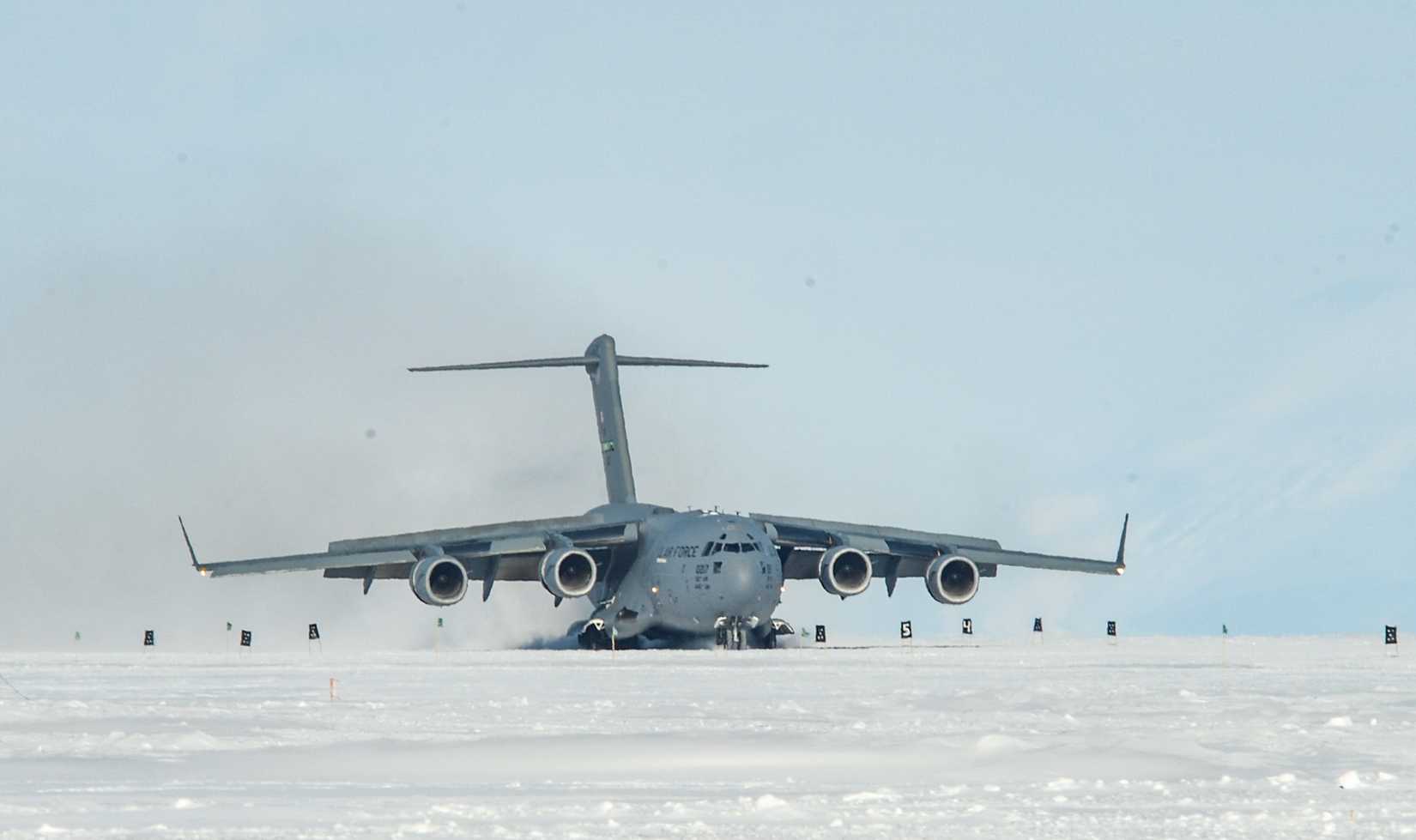
In a typical disaster zone, an airport quickly becomes heavily congested not because incoming planes cannot land, but because they lack the space or capability to clear the runway afterward. Most large aircraft require a ground-based tug vehicle to push them backward out of a parking spot, or a wide taxiway to turn around safely. With Port-au-Prince crippled, local ground support equipment was virtually nonexistent.
Once again, the C-17’s unique blown flap and reverse thruster system proved crucial. These features enabled the aircraft to take off and land over remarkably short distances and maneuver on the ground entirely without support equipment. A C-17 could land at Toussaint Louverture International Airport, taxi onto the cramped tarmac, lower its heavy ramp to unload vehicles and equipment pallets, and then back out of its parking space completely under its own power.
The Globemaster proved instrumental in bringing in food, water, and medical packages, alongside emergency responders, support vehicles, and a mobile air traffic management system. In a display of tactical versatility, C-17s even airdropped over 55,000 pounds of supplies directly into fields north of the city. A single jet dropped 40 pallets in one continuous pass without ever touching down, dramatically accelerating the response time of the entire disaster relief force.
Typhoon Haiyan and Evacuation from Tacloban: Operation Damayan
When Super Typhoon Haiyan devastated the central Philippines in November 2013, it left the coastal city of Tacloban almost entirely cut off from the outside world. The subsequent tactical response launched by the 535th Airlift Squadron from Joint Base Pearl Harbor-Hickam remains a defining chapter in the history of Pacific Air Forces.
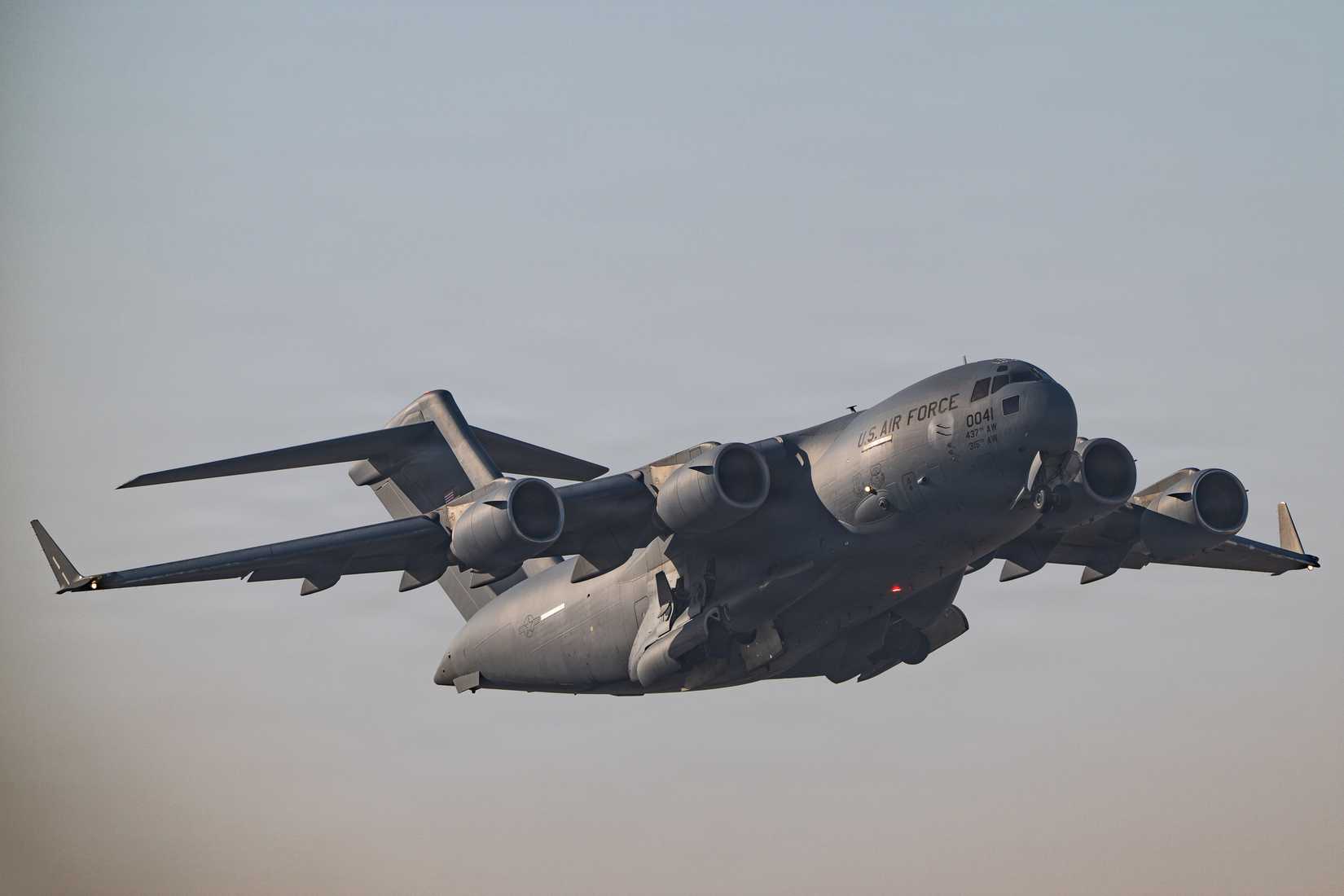
The widespread destruction of coastal infrastructure effectively severed the Leyte and Samar islands from the rest of the archipelago. When the first C-17s arrived on the scene, Tacloban Air Base was severely compromised. A massive storm surge had washed heavy debris across the single runway, destroyed the airport terminal, knocked out all electrical infrastructure, and disabled local air traffic control towers.
As was the case in Haiti three years prior, the C-17’s short-field performance was essential to making relief flights possible. However, during Operation Damayan, the aircraft’s unprecedented interior volume—allowing it to carry four times the passenger load of a C-130—became the most critical factor in saving lives.
When relief efforts on the ground proved increasingly untenable, the mission rapidly transitioned from material delivery to mass evacuation. A single C-17 flight could comfortably evacuate 300 to 400 survivors to Manila in one trip. Loadmasters routinely retracted the standard side-wall passenger seats and laid down heavy cargo straps across the bare floor, successfully converting the cavernous freight bay into a high-density floor-seating configuration.
During a single historic sortie out of Tacloban to standard airbases in Manila, a C-17 cargo hold was packed with an unprecedented number of evacuees. Loadmasters systematically marshaled women, children, and injured citizens into the bay, safely securing over 670 passengers directly to the floor tracking. This extraordinary load drastically exceeded the aircraft’s standard peacetime passenger manifest rules. As conditions gradually calmed, the mighty airlifter was brought back in to deliver additional troops and recovery equipment, clear debris, and return local residents to their hometowns.
Reach 871: The Historic Evacuation from Kabul
As the final days of the United States military presence in Afghanistan drew to a close in August 2021, the C-17 was once again summoned for an unprecedented mission. According to the United States Department of War, the Reach 871 flight on August 15, 2021, stands as the most dramatic and historically significant single flight in the large jet’s multi-decade service history.
A Globemaster assigned to the 305th Air Mobility Wing touched down at Hamid Karzai International Airport in Kabul on what was intended to be a routine mission to move equipment and personnel. While the aircraft sat on the tarmac, the perimeter security of the airport abruptly collapsed. Thousands of terrified Afghan civilians bypassed security gates and flooded onto active runways and taxiways, desperate to escape the rapidly advancing Taliban forces.
As the massive crowd surged toward the aircraft, hundreds of individuals entered the open rear cargo ramp and packed themselves tightly into the main cargo bay. Facing an imminent and dangerous threat of the aircraft being completely overrun, the flight crew made the pivotal decision to close the cargo ramp and prepare for an immediate emergency departure. Hundreds of men, women, and children sat tightly packed together directly on the bare metal floor for the tense flight to Al Udeid Air Base in Qatar.
There was no time for a conventional weight-and-balance check, and the four massive Pratt & Whitney engines were pushed to their absolute thermal and mechanical limits as they climbed away from the brutally hot, dusty airstrip. When Reach 871 finally touched down safely, the final tally revealed that the single C-17 had transported an astonishing 823 Afghan civilians in one flight, setting an all-time passenger record for the global fleet that endures to this day.