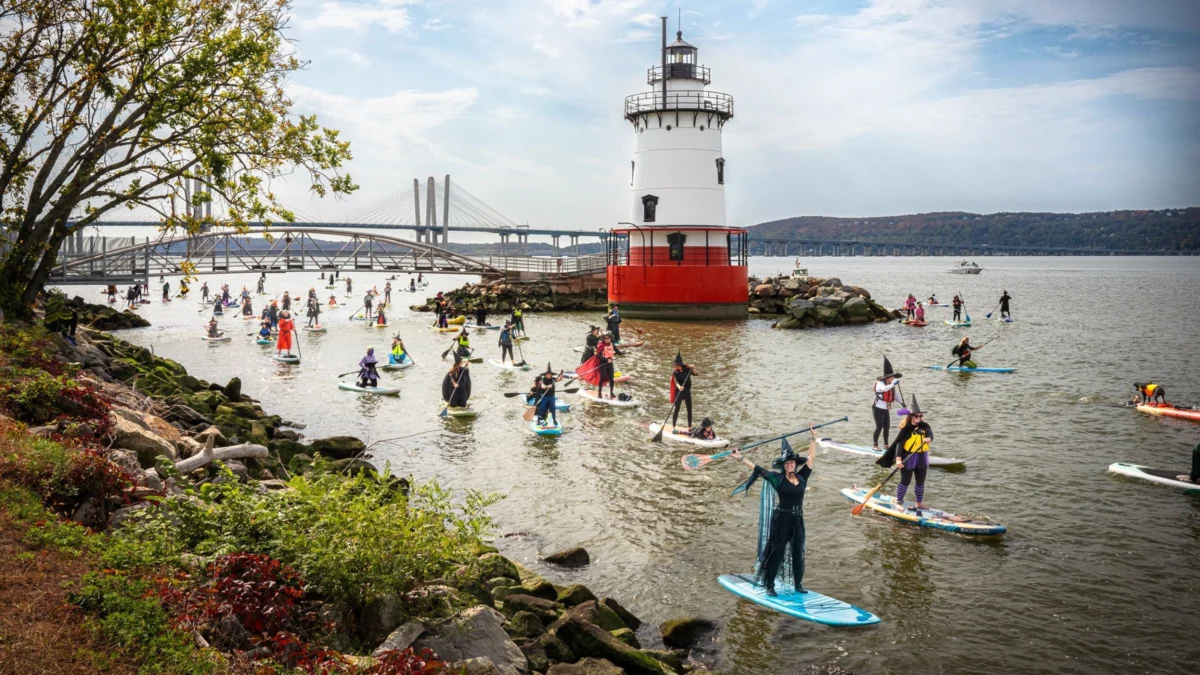
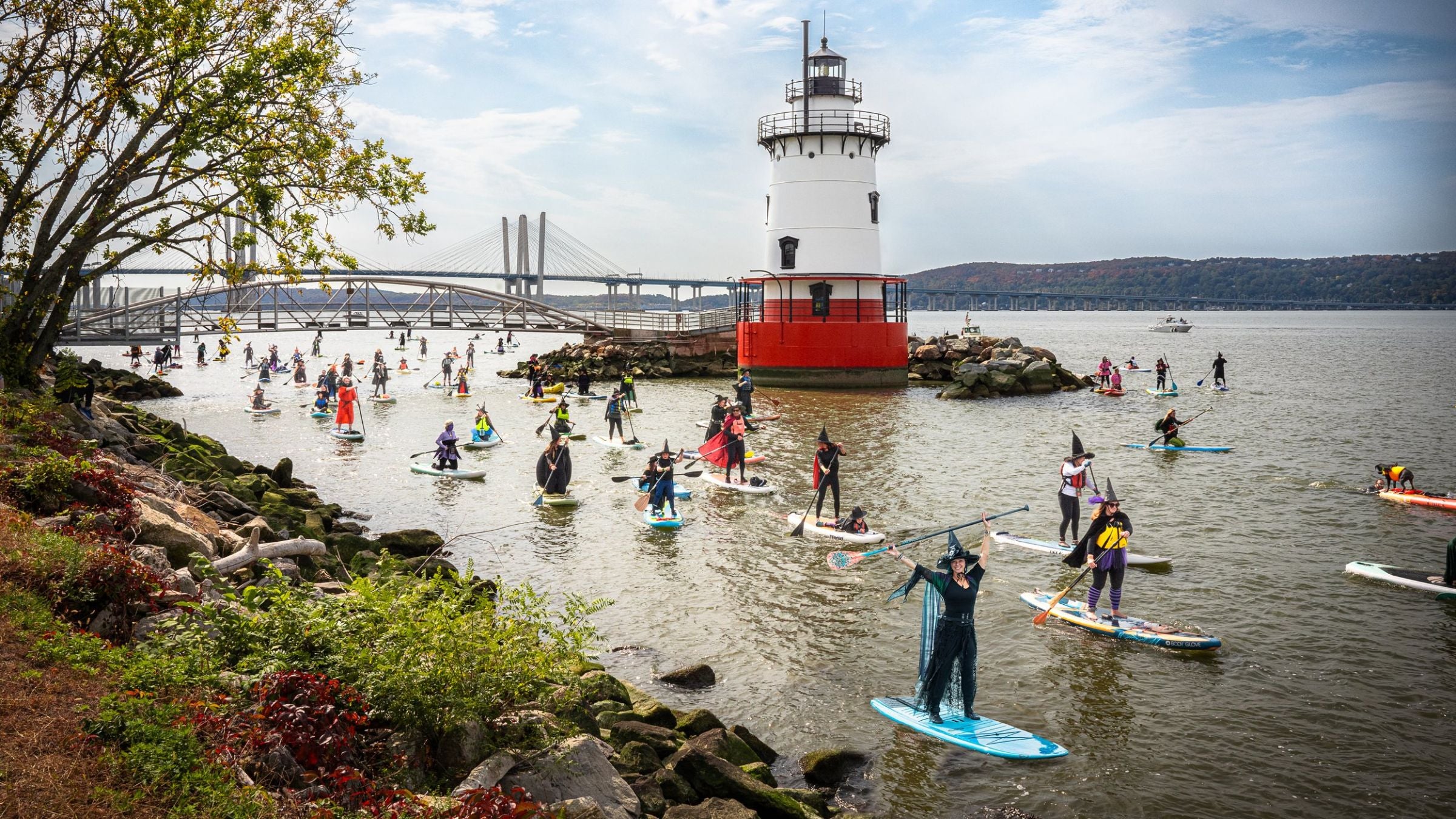
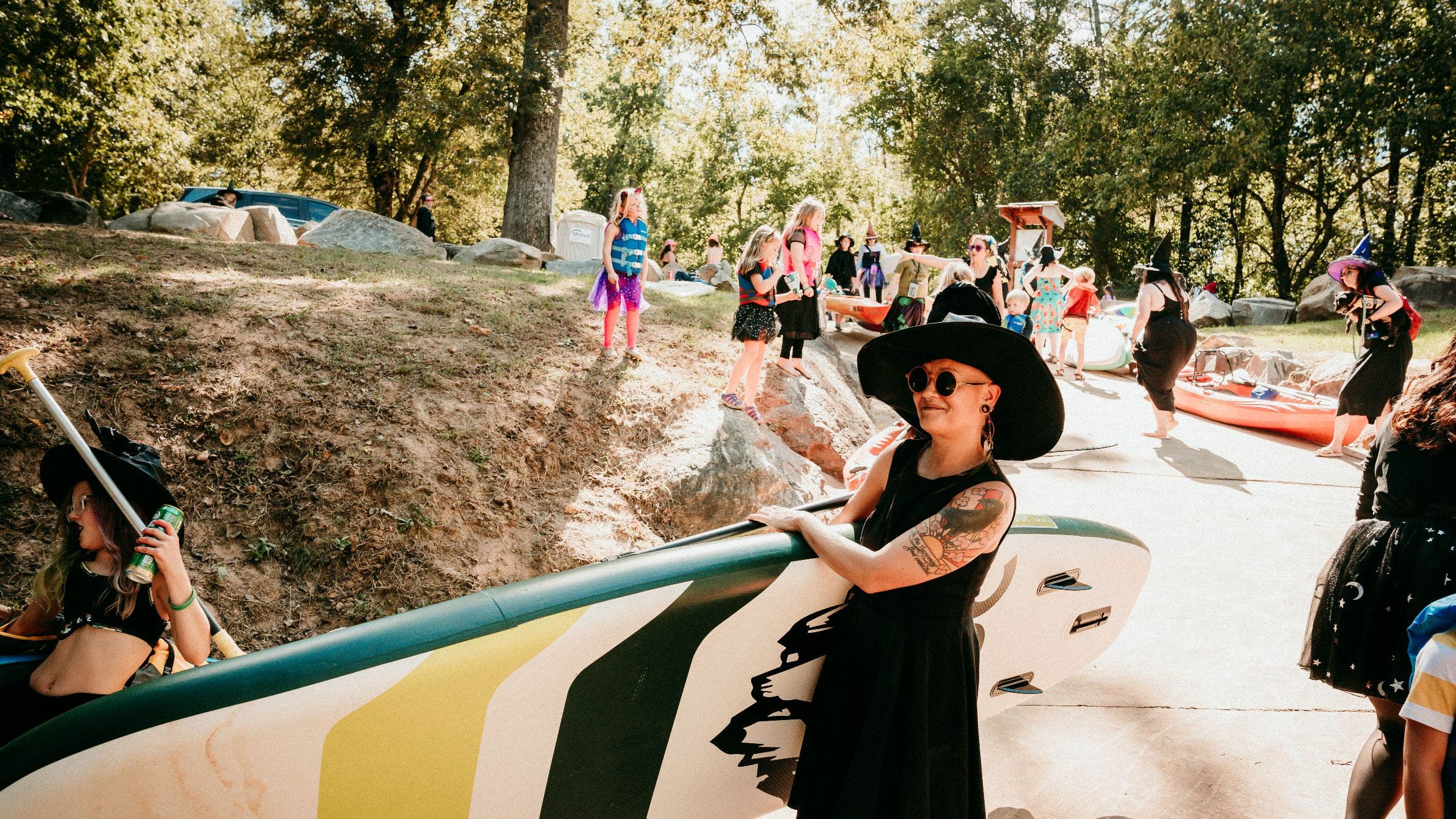
You might have spotted them cutting through the morning mist before: packs of people clad in flowing Stevie Nicks-style black dresses and oversized pointy hats, hoisting themselves onto stand-up paddleboards like a misplaced coven of Hogwarts extras. These gatherings, now broadly known as witch paddles, began much like any other spontaneous idea—conjured on a whim by a group of friends looking for a unique way to celebrate.
What transformed this niche waterfront spectacle into a full-blown spooky-season phenomenon, however, was a combination of fortunate timing, social media amplification, and a collective post-pandemic hunger for unadulterated play.
The movement traces its origins back to October 2013 in Morro Bay, California. Annette Ausseresses, widely recognized as the originator of the concept, maintained a longstanding tradition with her girlfriends of celebrating their late-October birthdays through various witchy escapades.
“The first year was dressing up as witches and going hiking,” Ausseresses recalls. “The next, we had paddleboards, so we said, let’s dress up as witches and go paddling.” Unbeknownst to them at the time, that single afternoon on the water unlocked a nationwide trend.
When asked how their informal gathering evolved into a cultural touchstone across the United States, Ausseresses points to two main catalysts: a local news report that was picked up globally by the Associated Press wire, and an inspired resident in the Pacific Northwest who decided to replicate the magic.
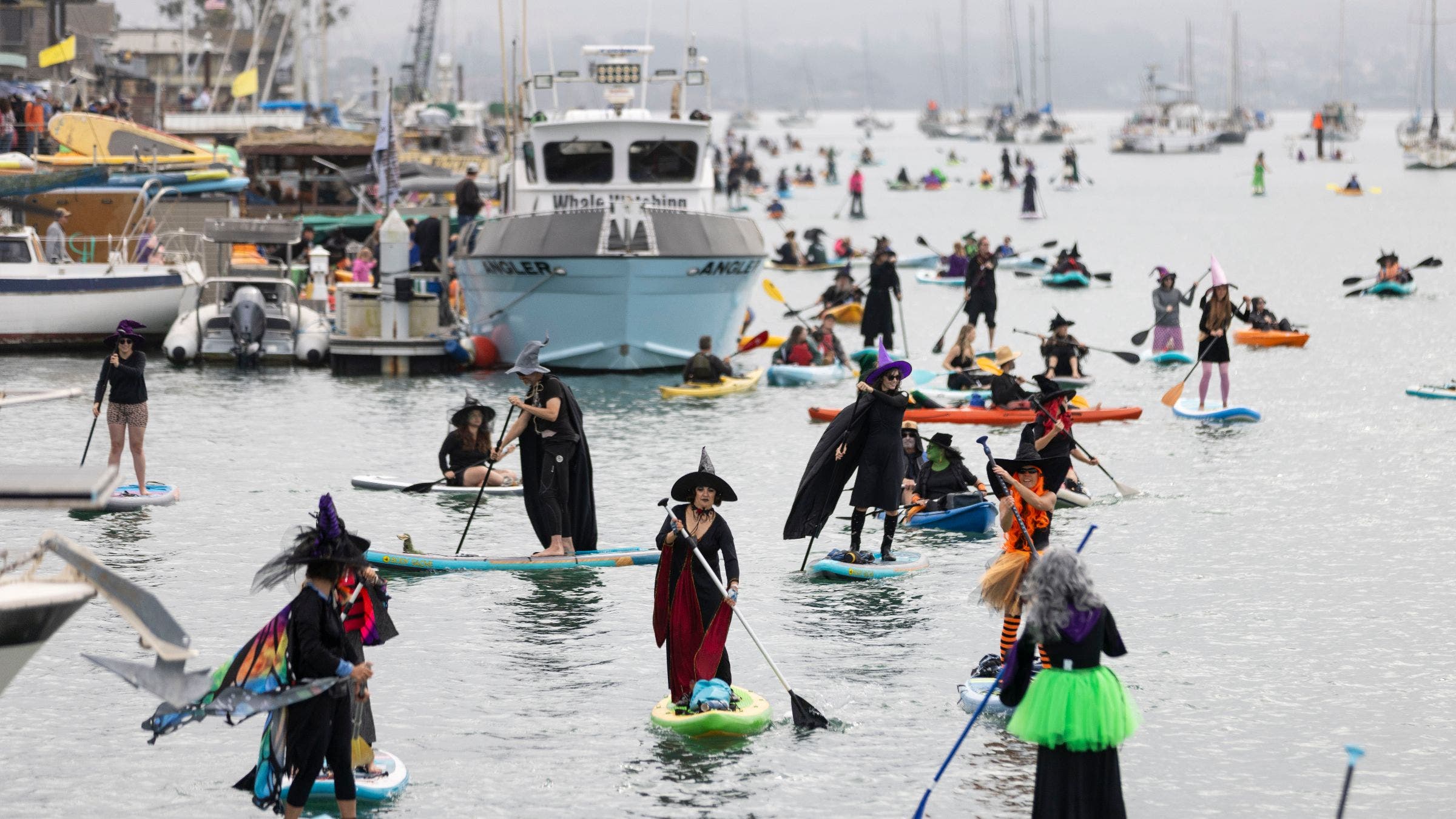
That resident was Ginny Kauffman. After encountering photographs of Ausseresses’s California outing, Kauffman brought the concept to Oregon in October 2017, taking to the Willamette River with just a few companions. As word of mouth traveled through the community, Portland’s local sorceresses began multiplying rapidly.
“People loved it because, well, this is Portland,” Kauffman says, nodding to the city’s unofficial motto, “Keep Portland Weird.” By 2019, the informal Halloween gathering had ballooned to roughly 200 participants, drawing men, women, and children alike, while copycat events began materializing in other regions.
Then came the disruptions of the COVID-19 pandemic, a gloomy period that tested even the most resilient outdoor enthusiasts. When communities finally emerged from isolation, Kauffman noted that the appeal of donning a witch or warlock costume and participating in something gloriously ridiculous carried an even more powerful draw. Witch paddles spread further across the map, demonstrating that Ausseresses had inadvertently tapped into a much deeper cultural current: a widespread desire for whimsical, community-driven play.
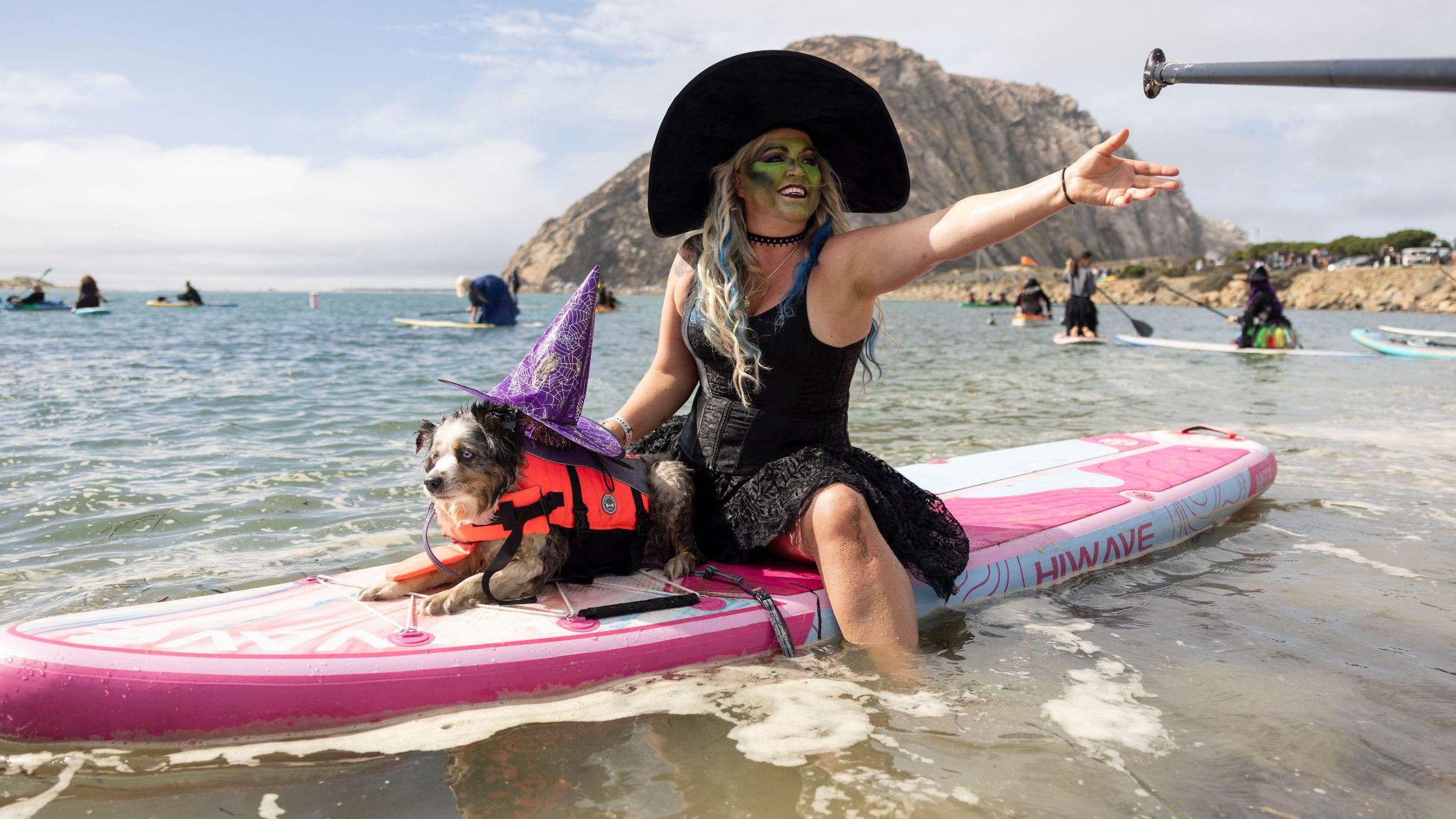
“For me, the best part is watching the joy that everybody has from it,” Ausseresses says. “I know that sounds super corny, but it really is. People are out there, they’re meeting their friends, they are smiling, they have fun.”
Kauffman echoes that sentiment, noting that adults and families simply appreciate opportunities to be playful.
Yet, managing the rapid growth of such spectacles has occasionally presented logistical hurdles. Kauffman no longer leads the charge for Witches on the Willamette in Portland, explaining that what began as a casual paddle eventually carried too many liabilities to continue safely on a larger scale. Today, she limits her costumed excursions to private outings with close friends. While no successor has stepped forward to formally inherit the mantle in Portland, leaving the city’s local coven without an official head organizer, Ausseresses’s foundational event in California continues to thrive. Similar pointy-hatted armadas now assemble annually across mountain lakes and southern rivers nationwide.
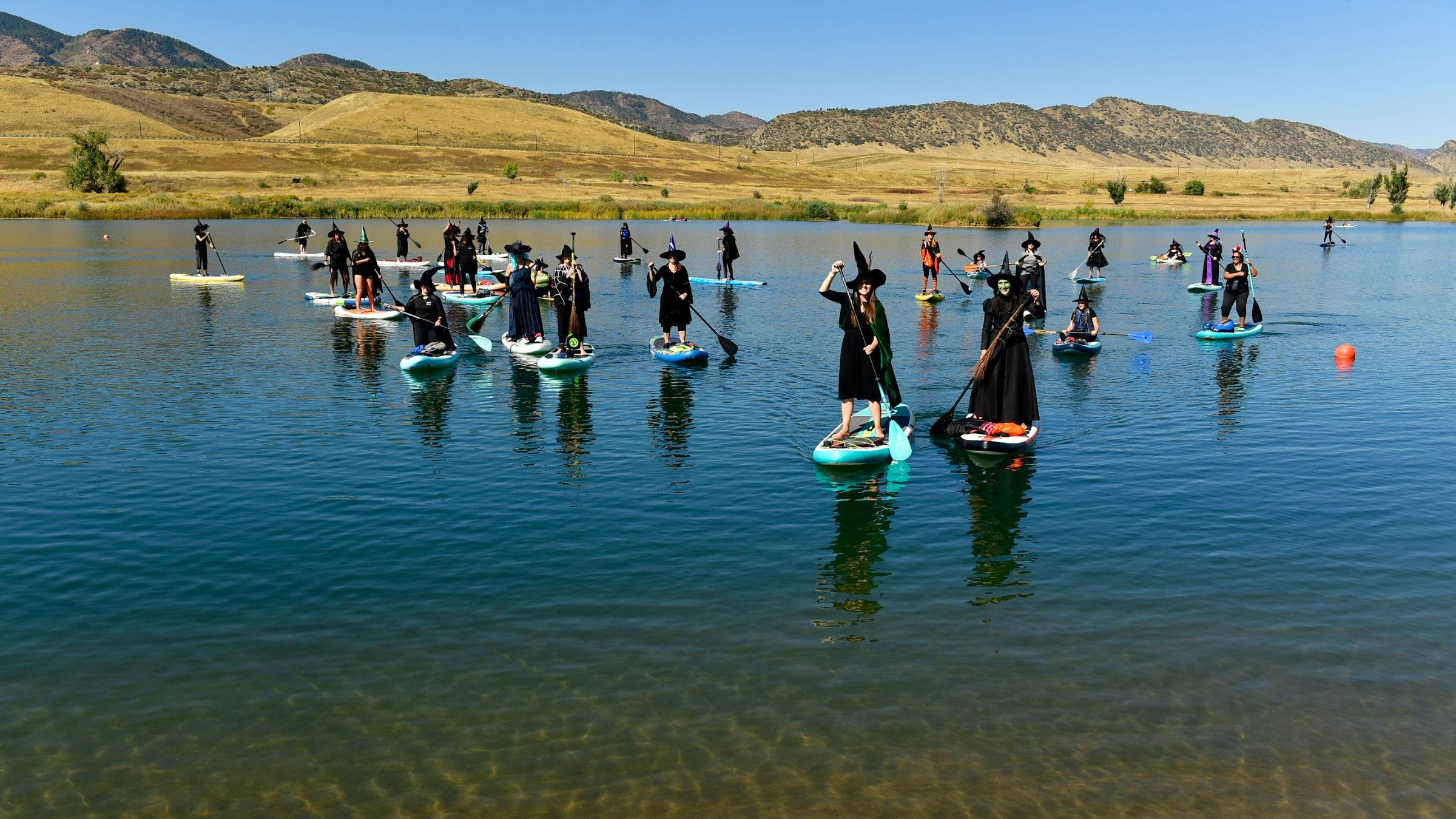
As October approaches, numerous communities across the United States prepare to host their own iterations of the seasonal tradition.
In Morro Bay, California, the original event remains a cornerstone of the movement. Scheduled for October 24, the Morro Bay Witches and Warlocks paddle brings founder Annette Ausseresses and her original crew back to the water. The gathering embraces inclusivity on the water. Organizers do not strictly require participants to use paddleboards, welcoming canoes, kayaks, outriggers, and even local dragon boat teams. Organizers anticipate roughly 500 participants for the casual meet-up.
Further inland, the Lake Havasu Witches Paddle in Arizona draws more than 600 costumed participants and spectators to the Bridgewater Channel near the city’s London Bridge each October. What began as a localized experiment has evolved into a prominent waterfront pageant featuring elaborate costumes and live entertainment.
In Colorado, an accidental success story unfolded at Chatfield Reservoir in Littleton. Anna Marie Madai organized her first Witch Paddle on a whim in 2021, drawing 80 participants. When she promoted the following year’s event on Facebook, digital engagement surged unexpectedly, prompting state park officials to intervene due to crowd management concerns. Madai subsequently partnered with the Sacred Sister Collective, a 501(c)(3) organization, to transition the gathering to a larger venue. The upcoming mid-October paddle regularly reaches capacity, though spectators are welcome to observe the gathering from the shoreline.
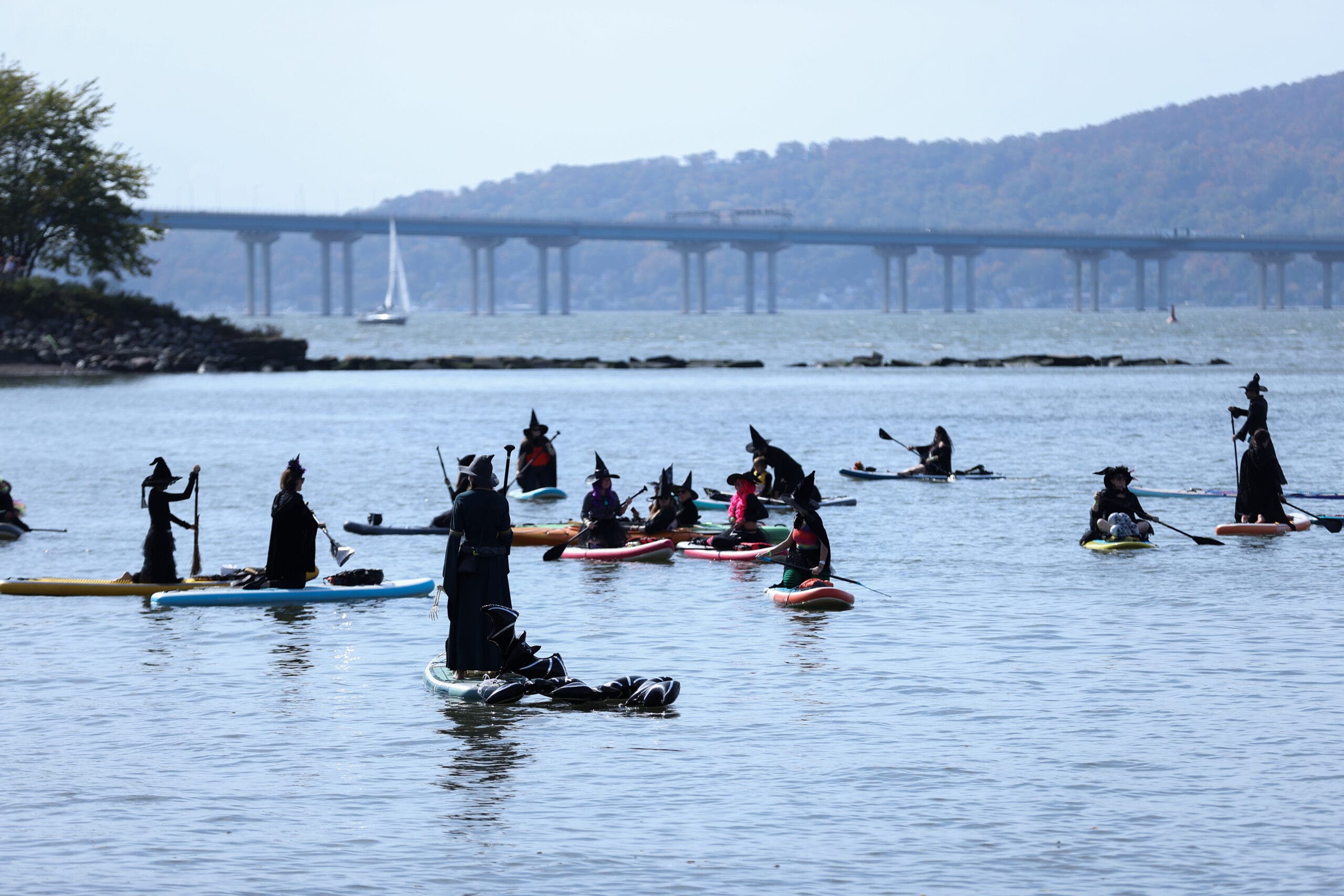
Along the East Coast, historical settings have embraced the trend. In Sleepy Hollow, New York—famous as the setting for Washington Irving’s classic ghost story—Rivertown SUP and Yoga owner Tara Scheller launched the Hudson River SUP Witchfest in 2020. Initiated during the pandemic with a modest group of 16 paddlers, the event expanded significantly after relocating to Kingsland Point Park, drawing participants from multiple neighboring states alongside local vendors and spectators.
Similarly, the Macon Witches Float in Georgia blends costumed recreation with charitable outreach. Originally established to support Macon Periods Easier, a nonprofit addressing period poverty in local schools, the event has expanded with the assistance of Visit Macon and Ocmulgee Outdoor Expeditions. Paddlers aboard kayaks, canoes, and paddleboards continue to contribute donation items alongside their participation on the Ocmulgee River.
In Florida, the Weeki Wachee Witches Paddle offers a morning excursion through the clear waters of Weeki Wachee Springs State Park on Halloween morning. The event features costumed participants navigating the spring-fed river, complemented by organized breakfast gatherings, costume contests, and commemorative medals for all participants.
In the Pacific Northwest, the Witches, Warlocks, and Wizards Paddle on Puget Sound reflects a community-focused recovery from pandemic isolation. Organized by spiritual practitioner Maari Falsetto following the closure of her West Seattle studio, the bring-your-own-board event gathers roughly 50 participants annually for a freewheeling morning on the water, demonstrating how a simple coastal pastime continues to unite communities through shared amusement.