As nations across the globe grapple with the escalating climate crisis, multilateral financial institutions and donor governments are aggressively championing multi-billion-dollar green energy frameworks designed to phase out fossil fuels. Among these initiatives is Vietnam’s $15.5 billion Just Energy Transition Partnership (JETP), a massive international agreement aimed at helping the Southeast Asian nation wean itself off coal. Yet, beneath the diplomatic handshakes and high-level financial commitments lies a stark and deeply troubling reality: the very people fighting for environmental, climate, community, and workers’ rights are being systematically sidelined, intimidated, and imprisoned.
In Vietnam, advocates who have dedicated their lives to protecting public health and pushing for sustainable energy are unable to weigh in on the transition policies shaping their country’s future. Instead of inclusive dialogue, they face threats, harassment, and arbitrary arrest. Discussions surrounding the implementation of the $15.5 billion JETP are taking place entirely behind closed doors, restricted strictly to high-level negotiations between international banks, government officials, and powerful corporations. Concerned members of civil society are left without any opportunity to provide meaningful feedback, review policy proposals, or engage freely with international colleagues working on similar climate frameworks in neighboring countries.
This exclusionary environment is not merely theoretical; it is enforced through severe legal crackdowns on dissent. To date, six prominent advocates of climate and energy justice have been arrested and detained in Vietnam for their tireless efforts to help transition the nation away from coal. Among them is environmental justice lawyer Dang Dinh Bach, who is currently serving a harsh five-year prison sentence. Bach was the founder and director of the Law and Policy of Sustainable Development Research Centre, an organization where he dedicated his life to safeguarding the public health of marginalized communities affected by industrial pollution.
The gravity of Bach’s imprisonment has drawn international condemnation. Earlier this year, the United Nations Human Rights Council Working Group on Arbitrary Detention released a formal opinion regarding his case, finding his imprisonment to be a clear "violation of international law." Furthermore, the UN working group expressed deep concerns regarding what it identified as a "systemic problem with arbitrary detention" targeting environmental defenders in Vietnam.
Bach’s case is far from an isolated incident. Another leading defender of climate justice in Vietnam, Hoang Thi Minh Hong, the founder of the influential environmental group CHANGE VN, was recently sentenced to three years in prison under similar circumstances. The ongoing criminalization of environmental advocacy has sparked a unified outcry from the international community. To date, the United Nations, the United States government, the United Kingdom, and the European Union have all released official statements condemning her recent conviction and sentencing, urging Vietnamese authorities to respect fundamental freedoms.
It is against this alarming backdrop that civil society leaders are raising urgent ethical questions regarding the rollout of international development funds. Observers, advocates, and regional networks are strongly urging multilateral development banks—such as the Asian Development Bank (ADB) and the World Bank—along with wealthy donor governments, not to bulldoze ahead with the implementation of the Vietnam JETP or its associated projects under current conditions. Proceeding with these agreements without securing civic freedoms means acting as complicit bystanders in the ongoing silencing, intimidation, and reprisals faced by community rights advocates, labor leaders, and environmental defenders.
The concerns surrounding these financial frameworks extend well beyond Vietnam’s borders. Elsewhere in the Asia-Pacific region, including in countries like the Philippines and Indonesia, plans by the ADB and the World Bank Group to dole out hundreds of millions of dollars in public funds have already drawn heavy criticism from environmental, climate, and social-justice groups. These publicly backed financial packages are ostensibly designed to enable coal companies to refurbish or prematurely retire their heavily polluting facilities. Such schemes are explicitly labeled as contributions to a "Just Transition" and are actively being considered as part of the JETP arrangements in Indonesia.
However, a closer examination of these arrangements reveals a profound disconnect between corporate rhetoric and ground-level realities. Project operators are consistently failing to be held culpable for the historic and ongoing harm and damage wrought by their coal-fired power plants on local community livelihoods, workers’ health, and the surrounding environment. Clear, legally binding promises to retain or provide dignified retirement packages, retraining programs, and comprehensive health impact redress for displaced workers remain largely nonexistent.
Moreover, proposals for green jobs frequently lack concrete commitments that would guarantee core labor rights in accordance with international conventions. Instead, the plans currently being put into motion heavily prioritize the "repurposing" of coal facilities rather than their complete and permanent decommissioning. This approach allows industrial facilities that once burned coal to be retrofitted so they can rely upon burning other resource-intensive, high greenhouse gas-emitting fuels, such as woody biomass or municipal waste. Meanwhile, vulnerable workers and residents living in surrounding communities are still left to bear the heavy burden of working and living in environments where the air, land, and water remain severely contaminated.
Alarmingly, mounting evidence suggests that this exact model of repurposing coal facilities will soon be proposed for financing under the Vietnam JETP. Plans moving forward in the name of a Just Transition are increasingly being backed by a powerful coalition of corporate and financial actors who prioritize institutional convenience over human rights. In response, civil society organizations, grassroots community groups, and workers’ alliances across the region have consistently called upon international banks and donor governments to establish clear, enforceable commitments. These commitments must ensure the creation of safe, open spaces where local populations can voice their concerns, review proposals, and provide critical feedback to inform the planning process before any major infrastructural plans transition into the implementation phase.
The high-level political declaration that formally announced the JETP in Vietnam explicitly affirmed the vital importance of consulting with diverse stakeholders, including non-governmental organizations and broader civil society, in order to achieve a "broad social consensus" regarding the nation’s energy-transition pathway. Yet, the hostile and disabling environment enforced against civil society and community-based groups in Vietnam makes it fundamentally impossible to engage in any genuine consultative processes. Citizens and advocates participate under the constant, paralyzing fear that speaking out could mean they are next in line to be arbitrarily detained, legally charged, and imprisoned.
This reality stands in direct contradiction to the internal policies of major international lenders. Both the Asian Development Bank and the World Bank Group have clear, established provisions guaranteeing access to information, organizational transparency, and public participation enshrined directly in their institutional policies—none of which can be operationalized under the current authoritarian context in Vietnam.
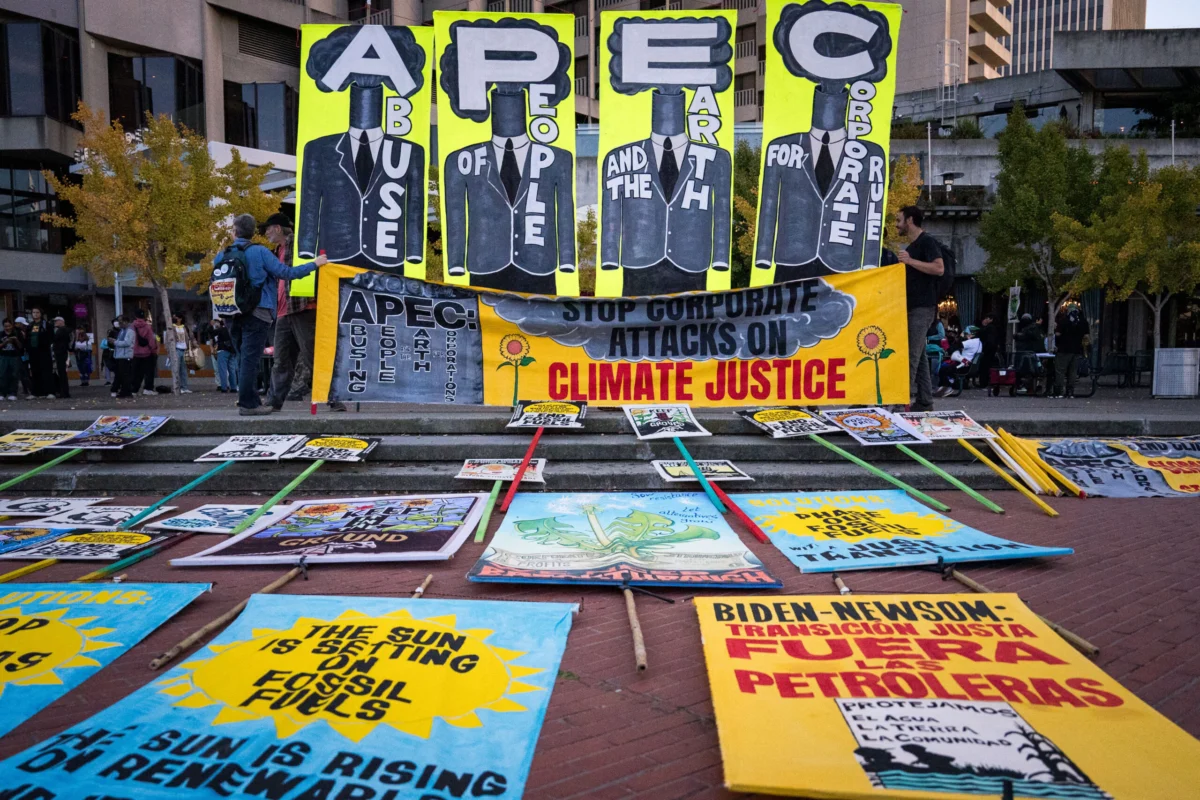
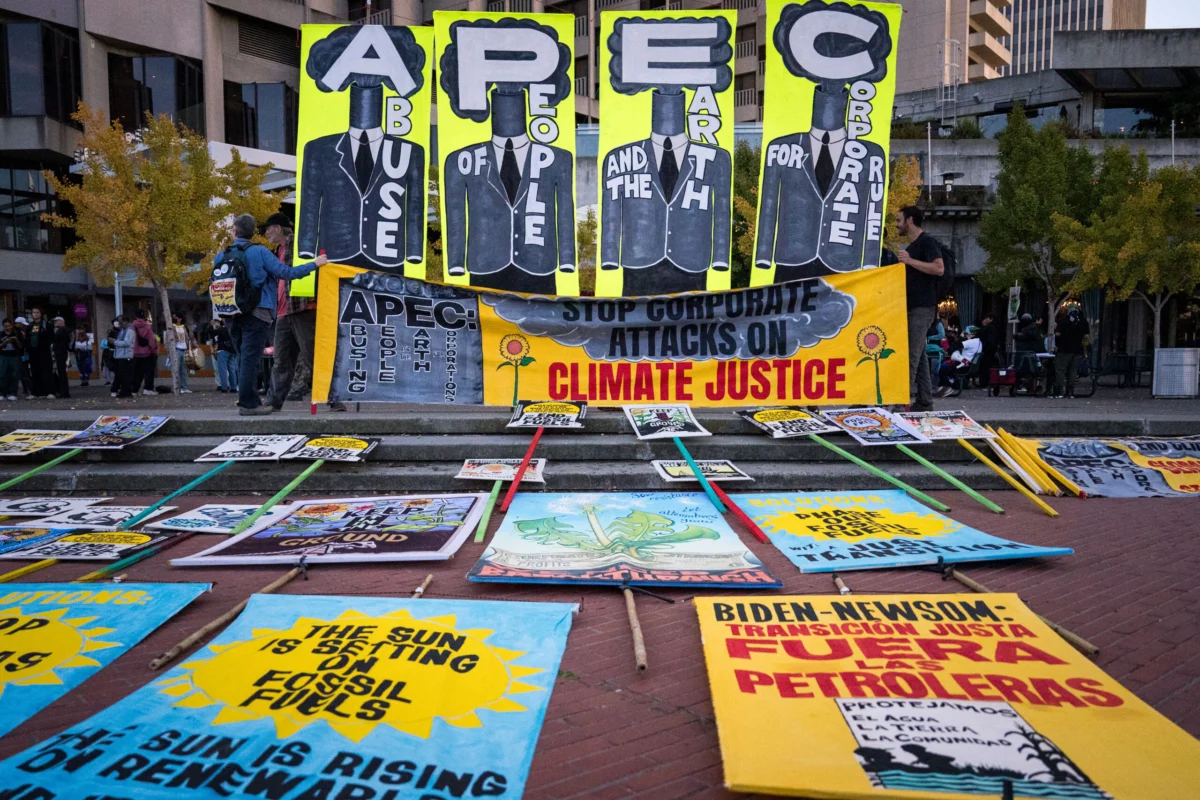
Crucially, major regional diplomatic gatherings, such as Asia Pacific Climate Week and events associated with the Asia Pacific Economic Cooperation, should serve as a pivotal moment for both the ADB and the World Bank Group to finally "walk the talk." Rather than offering passive endorsements of green policies, these institutions must issue clear, unequivocal public statements supporting the immediate release of imprisoned environmental and human-rights defenders in Vietnam. More broadly, they must commit to suspending all Just Transition-related planning processes and associated financing until verifiable safe spaces are established, allowing community members, labor representatives, and civil-society groups to raise questions, express concerns, and voice grievances without fear of state reprisal.
In the meantime, mobilization efforts by civil society groups working outside of Vietnam—dedicated to securing the freedom of Dang Dinh Bach, Hoang Thi Minh Hong, and other incarcerated environmental and human-rights defenders—will continue unabated. So, too, will the collective, cross-border efforts to advance the true processes, principles, and practices of equitable, rights-based Just Transitions within, across, and far beyond the region.
Tanya Lee Roberts Davis is the Just Transitions Advocacy Coordinator at NGO Forum on ADB.