The Airbus A220 family may not immediately stand out as a competitor in the longer-haul end of the commercial aviation market. Encompassing two narrowbody variants capable of carrying a maximum of just 160 passengers at a time, the jets are more aligned in size with aircraft that typically cover short regional hops. However, impressive range capabilities mean the A220 family is far from confined to simply linking nearby cities.
Where massive widebody airliners historically opened the door to accessible intercontinental travel, the two variants of the A220 have emerged among a string of modern narrowbodies capable of undertaking similarly lengthy journeys. In the case of the Airbus A220-300 in particular, few operators tap into the model’s operational versatility quite as thoroughly as Latvian carrier airBaltic.
The Airbus A220-300
Alongside the smaller Airbus A220-100, the A220-300 makes up what Airbus historically dubbed the only family of aircraft purpose-built for the 100 to 150-seat market. Airbus did not originally develop the jets entirely on its own, with Bombardier having introduced the family through the CSeries program back in 2008 before selling a majority stake in its commercial jetliner program to Airbus in 2018. The CSeries, which was first delivered throughout 2016 as the CS100 and CS300, was rebranded as the A220 soon after the acquisition was finalized.
Today, approximately 538 A220 aircraft are active in airline fleets worldwide, according to data from Airbus. A total of 542 units have been delivered out of more than 1,100 firm orders. While those figures remain a far cry from the 20,400-plus orders accumulated by variants of the vastly popular Airbus A320 family, the A220 has proven immensely popular as a means of plugging the operational gap between smaller regional jets and larger traditional narrowbodies.
Airlines have embraced the aircraft not only because it preserves crucial range capabilities, but also due to its superior fuel efficiency when compared against aging legacy models like the Boeing 737-700 and older Airbus A319s. Of course, direct competition has since emerged through alternatives such as the Boeing 737 MAX 7. While the Boeing counterpart holds a marginal edge over the A220-300 in both maximum range and capacity, delayed certification processes that culminated only recently mean deliveries remain in their absolute infancy. This dynamic leaves Airbus’s A220 variants as far more established and readily available options on the global market. The operations of airBaltic offer arguably the clearest operational insight into how these narrowbodies excel in the real world.
airBaltic Exclusively Flies A220-300
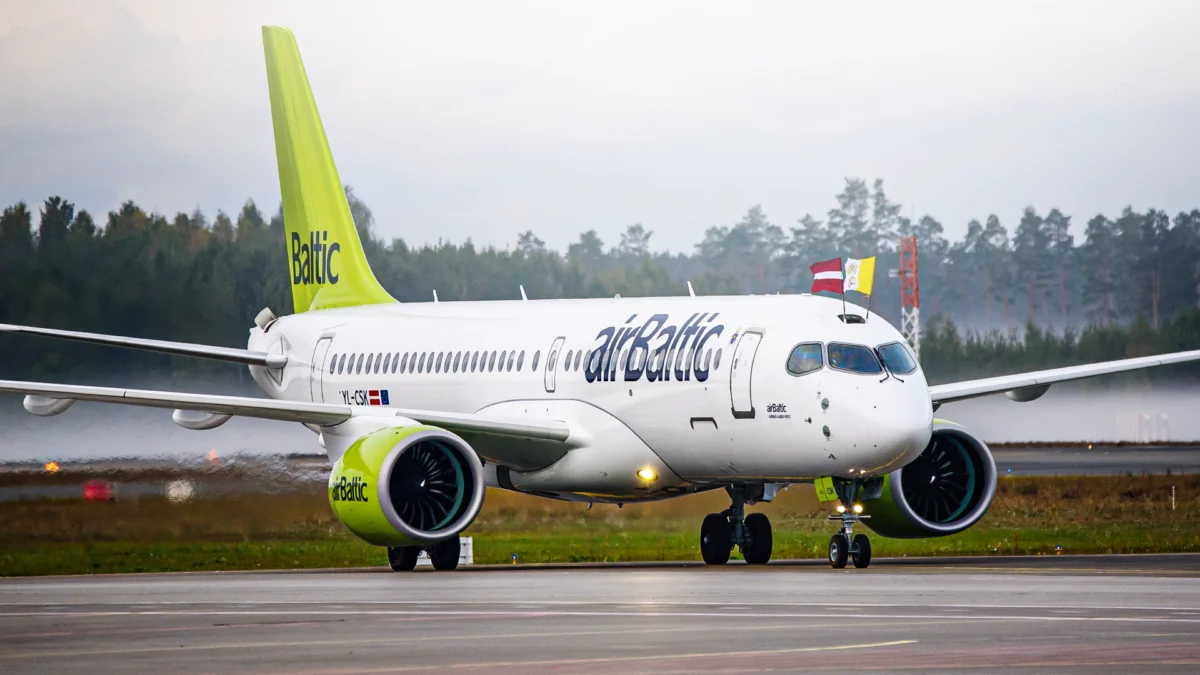
While it is not uncommon for airlines to run a uniform fleet in the interest of simplifying maintenance and operational overhead, airBaltic stands out among the few carriers globally to exclusively operate the A220. Breeze Airways recently joined these ranks upon fully retiring its Embraer 190 fleet, mirroring airBaltic by solely operating the A220-300 and its smaller stablemate.
Having shifted to an all-A220-300 fleet significantly earlier than its US-based counterpart back in 2020, airBaltic has become a prominent fixture in operating some of the longest scheduled routes featuring the aircraft type. According to the airline’s official corporate data, its current active fleet includes 54 examples of the model.
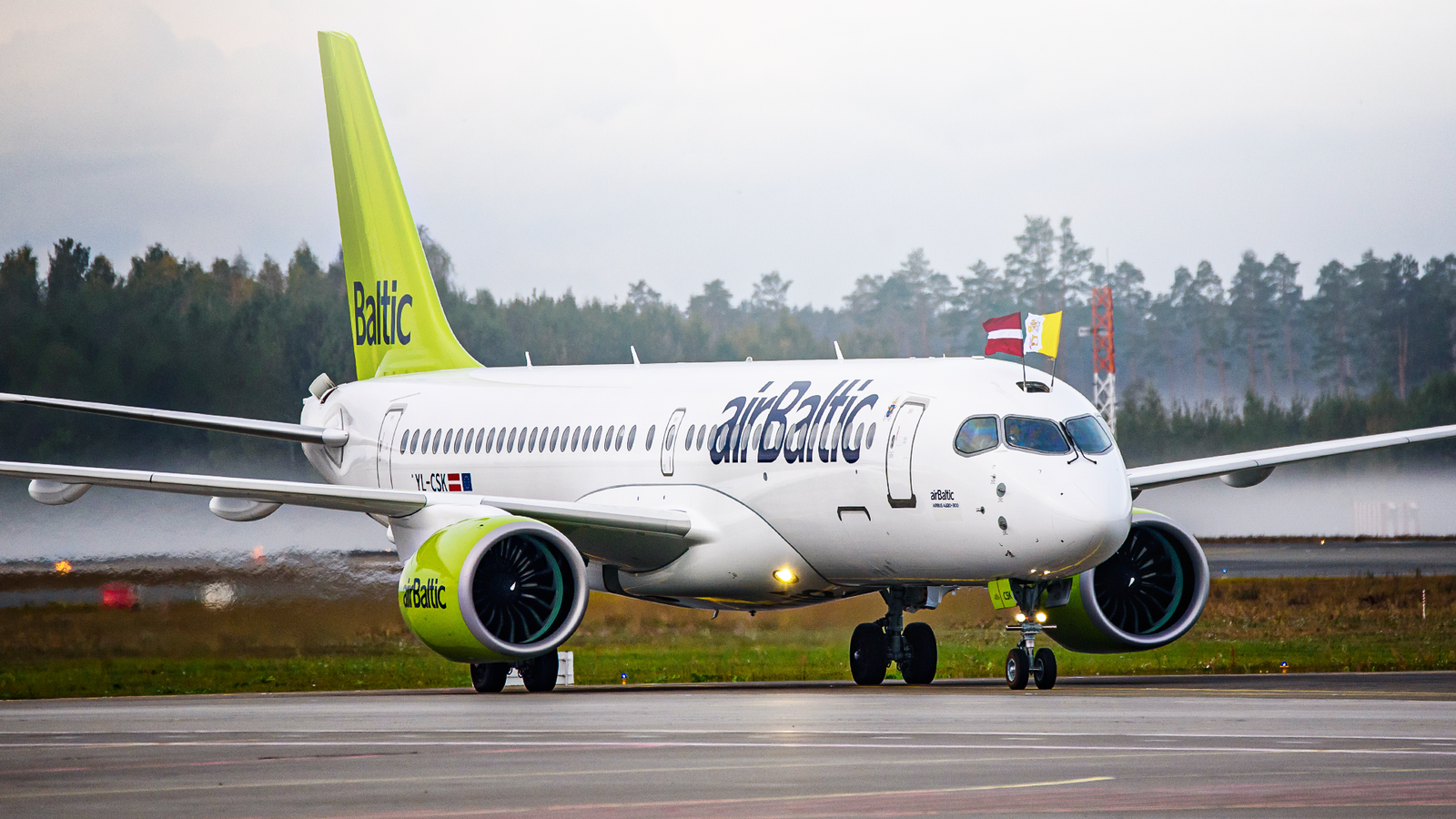
Each aircraft is configured to comfortably carry 148 passengers in the A220’s standard two-by-three seating layout. airBaltic lists the commercial range of its A220-300s at 2,471 nautical miles, or roughly 2,843 miles, which sits somewhat conservatively beneath Airbus’s theoretical maximum advertised figure of 3,400 nautical miles. Such variances are entirely unsurprising, given the typical gap between real-world airline operations and maximum theoretical ranges that require near-ideal meteorological conditions. That said, the Latvian flag carrier has routinely pushed the A220-300’s performance limits on its most ambitious seasonal and scheduled networks.
airBaltic’s Flights Scheduled In Excess Of Seven Hours
Looking at block times—measured from the moment a flight pushes back from its departure gate until it parks at its destination—airBaltic’s historically longest A220-300 flight connected Riga International Airport and Dubai International Airport. At a maximum scheduled duration of seven hours and 30 minutes, the link stands as one of the longest journeys ever attempted on a routine basis using the A220-300.
However, airBaltic also holds the informal crown for executing the longest A220-300 routes based on sheer geographic distance. Linking Tampere-Pirkkala Airport in Finland to Tenerife South-Reina Sofía Airport in Spain, the seasonal route operated over the winter months and covered an impressive 2,562 nautical miles, stretching well beyond the standard commercial range published by the carrier online for its fleet.
While the Tampere to Tenerife trip boasted an average flight time of around seven hours, ongoing disruptions to routing across the Middle East frequently extended actual flight durations. These disruptions often caused shorter great-circle distance journeys to experience extended air times due to mandatory airspace detours and air traffic control delays. Such geopolitical complications ultimately forced significant adjustments to airBaltic’s scheduling, most notably affecting its high-profile Middle Eastern connections.
airBaltic Dubai Service Currently Suspended
One important caveat to airBaltic’s network is that the carrier does not currently fly to Dubai. This suspension is not a reflection of the A220-300’s technical capabilities, nor is it a strategic choice born from weak demand. Rather, the airline was compelled to drop the route temporarily due to ongoing geopolitical instability and security concerns across the broader Middle East.
airBaltic historically operated regular flights from its primary hub in Riga to Dubai using the A220-300 up to five times weekly, maintaining the service through the early part of the year. However, following regional conflict developments, the service was suspended, and the airline confirmed the route would remain dark through the winter season. Acknowledging the difficult operational realities, management noted that the decision followed a comprehensive assessment of factors, including regional safety conditions and potential operational restrictions affecting the flight corridors normally utilized for traffic flowing between Europe and Dubai.
Even with this suspension, the single-aisle Airbus jet has been instrumental in bridging Northern Europe and key international markets. Alongside ambitious leisure routes connecting Northern Europe to the Canary Islands, the aircraft has continuously demonstrated the high degree of operational flexibility inherent in the A220-300 platform.

airBaltic’s A220-300s Also Used For Regional Hops
At the opposite end of the operational spectrum, the airline’s shortest daily route links the Latvian capital of Riga with Palanga International Airport in Lithuania, representing the epitome of a regional short-haul hop. Lasting just 40 to 45 minutes, the connection spans a mere 111 nautical miles.
Crucially, airBaltic deploys the A220-300 on this ultra-short regional route in the exact same 148-seat cabin configuration used for its lengthy leisure and intercontinental-stretching flights. The underlying business rationale is straightforward: a standardized, single-type fleet is significantly more cost-effective to maintain than a mixed portfolio of aircraft. Beyond commonality in expensive spare parts inventory, pilot training pipelines are streamlined, allowing flight crews to transition seamlessly across vastly different segments of the airline’s route network without requiring specialized type ratings.
Thanks to the capabilities embedded in the A220-300, airBaltic relies on a single aircraft model capable of executing a 111-nautical-mile regional hop or a multi-thousand-mile leisure trek with equal efficiency. Even as external geopolitical factors require temporary network adjustments, the carrier’s upcoming seasonal schedules ensure its fleet will continue to be thoroughly tested across a diverse array of destinations.
Reshuffle At airBaltic Ahead
Industry data indicates that airBaltic has earmarked a series of new links for the upcoming months to optimize its network footprint. These additions will connect Gran Canaria Airport, Finland’s Kuusamo Airport, and Tenerife South to various European metropolitan centers, anchored in part by the establishment of a new seasonal base at Tenerife.
Looking toward the longer term, however, airBaltic is scheduled to trim back parts of its network operations and contract its overall fleet size during the upcoming summer season. A reduced number of destinations will be served across its primary bases in Riga, Tallinn, and Vilnius compared to previous peak periods. In tandem with these network adjustments, the active fleet count is set to experience temporary reductions while the airline navigates broader financial restructuring, ensuring that the versatile Airbus A220-300 remains firmly at the center of its long-term corporate strategy.