In the wake of the fall of Afghanistan, many who watched the unfolding modern tragedy have been forced to look back, searching for clues in the deep history of a formidable and misunderstood land. Long before decades of conflict reshaped its borders and cities in the global consciousness, Afghanistan was a vital, pulsing stop on the legendary "Hippie Trail," a well-worn overland route for young Western backpackers traveling from Istanbul to Kathmandu.
Decades later, journals from that era offer a poignant window into a country that foreign powers have routinely underestimated. Among those archives is the personal travel log of a 23-year-old backpacker from Seattle who, in the summer of 1978, embarked on a 500-mile overland journey across Afghanistan, capturing a nation suspended between ancient tribal traditions, recent political upheaval, and the encroaching modern world.
Tuesday, August 1, 1978: From Herat to Kabul
The journey across the desert began in the pitch black of early morning. At 4:00 a.m., long before the bustling city of Herat should have been stirring, the traveler and his companion, Gene, ate a fresh melon and prepared to catch the 5:00 a.m. Qaderi bus bound for Kabul.
True to schedule, the bus was organized and punctual. As dawn broke, illuminating the sidewalks where locals had slept, the boisterous vehicle sounded its horn loudly, psyching itself up for the grueling 800-kilometer trek ahead. The route unfolded along a narrow but well-paved highway—built jointly by the United States and the Soviet Union—cutting straight across the desolate, hot, and foreboding Afghan desert.
The landscape offered little traditional scenic beauty. Throughout the 14-hour ride, the scenery remained remarkably consistent: herds of lazy camels, the occasional cluster of nomad tents, lone electricity lines, and mud-brick ruins melting into the earth like sandcastles hit by a wave, all set against a backdrop of stark, jagged dirt mountains. Yet, the sheer vastness of a nation supporting a population of 10 million left a profound impression.
The bus maintained a swift and steady tempo, stopping briefly for Coca-Cola, Fanta, and peanuts, alongside three scheduled roadside stops for passengers to turn toward Mecca and pray. By the time darkness fell, the bus had crossed into Kabul. With Gene feeling unwell, the pair took a taxi directly to the city’s tourist hub, "Chicken Street," where they secured a room at the modest Sina Hotel. While Gene retired immediately to sleep, the traveler settled for a meager dinner alongside a friendly student from Philadelphia who was visiting to study the local language, lamenting how quickly they had been spoiled by the comforts of their previous hotel in Herat. Nonetheless, they had arrived in Kabul, moving tantalizingly close to their ultimate dream: the Khyber Pass and India.
Wednesday, August 2, 1978: Navigating the Capital of Kabul
Traveling without a watch proved a recipe for waking up too early. With Gene still in poor health and confined to bed, the traveler ventured down to the Sina Hotel courtyard for a breakfast of melon, a large carrot, two boiled eggs, and tea. The morning offered a chance to cross paths with other wanderers, including a German traveler recovering from an eight-day bout of "Tehran tummy" who longed to return home—a universal sentiment for anyone navigating the strains of overland travel.
With administrative tasks ahead, the traveler walked to the Pakistan bus company to secure tickets for a Friday morning departure over the Khyber Pass. A subsequent visit to the Pakistani embassy brought welcome news: American citizens required no visas to pass through Pakistan. The route to India was clearing.
After checking on Gene—supplying him with a special batch of "magic tea" and boiled eggs—the traveler set out to navigate Kabul. Without a map or proper information, the city presented an intimidating challenge. Sprawling across multiple converging valleys, the capital felt like a massive, hodgepodge village that clung stubbornly to a dried-up river with a wide, rocky bed. The afternoon heat was punishing, shade was scarce, and wearing shorts as a lone Westerner made him feel conspicuously out of place.
A taxi ride to the Kabul Museum quickly turned into a lesson in local friction. The driver fiercely disputed the 40 afghanis offered for the fare, demanding 60. To cut the argument short, the traveler paid 50, only to discover upon arrival that the museum was closed. Frustrated by the crowds and local heckling, he boarded a crowded city bus and rode it to the end of the line, landing squarely in the heart of the capital’s commercial activity.
Here, the unique contradictions of Afghanistan were on full display. The country’s only true urban center featured modern institutes and large buildings, yet tribal chaos permeated every corner. Directly adjacent to a modern department store sat elderly men unloading donkeys laden with tomatoes, young girls selling limes, and a man fast asleep on a pile of honeydew melons while smoking hashish.
After finding brief respite in the cool bar of a fancy hotel and later dining at a restaurant atop the "Afghan store"—the closest equivalent to a Western department store—the traveler encountered an elderly local man who introduced himself as a professor. Excited to share a meal with an American, the professor eagerly conversed, learning the do-re-me musical scale and the definition of a radish before bidding farewell.
Evidence of the country’s recent communist revolution was impossible to miss. Upon entering Kabul, the bus had been thoroughly searched for weapons. Copies of revolutionary newspaper headlines remained posted on walls, an 11:00 p.m. curfew was strictly enforced, and soldiers patrolled the streets with fixed bayonets. Along the thoroughfares, the blown-out wreckage of a tank stood as a stark monument to the fallen regime. The evening concluded quietly back at the Sina Hotel courtyard with a simple dinner of melon, boiled eggs, and tea.
Thursday, August 3, 1978: Malaria Pills and Modern Echoes
Thursday marked the administration of weekly malaria pills and the official end of three weeks on the road. Despite lingering health vulnerabilities—including occasional bouts of traveler’s diarrhea—both men remained fiercely determined to press forward toward India.
The morning began with super-vitamins, zinc pills, black tea, toast, and eggs. Walking down Chicken Street, the traveler tuned out the relentless chorus of shopkeepers calling out, "Come into my shop mister, just look," realizing that the endless array of souvenirs held no real appeal. Seeking relief from the midday sun, he visited the American center to read old news. Current issues of Time magazine had been censored by the new government for featuring articles concerning the Soviet Union, leaving travelers to rely on outdated news—a strange, disjointed experience that provided a fleeting, bittersweet taste of home.
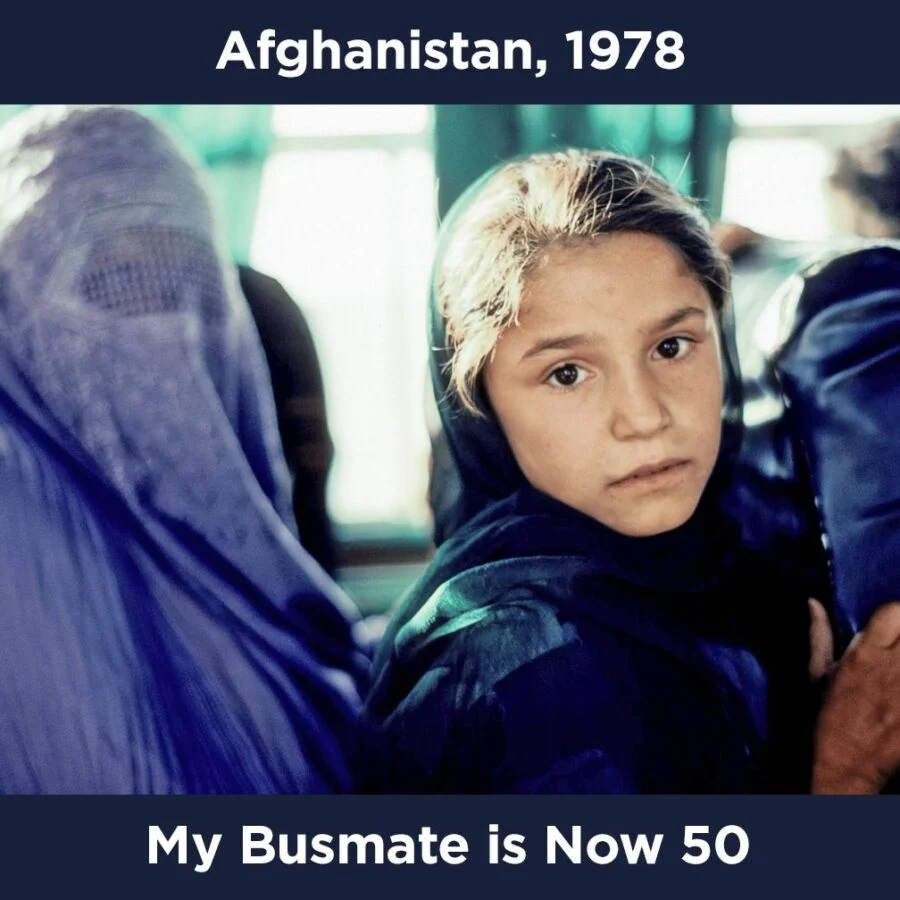
Later, donning Gene’s baggy white Afghan pants and a camera, the traveler boarded a local bus with no particular destination in mind, paying a single afghani to ride until the end of the line. The bus driver invited him for tea, drawing an intense, unbroken circle of stares from curious locals. The experience inspired reflections on a poem titled "Afghan Eyes," written after a young girl had stared at him unblinkingly for five hours during the bus ride from Herat.
Equipped with a zoom lens, he wandered through a nearby nomadic tent community. While the residents were camera-shy, other locals eagerly requested their portraits taken. Returning to Chicken Street, he found Gene finally emerging from his room with a renewed appetite.
The two decided to try the "Steak House," an establishment that had caught their attention upon arrival in Kabul. For less than a dollar, they were rewarded with a surprisingly satisfying meal of soup, a good steak with vegetables, and a pot of tea. Afterward, they exchanged their remaining Iranian and Turkish currency for 50 Pakistani rupees.
The evening was spent quietly in the hotel courtyard, listening to a Fleetwood Mac tape, mending a backpack strap, and updating journals ahead of the next day’s departure. Yet, the experience brought a complex psychological realization. Being wealthy—even as a modest backpacker—and visibly white in a deeply impoverished nation created an uncomfortable barrier. While European travels fostered easy connections and friendships, the language barrier, exhaustion, and the underlying reality that many English speakers interacted with tourists primarily for financial gain created an emotional wall.
As the journey prepared to move past the capital, the traveler stood at the threshold of the fabled Khyber Pass, ready to leave behind a capital city scarred by revolution and rich with contradictions, as the adventure pushed ever onward toward the Indian subcontinent.