In the competitive world of freelance writing, landing that elusive first client often comes down to a strategy that many aspiring professionals overlook entirely. According to industry insights shared by Location Rebel founder Sean Ogle, the true key to breaking into the market and scaling a freelance business is not just sending out initial pitches, but mastering the art of the email follow-up.
For many beginners stepping into the digital economy, client acquisition begins and ends with cold outreach. Freelancers typically compile lists of prospective clients, draft a handful of introductory emails each week, and wait for responses to roll in. However, industry veterans note that this single-touch approach is fundamentally flawed. Relying on a solitary email drastically limits a writer’s potential, as most prospective clients are rarely prepared to hire or buy on the spot. Real momentum, sales data indicates, is generated further down the line through persistent, thoughtful communication.
The Reality of Cold Emailing and Sales Data
Conducting effective outreach requires sending personalized cold emails consistently with the overarching goal of building professional connections rather than merely securing an instant sale. Yet, a pervasive mistake haunts even the most diligent freelancers: abandoning the conversation after a single unanswered message. Many individuals send one email, hear nothing back, and prematurely throw in the towel, unaware that the vast majority of positive responses and successful conversions stem from subsequent follow-up attempts.
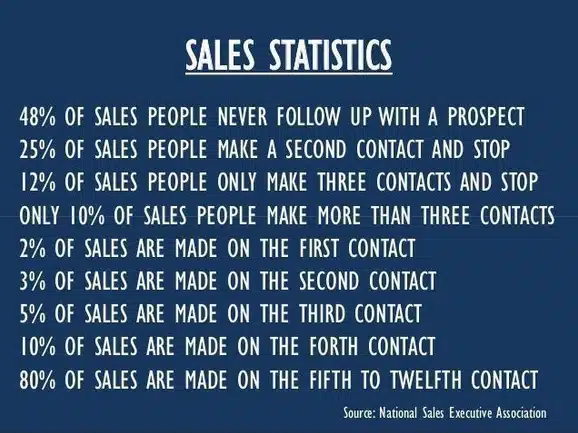
Sales and marketing statistics consistently demonstrate that a significant percentage of business deals are closed only after multiple touchpoints. If a freelancer sends a single pitch and immediately moves on to the next lead, they are inevitably leaving viable clients on the table.
The underlying psychology behind this phenomenon is simple timing. When a freelancer reaches out via cold email, the statistical probability that a prospect happens to need a writer with that exact skill set at that precise millisecond is remarkably slim. A potential client might have a fully booked content calendar or no immediate budget when the first email arrives. However, that dynamic can shift dramatically within a matter of months.

Consequently, the primary objective of an initial outreach message is rarely to close a deal immediately. Instead, the goal is to establish initial contact, plant a seed, and remain top of mind so that when a content need eventually arises—whether in three, six, or nine months—the writer is the first person the client thinks of.
Timing and Cadence in Professional Communication
Establishing a balanced follow-up schedule requires nuance and a delicate touch. Ogle advises against following up the very next day, which can easily come across as impatient or aggressive. Instead, waiting a span of two to five days between the initial email and the first follow-up strikes a healthy balance. Waiting too long risks the prospect forgetting who you are entirely, while following up too quickly crosses the line into annoyance.
Beyond the initial check-in, maintaining a structured cadence helps freelancers check in regularly without overwhelming the recipient’s inbox. This rhythmic approach ensures enough time passes for business circumstances to change, allowing writers to successfully balance staying visible with respecting the recipient’s time and boundaries. Industry professionals emphasize a crucial distinction: offering assistance and value is professional, whereas persistent, untargeted messaging crosses into spam. Furthermore, if a prospect explicitly requests no further contact, honoring that boundary by removing them from the outreach list is an absolute industry standard.
Many established freelancers utilize seasonal or quarterly touchpoints to align their check-ins with natural calendar shifts, providing organic talking points. Reaching out right before the holiday season to offer assistance with end-of-the-year content backlogs, or sending a brief note in mid-January to wish a happy new year and inquire about upcoming quarterly projects, creates a natural rhythm. Additional check-ins can then be distributed through the spring, summer, and fall, maintaining a steady, professional presence throughout the business year.
Overcoming the Noise Through Personalization
The digital landscape is heavily saturated with low-effort outreach. Decision-makers at modern companies are frequently inundated with generic, poorly crafted messages that appear to be hastily generated by automated tools. When these initial missives are followed by equally impersonal daily reminders, the resulting friction creates significant annoyance, ultimately giving cold outreach an undeservedly poor reputation.
In contrast, an email that demonstrates genuine research and a foundational understanding of the recipient’s business stands out immediately. Crafting a standout pitch does not require hours of exhaustive background research; often, tailoring just the opening sentence to reflect specific details about the prospect’s website or recent projects is sufficient to rise above the noise.
By combining genuine personalization with a polite, low-pressure closing statement—often referred to as an "easy out"—writers can keep communication channels open without imposing undue pressure on the recipient. In many cases, consistent and thoughtful follow-up functions as a service to the client. Rather than forcing a busy manager to scour the internet for talent when a sudden content gap appears, a well-timed email places a reliable professional directly inside their inbox at the exact moment of need.
Tracking Systems and Modern Productivity Tools
Managing a robust outreach pipeline requires organization, and writers utilize a variety of tracking methods depending on personal preference. While traditional manual spreadsheets remain a functional option for tracking contacts, dates, and response statuses, modern digital tools offer significantly enhanced efficiency.
Platforms such as Gmail-integrated customer relationship management tools have transformed standard email inboxes into streamlined tracking hubs. These applications allow users to monitor when messages are delivered, track whether emails have been opened, and attach chronological notes to specific contacts. Automated reminders help maintain a consistent follow-up schedule without relying solely on human memory.
Additionally, artificial intelligence assistants have emerged as popular organizational aids for freelancers who prefer alternatives to traditional spreadsheets. By keeping an AI assistant updated with dates, outreach logs, and contact details, writers can easily generate weekly or monthly progress reports. These summaries help track vital metrics, such as the volume of cold emails required to secure introductory calls and, ultimately, paid client projects, functioning effectively as an administrative marketing assistant.
Ultimately, industry experts stress that the specific system matters far less than having one in place. Once a reliable method for tracking outreach is established, maintaining consistency and executing scheduled follow-ups becomes a seamless part of daily operations. Writers who invest time in crafting thoughtful pitches and pairing them with structured follow-up routines dramatically improve their chances of breaking through the digital noise and securing long-term freelance success.