For travelers planning a short winter holiday, Romania and the historic region of Transylvania might not immediately spring to mind. However, a growing number of visitors are discovering that the country offers an ideal combination for a cold-weather break: grand, contrasting capital cities, snowy mountain ranges, fairytale architecture, hearty traditional cuisine, and one of the most expansive thermal spa complexes in Europe.
Far from being a conventional winter-sun getaway, a short trip to Romania delivers a genuine sense of adventure. Visitors can easily catch low-cost flights from the UK, base themselves in a vibrant capital, and witness an astonishing variety of landscapes and historical sites within the span of just three days.
Before experiencing it firsthand, Transylvania often exists largely in the imagination as a mythical landscape populated by vampires, shadowy castles, and dense, dark forests—images heavily shaped by Bram Stoker’s Dracula and the legends surrounding Vlad III. While these atmospheric elements give the region the suspense of a Halloween story, reality reveals something far more welcoming. Transylvania is undeniably mysterious, but it is also remarkably beautiful, culturally rich, and surprisingly accessible for a long weekend.
A fast-paced three-day itinerary typically pairs a cultural immersion in Bucharest with a full-day excursion into the heart of Transylvania, concluding with a restorative day at Therme Bucuresti before a flight home. For those with slightly more flexible schedules, expanding the trip to four days allows for a slower pace, particularly when exploring the medieval charms of Brasov.
The Allure of Romania in Winter
Romania takes on a distinct character during the winter months. Mountain peaks and castle grounds frequently wear a mantle of snow, the restaurants in historical quarters offer warm and cosy refuges, and steaming outdoor thermal pools provide an invigorating contrast to the icy air.
Winter weather also complements the architectural drama of Transylvania. While landmarks like Bran Castle possess undeniable appeal beneath summer skies, the presence of mist, bare branches, and a dusting of snow delivers the atmospheric ambiance travelers secretly hope to find. Naturally, the season comes with practical challenges. Days are shorter, mountain routes can experience slower traffic, and snowfall is never guaranteed. Visitors must pack appropriate cold-weather gear, particularly for excursions into the higher altitudes. Yet these elements contribute to the overall appeal, transforming the journey into an authentic winter expedition defined by heavy coats, local red wine, and historic stone fortresses.
Bucharest: A Capital of Grand Contrasts
Bucharest is a city that reveals its charm gradually to those who wander its streets. It presents a striking mosaic of architectural eras, featuring colossal communist-era structures, ornate Eastern Orthodox churches, lively hospitality venues, and elegant historical facades sitting side by side. Plentiful budget flight options and an extensive selection of affordable accommodation make the capital an exceptionally convenient hub for short getaways.
For visitors with limited time, concentrating explorations within the compact Old Town of Lipscani offers an ideal introduction. The area’s cobbled streets are layered with history, featuring architectural marvels like the Stavropoleos Monastery, the umbrella-shaded Pasajul Victoria, and the visually stunning Carturesti Carusel bookshop. Amidst the lively commercial buzz, urban wanderers frequently stumble upon quiet church courtyards where the city noise fades away. These active places of worship offer tranquil moments of reflection, provided visitors observe respectful dress codes and maintain quiet reverence.
Beyond the historic center, the Palace of Parliament stands as a monumental reminder of the Nicolae Ceausescu regime. Impossible to fully comprehend until viewed up close, this vast and extravagant structure dominates the urban landscape. Those unable to secure a guided interior tour can still appreciate its sheer scale from Constitution Square.
As evening falls, dining at Caru’ cu Bere provides an introduction to traditional Romanian hospitality. Housed within a historic building adorned with carved wood and stained glass, the restaurant serves up hearty local fare—including grilled meats, sour soups, polenta, and papanasi, a traditional doughnut-style dessert served with sour cream and jam.
Accommodation and Logistics in the Capital
For a short itinerary, securing accommodation in or immediately adjacent to the Old Town ensures optimal walkability to dining venues and central departure points for regional tours. Properties such as the AIAStay Riverside Apartments demonstrate the excellent value available in the city, offering spacious quarters with views toward the river and parliament building. While older urban buildings can occasionally feature austere communal stairwells or lifts, the private apartments themselves often provide modern comforts and secure access systems.
Journey into Transylvania: Castles and Mountain Cities
The second day of the itinerary typically involves a full-day guided excursion from Bucharest into the Carpathian Mountains. While independent travel is possible, organizing transport through a guided tour removes the logistical stress of navigating winter roads and train connections, allowing travelers to focus on the snowy alpine scenery.
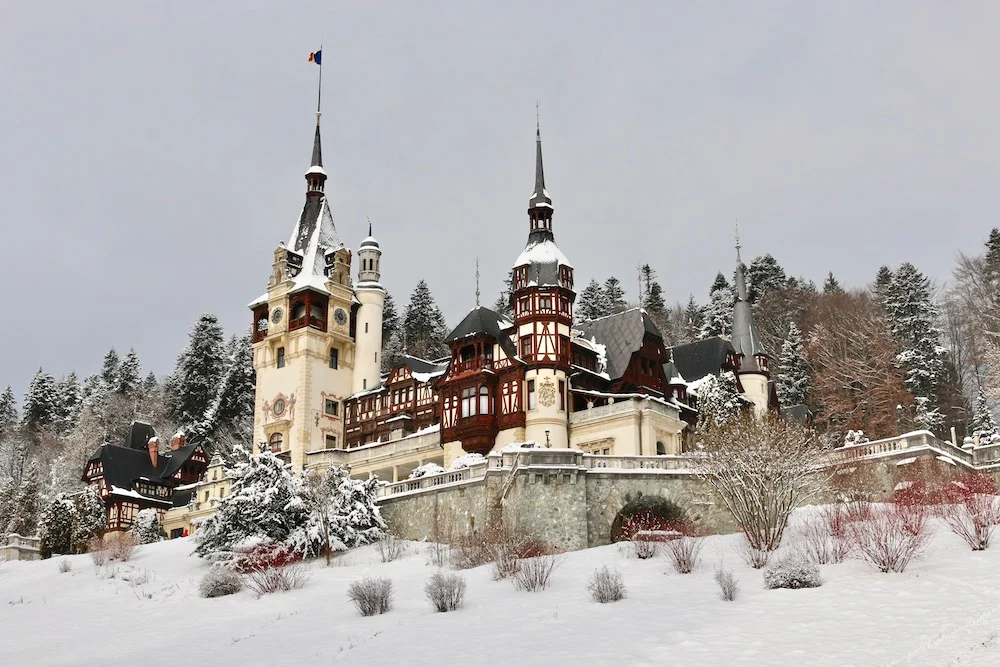
The journey’s first major highlight is Peles Castle, located near Sinaia. Originally constructed as a royal summer residence, the palace more closely resembles an extravagant Alpine lodge than a gloomy medieval fortress. Surrounded by forest and mountain peaks, its turrets and intricate woodwork create a distinctly picturesque setting, though visitors should wear footwear with reliable grip to navigate potentially icy paths.
The itinerary then proceeds to Bran Castle, globally recognized as Dracula’s Castle. Perched dramatically on a rocky outcrop, the fortress features winding internal staircases, timber galleries, and exhibits detailing both its royal heritage and its association with the vampire myth. Although historical links between the real Vlad III, author Bram Stoker, and the castle are minimal, the site retains immense cultural and visual appeal.
The day trip concludes with a visit to Brasov, a historic city nestled beneath forested hills. Even a brief stop allows visitors to appreciate Council Square, the imposing Black Church, and Strada Sforii, known as one of the narrowest streets in Europe. Those who have extra time can ride the cable car up Mount Tâmpa for sweeping views over the snow-dusted landscape.
A Relaxing Finale at Therme Bucuresti
Following an intensive day of sightseeing, the final day offers a deliberate shift in pace. Located close to the capital’s international airport, Therme Bucuresti is an expansive wellness and thermal bathing complex featuring indoor and outdoor pools, botanical gardens filled with palm trees, swim-up bars, and extensive sauna facilities.
The experience of swimming from a warm indoor pool into the outdoor thermal waters while cold winter air surrounds the surface offers a surreal and deeply relaxing conclusion to the trip. Divided into different zones catering to varying preferences—ranging from family-friendly waterparks to serene relaxation areas and premium wellness spaces—the complex provides a seamless transition before heading to the nearby airport for an evening flight home.
Ultimately, a short winter break in Romania offers an exceptional density of experiences, blending the urban energy of Bucharest with the mythic landscapes of Transylvania and the modern comforts of its world-class thermal spas.