Madrid is increasingly positioning itself as a premier destination for autumn travel, offering a balanced mix of gastronomic excellence, architectural grandeur, sprawling green spaces, and a vibrant cultural calendar that avoids the intense summer heat.
For travelers seeking a European escape once the summer crowds dissipate and the weather cools, the Spanish capital presents a compelling alternative to more traditional, rain-heavy northern destinations. Offering an expansive network of world-class art institutions, historic neighborhoods, and a celebrated nightlife culture, November offers an ideal window to experience the city’s distinct urban rhythm.
Madrid Excels in Autumn Climate and Walkability
Unlike many European cities that experience a distinct dip in atmosphere once summer ends, Madrid embraces the autumn season with a vibrant golden glow. The city’s extensive park systems transition into striking shades of yellow, orange, and red, while daytime temperatures remain exceptionally comfortable for prolonged sightseeing.
This climate is particularly attractive for visitors escaping the overcast, grey conditions typical of northern Europe during late autumn. Because Madrid is fundamentally a walkable city, the temperate November weather facilitates effortless exploration. Travelers can easily spend the morning navigating the historic center, pause for a leisurely lunch, and transition into an afternoon stroll through the city’s grand parks before settling into a traditional tavern for an early evening vermouth.
Access to World-Class Art Collections
Madrid houses some of the most significant art collections in Europe, anchored by the renowned Golden Triangle of Art. This cultural hub comprises the Prado Museum, famous for its extensive holdings of classic Spanish masterpieces; the Reina Sofía, which houses Pablo Picasso’s iconic Guernica; and the Thyssen-Bornemisza Museum, which bridges centuries of European and American artistic traditions.
Beyond these major institutions, the city offers a more intimate cultural experience through its specialized house museums. Venues such as the Sorolla Museum, the Lope de Vega House Museum, and the Museo Cerralbo provide visitors with a rare look into the historic residences of Spain’s celebrated artists, writers, and nobility. These indoor spaces also serve as ideal cultural retreats should the November weather turn chilly.
El Retiro Park Takes Center Stage
At the heart of the city lies El Retiro Park, a sprawling 350-acre green space designated as part of a UNESCO World Heritage site alongside the neighboring Paseo del Prado. In November, the park’s tree-lined pathways, the iconic Crystal Palace, and its central lake offer a tranquil escape from the urban density.
Visitors frequently utilize the park for slow, uninterrupted walks, café breaks, or recreational boating on the lake. This blend of natural beauty and urban accessibility underpins Madrid’s appeal as a destination where travelers are not pressured to constantly tick off tourist attractions.
A Gastronomic Culture Centered Around All-Day Dining
In Madrid, culinary exploration is deeply integrated into the daily itinerary rather than treated as a secondary activity. The city’s historic markets and traditional taverns form the backbone of its vibrant food culture.
Prominent culinary hubs include the Mercado de San Miguel near Plaza Mayor, which specializes in tapas and gourmet treats, and the Mercado de San Antón in Chueca, known for combining food stalls with a rooftop terrace. For more localized experiences, the Mercado de Vallehermoso and the Mercado de San Fernando in Lavapiés offer a mixture of traditional Spanish fare and independent food enterprises.
Concurrently, Madrid’s historic taverns preserve centuries-old culinary traditions. Establishments such as Bodega de la Ardosa, founded in 1892, are celebrated for their authentic tortilla de patatas, while Casa Alberto, dating back to 1827, serves traditional dishes like cocido madrileño alongside vermouth. Other historic fixtures, such as Casa Labra and Taberna de la Dolores, continue to draw locals and visitors alike with time-honored recipes and preserved architectural features.
A Busy Cultural Calendar Anchored by Autumn Festivals
November marks a significant peak in Madrid’s cultural programming. The Madrid Autumn Festival brings international theater, dance, and performance art to venues across the city, running alongside the annual JAZZMADRID festival.
Architectural enthusiasts also benefit from events such as Open House Madrid, which grants public access to over 100 historically significant buildings that are typically closed to visitors. Concurrently, the city hosts major sporting events, including high-profile football matches at the Santiago Bernabéu Stadium and the IFEMA Madrid Horse Week later in the month, complemented by a continuous schedule of opera, classical concerts, and theatrical performances.
Rooftop Vistas and Late-Night Social Culture
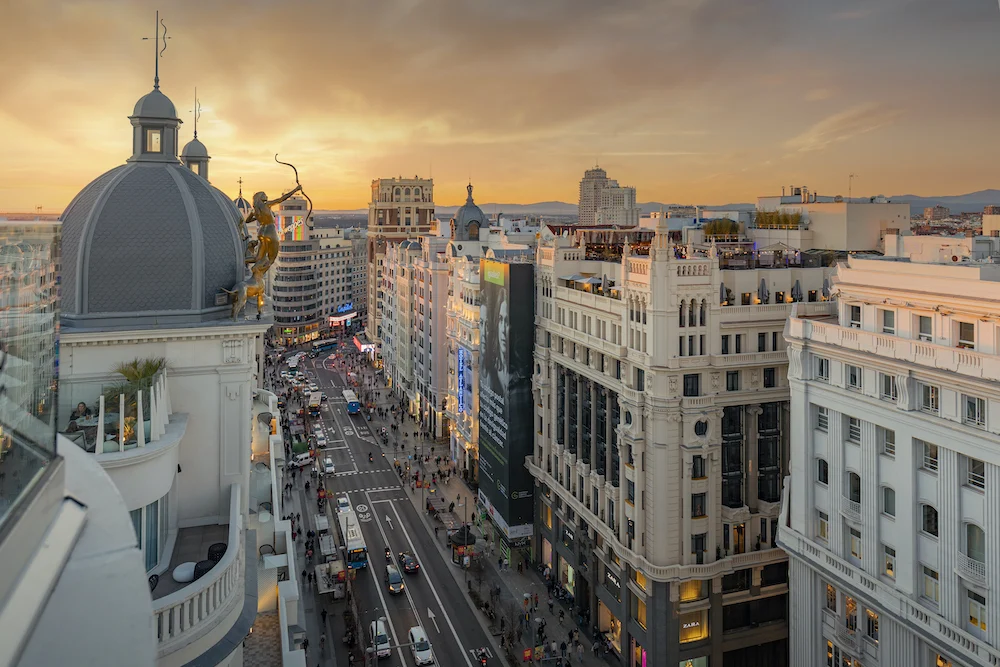
As daylight fades, Madrid’s skyline offers distinct perspectives through its numerous rooftop venues. Locations such as Azotea del Círculo, Picalagartos Sky Bar, Ginkgo Sky Bar, and the more budget-friendly Hat Rooftop provide elevated vantage points overlooking the illuminated Gran Vía and the broader cityscape.
This transition into the evening highlights Madrid’s distinct social schedule, which defies standard northern European dining hours. Evening activities typically begin later, with dinners, social gatherings, and cultural events extending well past midnight. This unhurried approach to the evening allows visitors to experience the city’s social infrastructure at a natural, localized pace.
Neighborhood Exploration Beyond the Tourist Core
Madrid’s identity is heavily defined by its diverse neighborhoods, each maintaining a distinct character far removed from standard tourist itineraries. Allowing time to wander aimlessly through these districts reveals independent shops, local cafes, and architectural details that define everyday life in the capital. This decentralized urban layout encourages spontaneous exploration over rigid itinerary planning.
Uncovering Hidden Architectural and Cultural Gems
Beyond the prominent landmarks, the city contains numerous understated architectural treasures. The Church of San Antonio de los Alemanes, often referred to as Madrid’s "Sistine Chapel," features a Baroque interior entirely covered in ceiling frescoes. Similarly, the Ermita de San Antonio de la Florida houses dome and ceiling frescoes painted by Francisco Goya in a setting far more intimate than the city’s larger museums.
For those seeking green spaces outside the center, Parque de El Capricho offers 18th-century romantic gardens complete with winding pathways and hidden historical structures, complementing the recreational paths of Madrid Río and the vast expanse of Casa Campo, which accommodate cyclists and outdoor enthusiasts.
Infrastructure and Practical Accessibility
Madrid operates as an accessible destination for international travelers, supported by frequent flight connections through Madrid-Barajas Airport, which links directly to the city center via reliable public transport shuttle services. The city’s extensive metro and bus networks, combined with central clustering of major attractions, simplify navigation without requiring private vehicle rentals.
For those planning a trip, industry professionals recommend dedicating at least three full days to absorb the city’s primary offerings, with advance booking advised for high-demand accommodations, major museums, and specific autumn cultural events.